



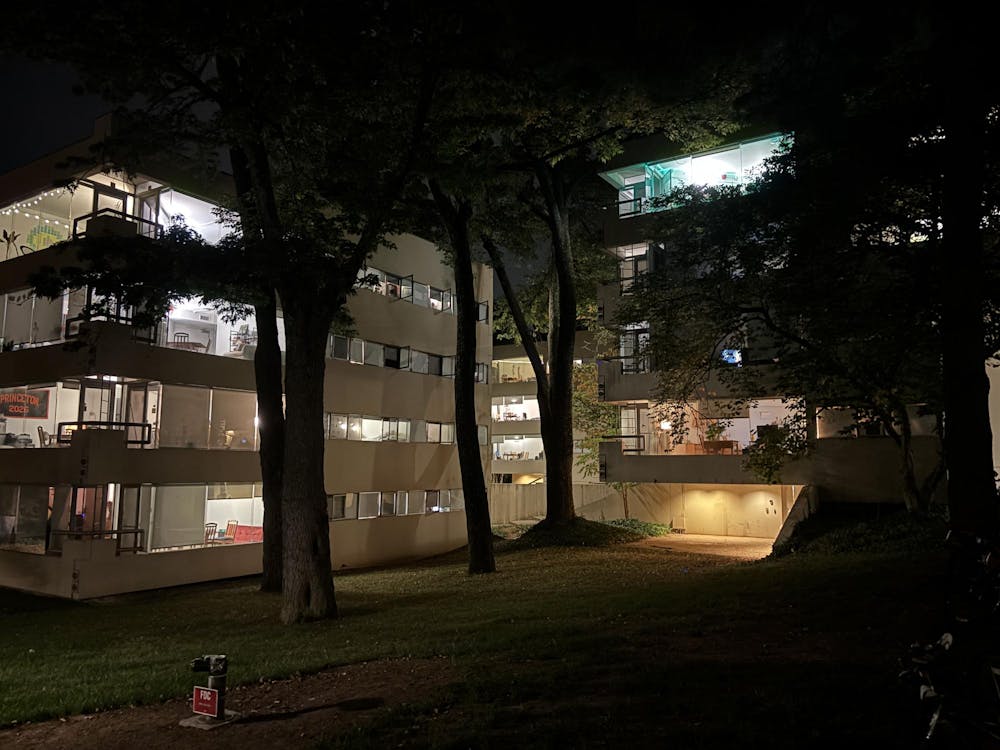
A year after the University was rocked by dining changes, students in Spelman Hall, previously the preferred home for students on the independent plan, remain divided on the effective elimination of independent status.
This fall semester marked the first time that undergraduates living on campus and not registered with an eating club or co-op were required to purchase the Block 128 dining plan — which provides 118 meals and 10 guest meals, and costs $1,800 per semester — or an unlimited meal plan, which costs $4,555 per semester. Students could previously not select a meal plan at all, meaning they were responsible for cooking or buying all of their own meals, though two meals were provided free per week by the University.
In June 2024, Huron, a private consulting group, released an investigation finding that a quarter of Princeton’s student population were not satisfied with their dining experience. Independent students in particular felt isolated from other peers during meals, according to Huron’s findings.
The University’s September 2025 announcement on the elimination of independent status emphasized goals of “promoting community in the residential dining halls” and “strengthening a sense of belonging.”
Spelman residents, some of whom identify themselves as “partial-independent” now that they are required to purchase at least Block 128, are divided over whether the decision has actually promoted its goals.
For Samuel Ishikawa ’28, the desire to cook in a smaller community was what drew him to the independent status.
“Community centers around being independent,” Ishikawa told The Daily Princetonian in an interview. “You can make things for people, bring people in to eat together, cook together.”
Some students are satisfied with their participation in Block 128.

Ian Barnett ’27 said in an interview with the ‘Prince’ that he would choose to remain on Block 128 if given the option to be fully independent because he is “not in a position where I have the time to get groceries and cook.”
Many partially independent students expressed that they do not feel isolated in spite of their dining status.
Barnett, who was previously registered in an eating club and is on the Block 128 plan this year, said isolation for him is not “as bad as it could be because we’re eating now at dining halls most of the time, so you still get to see a lot of people in that.”
Emily Tang ’28 said she does not feel isolated while partially independent, because she now lives “with all [her] friends,” gets to see them daily, and her enrollment in Block 128 allows her to go to the dining hall with friends she doesn’t live with.
Tang is the head Photo editor for The Daily Princetonian.
On the topic of the University’s goals to promote belonging, Abraham Jacobs ’27, another partially-independent Spelman resident, told the ‘Prince’ that “we’re adults ultimately,” and as such, “have to take responsibility for your own socialization and things of that nature.”

University spokesperson Molly Seltzer wrote to the ‘Prince’ that the University has already monitored a rise in student participation in the dining halls, which has led to an increase in dining stations and seating.
“With all students now having access to residential dining options, we expect to see the student community continue to thrive over meals,” Seltzer wrote.
Many Spelman residents spoke to the ‘Prince’ regarding concerns around autonomy and finances. These points were previously identified as primary motivators for registering as independent in the 2024 investigation into dining satisfaction.
Jacobs explained to the ‘Prince’ that he made the decision to register as fully independent last year and for Block 128 this year in large part due to finances. Barnett said he made the decision to switch from an eating club to Block 128 for the same reasons.
While some students were satisfied with being partially independent, others called for the reinstatement of the full independent option.
For Tang, “there’s just more freedom to choose” with partial independent status, noting that Nassau Street has a lot of options, kitchen access in Spelman enables her to cook, and Block 128 means she can swipe into any dining hall.
Barnett, Jacobs, and Ishikawa, however, urged the University to allow students freedom to choose independent status.
On what steps the University should take to improve dining, Ishikawa said, “I think that [the University] should give students more independent meals. I think options are the best.”
With all independent students mandated to be on the Block 128 plan, Jacobs expressed his belief that the lack of the independent option is unfair.
“Autonomy has only been restricted for those who were seeking it the most,” Jacobs said.
“I think community finds its own ways,” Ishikawa said, calling the required meal plan “nice but … unnecessary.”
“You just don’t have the decision to not be in anything now,” Jacobs said.
Grace Meyerle is a News contributor for the ‘Prince’ and a member of the Class of 2030.
Please send any corrections to corrections[at]dailyprincetonian.com.
Read More

First-years begin campaigning for Class Council
Mia Chen and Sophie WangEighteen first-years are campaigning for five Class Council seats, with candidates pitching expanded dining options, more student events, and new ways to build class community.
Eighteen first-years are campaigning for five Class Council seats, with candidates pitching expanded dining options, more student events, and new ways to build class community.

Center on Science and Technology being evaluated due to budget constraints
Cynthia TorresPrinceton is reviewing the Center on Science and Technology as part of broader budget reductions, though its courses and StudioLab operations will continue through the current academic year.
Princeton is reviewing the Center on Science and Technology as part of broader budget reductions, though its courses and StudioLab operations will continue through the current academic year.

Hot take: Hotbirds isn’t quite worth the hype
Kate ChunContributing writer for The Prospect Kate Chun compares recently opened Hotbirds Nashville-style hot chicken to Frist Late Meal chicken tenders on three categories: convenience, cost, and craveability.