



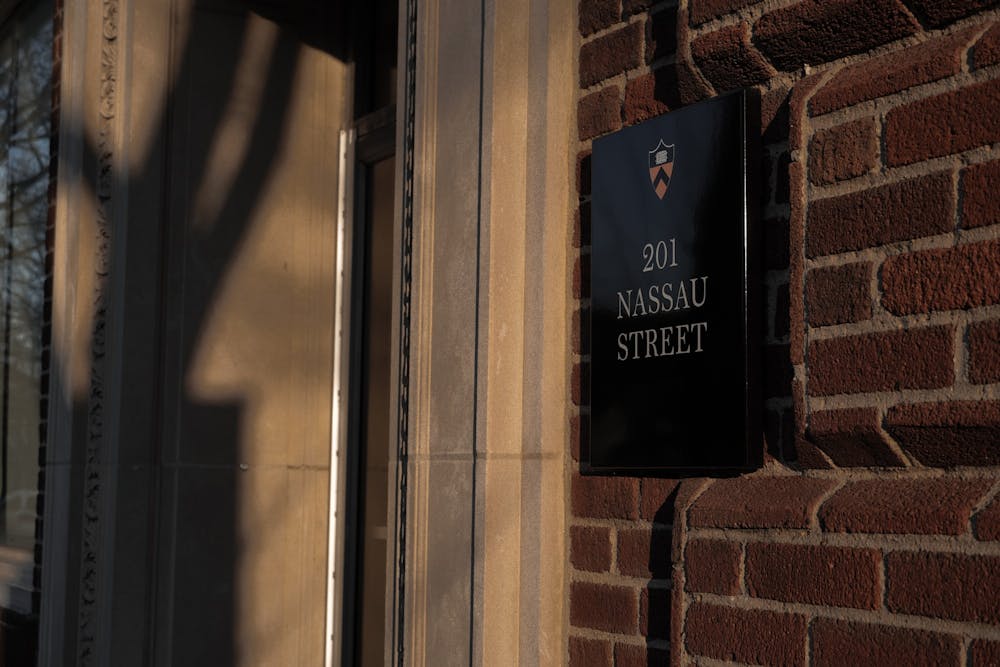
Details of a new subcommittee composed of undergraduate students, graduate students, faculty, and staff focusing on “sexual climate, culture, and conduct,” housed under the University Student Life Committee, will be discussed at the Monday meeting of the USLC, the University wrote in a statement to The Daily Princetonian. This follows the approval of a resolution on Sunday by the Undergraduate Student Government senate calling for Title IX reform at Princeton in the wake of a lawsuit against Cornell University that has garnered widespread national attention.
Additionally, questions regarding sexual misconduct, formerly included in the We Speak survey, will be added to a new Student Campus Climate Survey, to be sent to students next month. The University’s Sexual Harassment/Assault Advising, Resources, and Education office will also increase clinician drop-in hours and run resource tables in residential colleges.
“We know that news and national conversation about the horrifying incident at Cornell University in 2024 has deeply impacted our campus,” University spokesperson Michael Hotchkiss wrote to The Daily Princetonian. “Our priority at this time is to support individuals who are personally affected — and to encourage all members of our community to engage in University initiatives to prevent sexual misconduct, report it when it occurs, and provide support to victims.”
The letter calling for reform, drafted by USG Treasurer Marvel Jem Roth ’28 and U-Council Chair Isaac Barsoum ’28, was approved unanimously by the USG senate, in the wake of Jane Doe alleging that Cornell University failed to adequately protect her from and seek justice for her reported instance of alleged rape by fraternity members in 2024.
Barsoum is an associate Opinion editor for the ‘Prince.’
The USG letter specifically pushes Princeton to reform its alternate resolution process, set clearer standards for temporarily removing alleged offenders from campus, and give students more transparency and input on its Title IX policies. It also expresses support for Jane Doe, whose lawsuit has drawn national scrutiny of Cornell’s response and investigation, with New York Gov. Kathy Hochul appointing the state attorney general, Letitia James, as a special prosecutor for the case.
“The policy inadequacies that have failed Jane Doe are all too familiar at Princeton. We are alarmed by the parallel ways each institution has exhibited a lack of regard for student safety,” Roth and Barsoum wrote in the letter.
The letter had called for Princeton to administer a new We Speak survey during the 2026–27 academic year, the first since 2022. It also critiques the fact that the only committee on sexual conduct at Princeton is within a sub-committee of the University Student Life Committee , a standing advisory faculty committee rather than “a deliberative University body.”

Hotchkiss added that “all members of our community are encouraged to visit the Sexual Misconduct and Title IX website,” to understand Princeton’s policies, reporting options, and “how students and others can get involved in preventative efforts.” The site also “provides links to annual data the University releases about sexual misconduct complaints and trends,” including the 2025–2026 sexual misconduct, sex discrimination, and Title IX office annual report.
“We wanted to be able to put forward a statement at Princeton to restart conversation on Title IX here, but most importantly, speak in solidarity with that student against that system at our peer institution and commend her courage,” Roth said in an interview with the ‘Prince’ after the Senate meeting.
The letter argues that Princeton’s sexual misconduct investigation process remains difficult for survivors to navigate, citing past testimony from Princeton students and alumni, as well as both a 2023 Daily Princetonian investigation and letter from Princeton Students for Title IX Reform. Throughout the letter, they also refer to the University’s 2022 We Speak survey and annual sexual misconduct reports.
“These investigations that were initiated often lasted months and months and months and took a toll on the survivors who experienced them as well,” Barsoum said.
Alex Tu ’27, co-director of the Princeton Peer Nightline, a confidential, anonymous, and student-run peer support service, said that victims often don’t seek justice because they feel “that what happened to them was the result of their actions rather than the perpetrator” and that it is “too late to seek help.”
“Resources should provide students with the space to freely express their situation rather than being coerced to fit a narrative and clear guidance on next steps that students can take,” Tu told the ‘Prince.’

According to figures compiled in the letter, at least 1,347 people obtained information from Princeton’s Title IX office after experiencing or witnessing sexual misconduct between 2015 and 2026. During the same period, the letter states, 139 formal investigations were launched and 84 respondents were found responsible.
Roth said the authors view low participation in formal processes as an issue of institutional trust rather than a lack of desire to report or seek justice. She added that lengthy investigations can make accountability particularly difficult when employees or faculty leave Princeton before proceedings conclude.
“We cite that there are cases where faculty or employees are only suspended for three days, or they receive no disciplinary sanctions at all because throughout that very long Title IX process, they have that opportunity to just leave the University and nothing will follow them,” Roth said. “That is completely unacceptable.”
The University describes its Title IX office as providing resources and reporting options while investigating misconduct “in a manner that is fair and equitable to all parties involved.” The University’s alternate resolution process remains a primary target of reform for USG, which allows parties to resolve sexual misconduct reports without completing formal investigation and adjudication processes.
Under the University’s current policies, participation in ARP requires the consent of both parties and is voluntary. Potential outcomes of participating in an ARP include no-contact orders, restrictions on participation in clubs and organizations, and housing changes. University policies state that no disciplinary action can be taken against a respondent through ARP and that the resolution does not appear on the accused’s disciplinary record.
“A survivor cannot enter into the alternative resolution process and ask for the respondent to be suspended for a semester,” Barsoum said. “The University essentially … forces survivors to pick, as we write in the letter, between proper justice and expeditious treatment of their case.”
The USG letter notes that no students pursued alternate resolutions during the 2025–26 academic year. Five sexual misconduct cases were fully investigated and adjudicated from July 1, 2025, to June 30, 2026 — a result the authors interpreted both in the letter and in the interviews as evidence that students do not view the process as providing sufficient accountability, closure, or safety.
The letter maintains that due process protections remain “critical,” but argues that there are circumstances in which an urgent threat to safety can justify temporarily removing a respondent while a case or alternate resolution process is still pending. It asks the University to establish a clear threshold for when it is appropriate to have respondents removed from campus, and separately to allow complainants to ask respondents to take a “voluntary leave of absence” as part of alternate resolution processes.
The University’s existing sexual misconduct policy already has the option to summarily remove an individual from an educational program or activity after an individualized safety and risk analysis determines that the person poses an immediate threat to someone’s physical health or safety. The policy requires that the removed individual receive notice and an opportunity to challenge the decision immediately afterward.
The authors claim that this process of student removal on the basis of campus safety has been brought up before, particularly during the 2024 ‘“Gaza Solidarity Encampment.”’ Students who set up tents on Cannon Green were deemed a “threat to safety” and were liable for removal, Roth said.
“The University is indirectly saying through their actions that peaceful protesters on Cannon Green are more dangerous than folks who have committed sexual misconduct,” Barsoum said. “It values the pristineness… and the order and tidiness of its campus above the safety of its students who are coming to the University seeking support and help.”
The University did not respond to a question regarding the comparison about removals from campus.
Anonymous activists smashed windows and painted “AT CORNELL RAPISTS ARE PROTECTED PROTESTORS ARE EXPELLED” outside the university’s central administrative building Monday morning. The activists stated that this vandalism was carried out in response to the Jane Doe case and Cornell’s handling of her allegations.
Barsoum and Roth had already met with University administrators before Sunday’s vote, according to discussion during the Senate meeting. It is only the “first step that USG is making,” Roth said.
Devon Williams is a staff News writer for the ‘Prince’ from Menlo Park, Calif. She can be reached at dcw[at]dailyprincetonian.com.
Please send any corrections to corrections[at]dailyprincetonian.com.
Read More

Mercer County aims to boost tourism with new website, airport upgrades
Grace BeckishMercer County launched a new tourism website last month that will serve as the county’s central tourism center. The launch is part of a broader push to increase visitors, including planned renovations to the Trenton-Mercer airport.

Fragile play, handled with care: Theatre Intime’s ‘The Glass Menagerie’
Mia MazzeoAssistant Prospect editor Mia Mazzeo reviews Theatre Intime’s adaptation of Tennessee Williams’ “The Glass Menagerie."
Assistant Prospect editor Mia Mazzeo reviews Theatre Intime’s adaptation of Tennessee Williams’ “The Glass Menagerie."
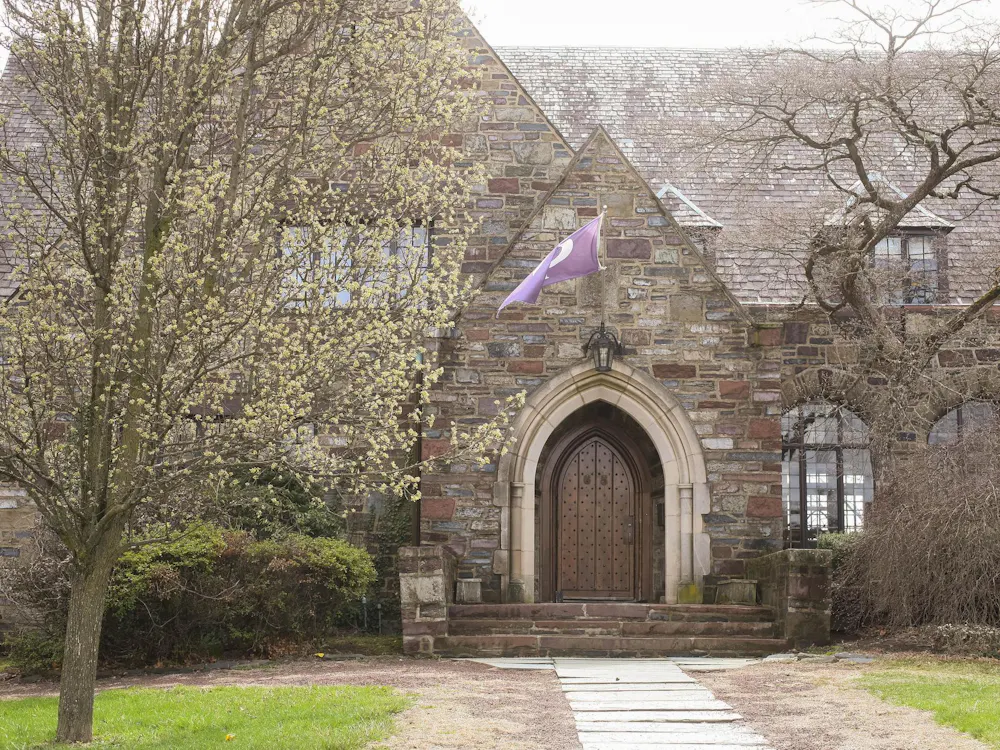
Cloister to remain closed indefinitely amid financial struggles and renovation planning
Daphne LewisCloister Inn, a Princeton eating club whose operations have been temporarily suspended following financial conerns, is working to raise money for a major renovation called “Re-Imagine Cloister.”
Cloister Inn, a Princeton eating club whose operations have been temporarily suspended following financial conerns, is working to raise money for a major renovation called “Re-Imagine Cloister.”