



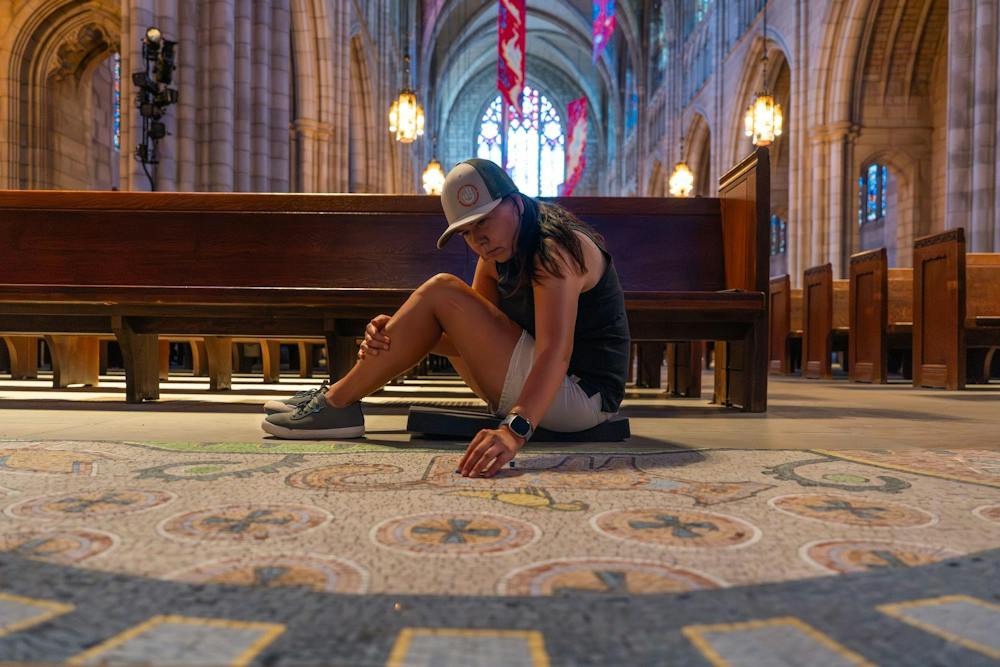
This summer, the University Chapel saw the installation of a new mosaic depicting Indigenous motifs at the front of the nave ahead of the Chapel’s centennial in 2028. This is the first permanent addition to the Chapel since the 1990s and the largest aesthetic change to the original material of the building since its construction in 1928.
The work, titled “Presence,” was created by artist Marianne Nicolson, an Indigenous activist and a member of the Musgamakw Dzawada’enuxw First Nation, who has been involved in the project for several years. It is 50 feet long, and incorporates traditional Indigenous motifs from around the North American continent, including a variety of colorful depictions of animals, people, and landscapes.
“My goal for the project is that it be helpful to the Princeton community — that it should prompt thinking, believing, constructive dialogue, and critical reflection on representations within religious iconography and how these relate to movements for justice,” wrote Alison Boden, former dean of religious life and the chapel, following the start of the project in 2021.
“Presence is a tangible expression of the Office of Religious Life’s mission and its five values,” the Office of Religious Life wrote in a statement to the ‘Prince.’ “Its values are radical welcome, spiritual exploration, diversity, community, and engagement.”
Nicolson is an artist from the Dzawada’enuxw First Nation on the Pacific Northwest Coast of Canada. “We have a different type of lived and visible Indigenous presence staying here at the University of Victoria, so it was very difficult for me to go to Princeton and not have that context,” she said in an interview with The Daily Princetonian. “Why am I being asked to do this? If I’m from the North Coast, why ask me to come here?”
“Then I realized that because of the history of the landscape and removals that had occurred, it was about looking to try and fill that gap and open the door … to the original people,” she said to the ‘Prince.’
Nicolson was specifically drawn to the medium of mosaic because she felt that it reflected the longstanding tradition of beadwork on the continent. For example, she felt inspired by the northeastern tradition of ‘wampum,’ which are traditional belts created using beads made of shell, often used as “expressions of international relationships” between different groups of people, according to Nicolson.
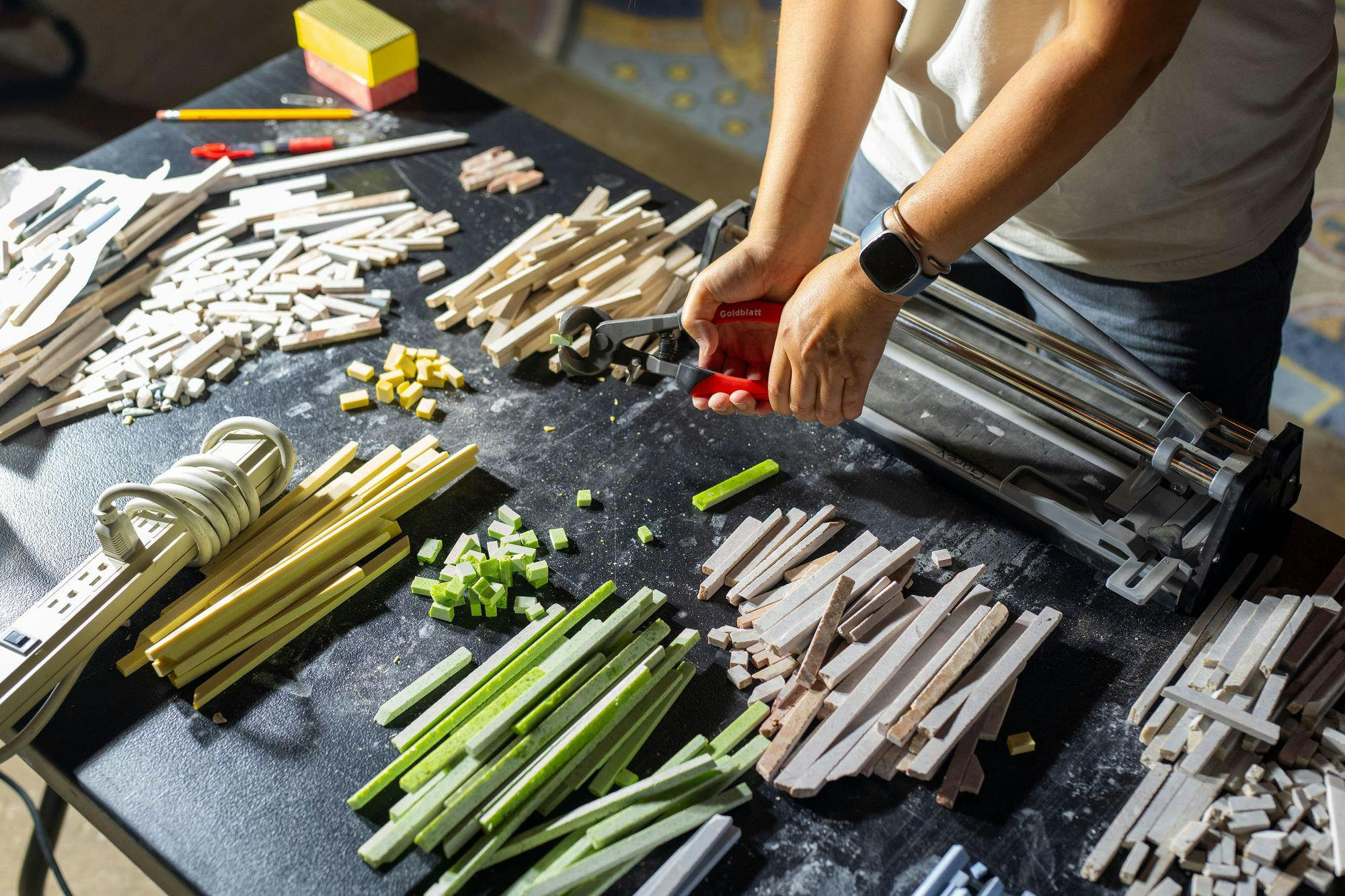
Materials used in the new University Chapel mosaic.
Courtesy of Ryan Campbell / Office of Communications

Her favorite part of the piece are the rays of sunshine which also resemble feathers — a key part of the visual heritage of the northeast. Another section she particularly enjoyed bringing to life was the twin imagery of the coyotes with a bird resting on each of their backs to highlight “the symbiotic relationship between animals,” she explained.
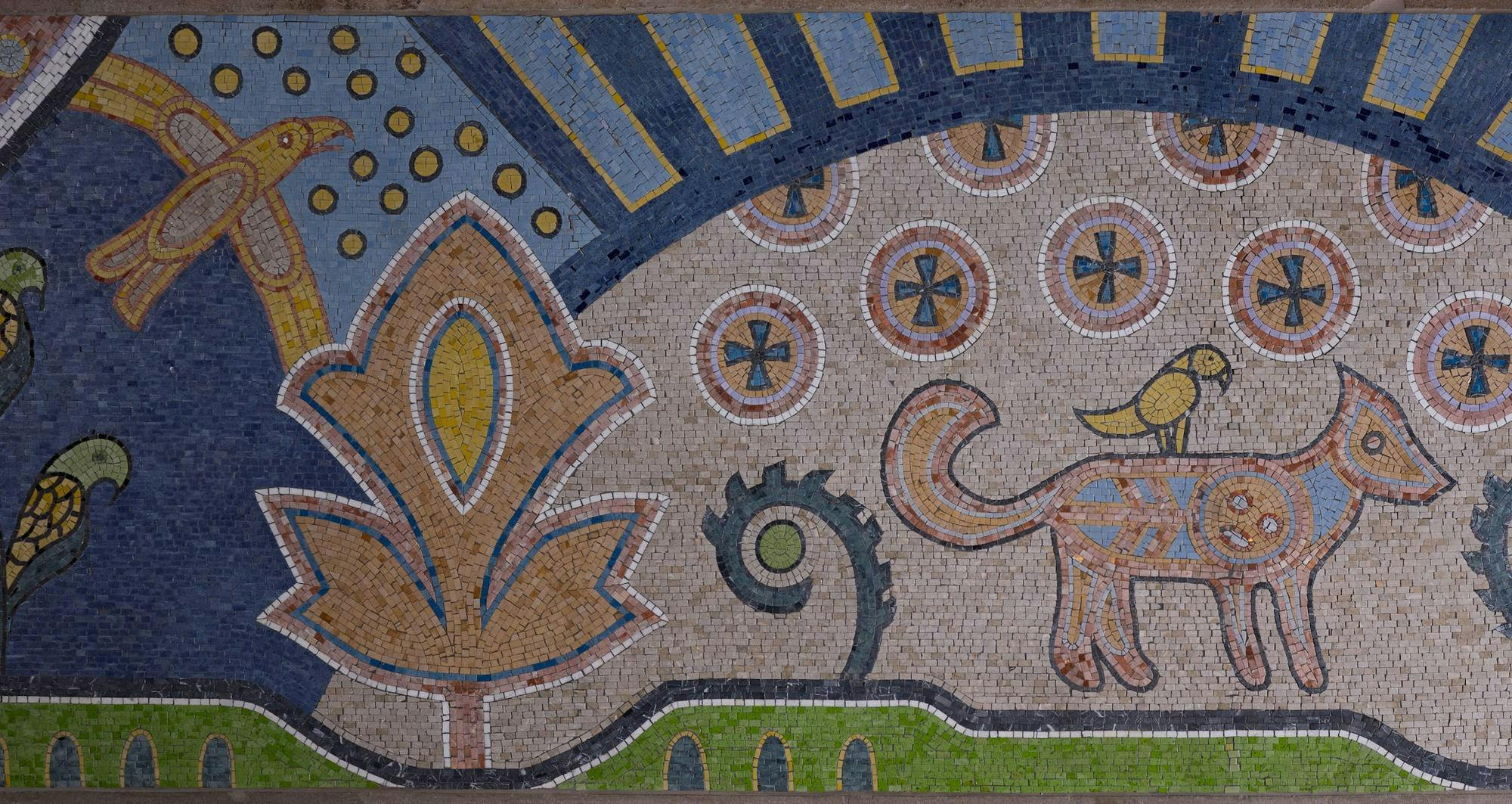
Image of a coyote and bird featured within the Indigenous mosaic in University Chapel.
Courtesy of Ryan Campbell / Office of Communications
When working on the piece, colorization became an integral part of the process for Nicolson. “We spent a lot of time working on that to make sure that the mosaic would be complementary and yet be able to stand on its own within the context of the chapel,” Nicolson said.
“To welcome this poignant work into the Chapel — a cornerstone of our University and central to the fabric of our community — is to invite students, alumni, neighbors and visitors to reflect on what we believe and how we celebrate the richness of Princeton,” said Rev. Theresa Thames, Dean of Religious Life and of the Chapel in a statement to the ‘Prince.’
“It is already enriching conversations across campus and expanding my own thinking as a theologian. My hope is that it will continue to move us to ask harder questions and deeply consider our responsibilities to each other,” she wrote.
She urged the recognition of the presence of Indigenous students and faculty on campus and encouraged “conversations on campus about the communities that used to live in the space that Princeton is now standing on.”

The artwork is open to the public within the operational hours of the Chapel.
Lucy Harper is a News and Features contributor for the ‘Prince.’ She is from London.
Please send any corrections to corrections[at]dailyprincetonian.com.
Read More

PSafe report shows decrease in liquor violations, includes new hazing data
Joshua KimPrinceton’s 2026 Security and Fire Safety Report showed that motor vehicle theft continued to be the most reported crime in Princeton. It also shows a continued decline in liquor law violations, and an increase in drug referrals since 2025.
Princeton’s 2026 Security and Fire Safety Report showed that motor vehicle theft continued to be the most reported crime in Princeton. It also shows a continued decline in liquor law violations, and an increase in drug referrals since 2025.

What’s funny anymore? On comedy with Jack and Jack
Lola HorowitzJack Goodman ’27 and Jack Musser ’27 are host and co-host for Season 15 of All-Nighter, Princeton’s student-run late-night talk show. They reflect on what makes their partnership effective, their approaches to comedy, and the state of comedy in the political climate.
Jack Goodman ’27 and Jack Musser ’27 are host and co-host for Season 15 of All-Nighter, Princeton’s student-run late-night talk show. They reflect on what makes their partnership effective, their approaches to comedy, and the state of comedy in the political climate.

No. 10 field hockey sweeps the weekend: edges Yale 2-1, blanks Temple 3-0
Caden Hammond and Ari AhdiehNo. 10 Princeton field hockey snapped a three-game skid with wins over Yale and Temple.
No. 10 Princeton field hockey snapped a three-game skid with wins over Yale and Temple.