



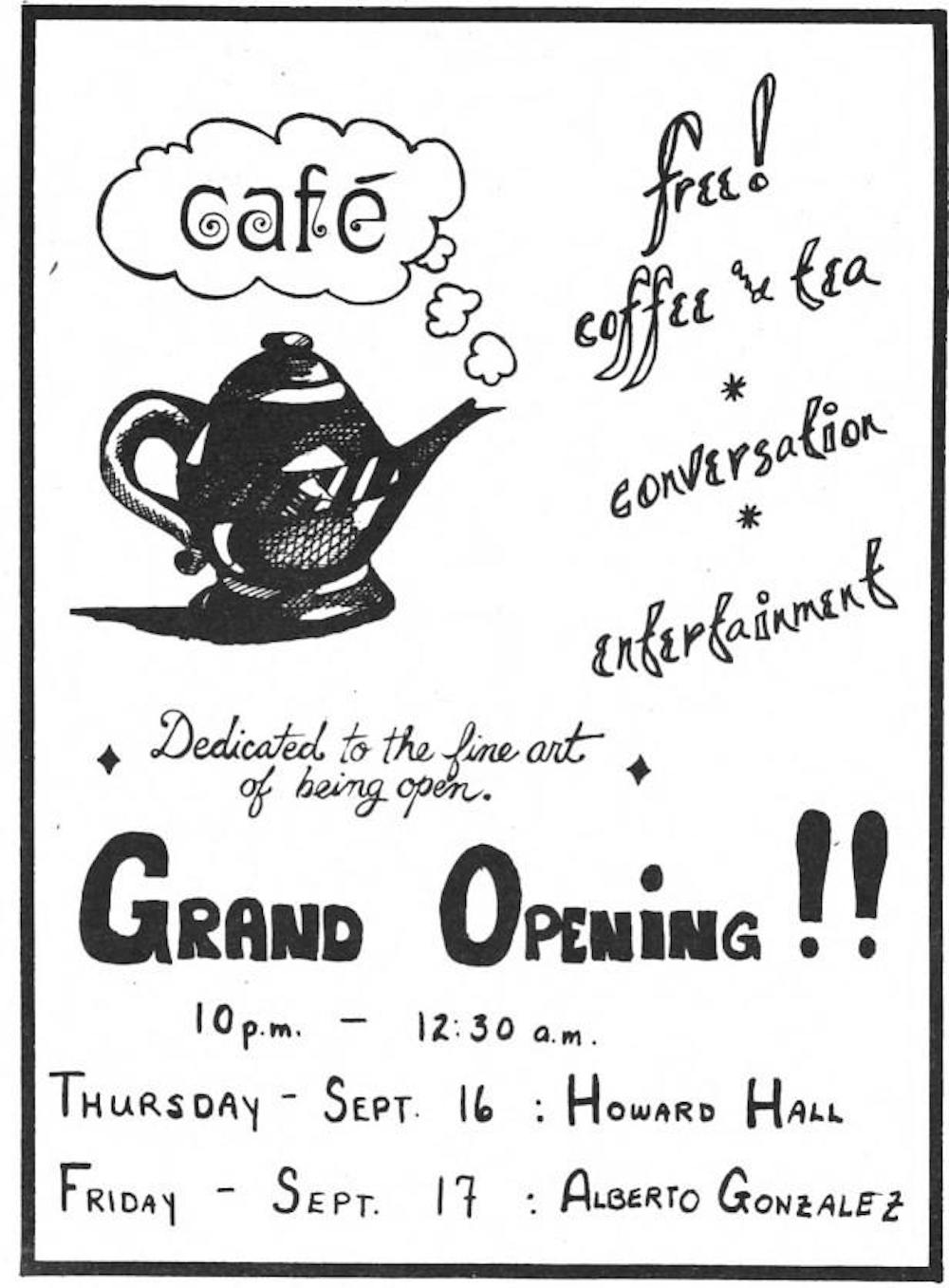
In September 1976, a café opened its doors in the basement of Murray-Dodge Hall, the home of the University’s Office of Religious Life (ORL). While the journey to opening was far from smooth, facing food and safety regulations, once open, the café quickly became an iconic Princeton institution, still loved and frequented by students 50 years later.
Murray-Dodge Café is known today as a social spot to study while snacking on free student-baked cookies and tea. From 12 p.m. to 12 a.m. daily, the café is frequented both by students bent over notebooks completing problem sets and readings, as well as by groups of students socializing, engaged in animated conversation. Rich Chrisman ’65 initially conceived of the café in the early 1970s after returning to Princeton as assistant dean of the Chapel.
Chrisman told The Daily Princetonian in a recent interview that his idea for the café was a product of the climate on campus at the time: The Vietnam War was ending, the first class of women enrolled at the University just a few years prior, and there was a growing outrage at racial inequality. “We wanted to, in the Chapel, be part of this growing, healthy climate of dialogue [and] interaction,” Chrisman explained. He hoped it would become both a place of work and socialization for many students, as well as a venue to host student and faculty music performances.
In 1976, the ORL had an empty basement in Murray-Dodge, which Chrisman thought was the perfect place to turn his dream into a reality. He told the ‘Prince’ that “[the basement] had been used before, so it was not a cave with raw dirt in it, but it had fallen into dereliction.” With the space having fallen into disuse, it would take serious renovation before it would be able to host an operational business.
In order to raise funds for the operation, Chrisman said he had collaborated with the University Chapel, the Aquinas Institute, the Princeton Hillel Foundation, the Wesley Westminster Foundation, and the campus Episcopalian group. The café project united many religious groups at Princeton and was set to provide a non-denominational space for fostering community.
He drew inspiration from the Carl A. Fields Center on Prospect Avenue, which Chrisman recalled had just begun to host poetry readings and similar performance events, providing a space for student connection and artistry.
Chrisman thought a café would create an environment conducive to dialogue, providing a “non-alcoholic, quiet alternative” to existing social spaces on campus, like the campus pub in Chancellor Green.
Students would staff the café, providing a new opportunity for students with work-study requirements in their financial aid packages to complete the job requirement.

Suzi Wizowaty ’75, Murray-Dodge café’s first student manager, reflected, “I’d had a variety of work-study jobs at Princeton, but this one was bigger than that. This was not an intellectual job, which was really refreshing. This was a managerial job, which was just much more fun.”
In 1976, Small World Coffee was still 17 years away from opening its doors, and Starbucks had opened its flagship shop in Seattle only five years prior. Café culture had not yet made its way to Princeton. Instead, bars and pubs served as the primary social common spaces in town. Murray-Dodge Café work-study employee Edward Chow ’79 reflected that the café “was a novel concept back at the time.”
Chow explained, “Back in those days there wasn’t a lot of stuff available on campus other than the pub.”
After opening in the fall of 1976, the café found immediate success. Chrisman told the ‘Prince’ in September 1976 that the café enjoyed an “extremely successful” opening week. In fact, it was so successful that it had to deal with an overly high noise level due to the number of student patrons present, compounded by the student performers who had to compete with the loud conversations.
“A bit of New York has arrived in Princeton,” a ‘Prince’ headline proclaimed a week after the grand opening. The café “may be the closest Princeton ever gets to Greenwich Village,” a New York City neighborhood at the time known for its artsy cafés and coffee shop scene.
“Both amateurs and professionals have brought their acts to the coffeehouse,” the ‘Prince’ reported. Guest artists included Princeton assistant professor of classics and folk singer Lois Hinckley, singer Margaret Emory ’79, and poets Bruce Eager ’77 and Jeremy Nobel ’77. “There are a great many people here who simply enjoy performing and many who would enjoy listening to them,” the ‘Prince’ proclaimed. The café’s first student performer, Jonathan Leavitt ’78, for instance, performed for “a full house on the opening night of the new Murray-Dodge Café.”

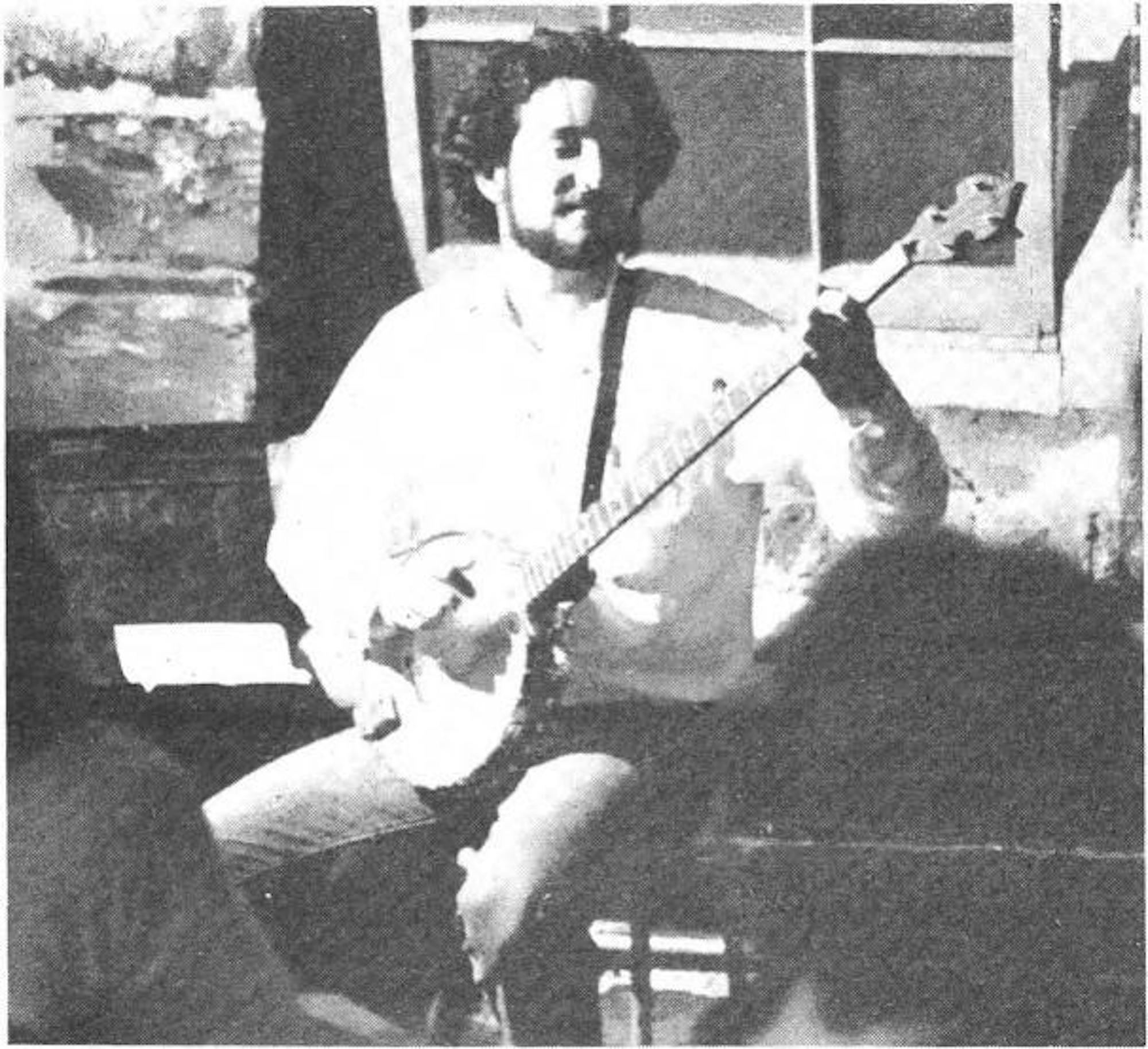
Murray-Dodge Café quickly became a place where Princeton students came to unwind. Wizowaty recalled the café as a “respite, a place to relax, get away and hang out in a way that was not pressured in any way,” during a busy Princeton academic day. “We felt like we were part of creating something special and new.”
Chrisman saw his goal of fostering relationship building and dialogue realized: The café “was a small enough place where a conversation of two or three people at one table might expand to the next table,” he told the ‘Prince.’
Today, one of the café’s most iconic features is the sign outside that proudly declares: “Free Coffee, Tea, and Cookies.” Providing free refreshments, however, was not part of Chrisman’s initial vision for the café, which he had imagined as a commercial operation that would fund itself. The café, which was initially scheduled to open in April, not September, 1976, faced numerous challenges from the Princeton Borough Board of Health due to the café’s basement location. Chrisman and his fellow campus religious group leaders had to come up with a creative solution to open the café’s door.
The basement renovation project began with electricians installing new lights in the dark basement, providing enough lighting for the cleaning process to commence and to install a kitchen.
In March, before applying to the Board of Health to sell food, Chrisman and the Office of Religious Life were rightly worried that “the health board may not allow the sale of food because basements, such as the one in Murray-Dodge, are susceptible to flooding, poor ventilation and contamination.”
Chrisman cited vending machines as a potential alternative to food sales if problems with the health department persisted. He could not be deterred from creating the social space he thought the campus needed. The café’s value did not lie in its role as a commercial operation, but in its ability to bring people together.
As renovations to bring the basement up to health code wrapped up later in the fall and the café prepared to open, it continued to face challenges from the Princeton Borough Health Department.
Health inspector David Blake misunderstood the desired reach of the café, believing that it “would only be open to the relatively few persons who are members of the sponsoring religious groups,” as opposed to the entire campus community, according to a ‘Prince’ report from September 1976. Chrisman argued that creating a sense of community was a goal of organized religion. Thus, the café would contribute to the overall religious-oriented mission of Murray-Dodge.
The café also faced issues from the health department related to food sales. Murray-Dodge’s founders’ concerns about the basement’s location were correct, with the kitchen’s location precluding the café from obtaining permission to sell food. Chrisman sought to get around this setback by having the café operate on a donations-only basis. The café hosted a preview on Sept. 8, 1976, for students prior to its official opening, with cards adorning each table in the café suggesting donations of “10 cents for coffee or tea and 5 cents for the pastries.”
Blake took issue with the prominence of the café’s donation request signs, as they too closely resembled a commercial operation.
Five days later, however, the health department ruled that the café could officially open and would not constitute a commercial operation as long as the placards encouraging students to donate specific amounts for drinks and pastries were removed. Nevertheless, the health department allowed a small collection tin to remain in the café for students to make voluntary donations, which covered two-thirds of the café’s food costs.
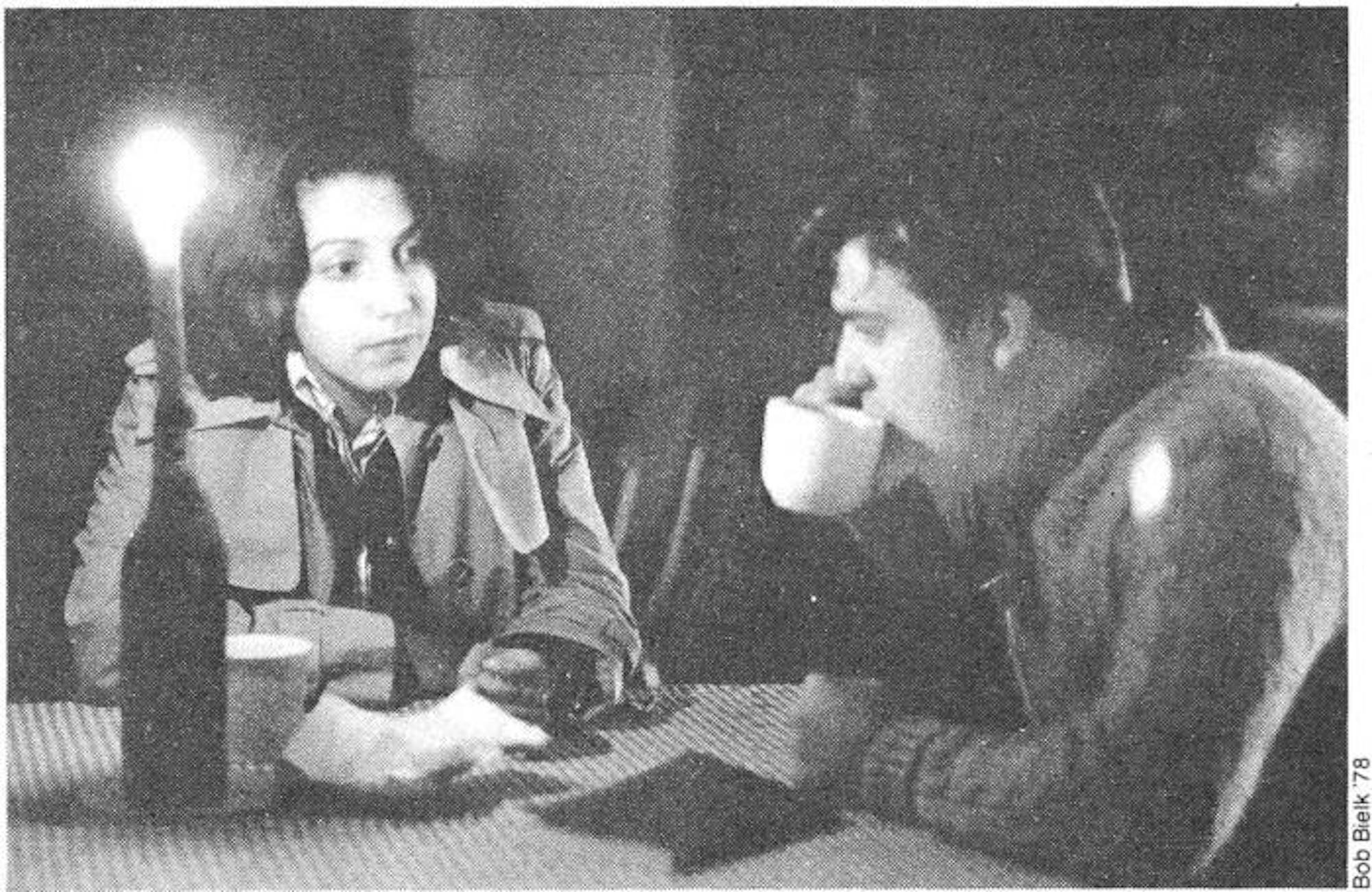
Today, Murray-Dodge Café welcomes students by advertising its free coffee, tea, and cookies, still prepared by student employees for their classmates.
Last week, the café celebrated its 50th anniversary by offering 100 free, custom mugs and pins, and featuring student performances from Child’s Play improv group, the ForWord Collective slam poetry group, and an Opus string quartet. The event was reminiscent of the café’s early days of student performances and socialization.
Its legacy has lasted, unchanged, across the decades.
Miriam Dube is an assistant Archives editor and a staff Copy editor.
Please send any corrections to corrections[at]dailyprincetonian.com.
Read More

‘We still have pride’: Students and faculty react to U.S. News ranking that placed Princeton second
Claire Ding and Albert TanStudents and faculty reacted to Princeton dropping its No. 1 position on U.S. News’s annual university rankings for the first time in 15 years.
Students and faculty reacted to Princeton dropping its No. 1 position on U.S. News’s annual university rankings for the first time in 15 years.

Laptop smashed and TVs damaged in Bowen Hall, investigation ongoing
Sena ChangA laptop and multiple monitors were found damaged in Bowen Hall on Sunday morning. This incident is still under investigation as of Monday.
A laptop and multiple monitors were found damaged in Bowen Hall on Sunday morning. This incident is still under investigation as of Monday.

Portal Bridge construction on Northeast Corridor to disrupt Fall Break travel
Coralene Ellis and Maeen AbabnehDuring fall break, students and faculty using NJ Transit and Amtrak will be inconvenienced by changed railroad schedules caused by construction on the Northeast Corridor.
During fall break, students and faculty using NJ Transit and Amtrak will be inconvenienced by changed railroad schedules caused by construction on the Northeast Corridor.