




Recent favorites in media, trends, and food, brought to you by The Prospect editors.
“Tony” by Matt Johnson
Gavin McLoughlin, Head Editor
How does one approach a biopic for someone who feels larger than life? This daunting question has come up several times in the last five years with films such as Antoine Fuqua’s “Michael” and James Mangold’s “A Complete Unknown,” and was the first question Canadian filmmaker Matt Johnson had to wrestle with when directing his biopic of the iconic chef, author, and TV star Anthony Bourdain.
Rising to stardom with his 2000 novel “Kitchen Confidential,” a gritty memoir that pulled back the curtain on the New York City restaurant scene, Bourdain was later immortalized for his travel shows, which captivated a generation of fans with equal parts caustic wit and tender vulnerability.
Despite the cult icon Bourdain became after his tragic death — a culinary Bukowski of sorts — Johnson’s biopic centers around a younger version of the man, a world away from the world we came to know: In Bourdain’s own words, “a spoiled, miserable, narcissistic, self-destructive and thoughtless young lout, badly in need of a good ass-kicking.”
Following 19-year-old Bourdain, played by rising star Dominic Sessa of “Holdovers” fame, “Tony” is set over a pivotal summer in Provincetown, Mass. where Bourdain spent summers in his youth working at a local seafood restaurant. Like Mangold’s “A Complete Unknown,” “Tony” doesn’t attempt to cover the breadth of Bourdain’s later, highly publicized life. Instead, it focuses on a snapshot of Bourdain’s origins, with creative liberties that lead to the film’s greatest successes and biggest flaws.
For those already familiar with Bourdain’s life, “Tony” serves as a kind of culinary anti-hero origin story, stringing together pastiches of his life that range from poignant to almost kitschy. Perhaps ironically, “Tony” operates far better as a captivating standalone coming-of-age story than as a biopic. Sessa’s Bourdain, while often devoid of the chef’s renowned cosmopolitan charisma, remains magnetic, keeping you fully engaged despite his nervy, pompous, drugged-out persona. The film is further anchored by an excellent performance by Antonio Banderas and beautiful cinematography by Michael Bauman, most recently Oscar-nominated for his work on “One Battle After Another.” Therefore, whether you’re a die-hard Bourdain fan or brand new to his legacy, “Tony” is worth watching as a captivating, stylish culinary drama, born of the cinematic DNA of several classic coming-of-age films.

“you seem pretty sad for a girl so in love” by Olivia Rodrigo
Kaichen Chou, Assistant Editor
Everyone has listened to or at least heard a snippet of “driver’s license” by Olivia Rodrigo, I’m sure. Whether you initially liked this song or not, it dominated the COVID-era of TikTok — and even if you did like it, you probably despised it by the end. While I enjoyed “good 4 u” and “vampire,” two of Rodrigo’s other beloved songs, I still wasn’t the biggest fan of her discography.
But on June 17, my life changed. After a semi-sentimental morning of bidding my home goodbye for a two-month excursion to Costa Rica, I suddenly remembered Rodrigo’s newly released album, “you seem pretty sad for a girl so in love.” With nothing better to do during my eight hours of traveling, I decided to play the album start to finish. Not one day in the next 62 days went by without me blasting “what’s wrong with me” at least 10 times.
I don’t consider many albums to be “no-skip,” but this is one of them. In 13 songs, Rodrigo conveys both the carefree bliss of crushing real bad and the security and permanence their love brings, then the painstaking realization that their relationship will “never be the cure.”
The album has a little bit of everything. There’s the classic indie-pop style she’s known for in “stupid song” and “maggots for brains,” some experimentation with a synthy, alternative sound in “my way,” and typical cheesy love songs like “drop dead” and “u + me = <3.” She packs a punch in her melancholic, emotional ballads “honeybee,” “begged,” and “less,” honing the signature style that made her famous. “less,” in particular, has some of the most gut-wrenching lyrics, flawlessly encapsulating the helplessness that comes from a failing relationship.

Though “the cure,” which details the toxicity of codependency, is among the highest streamed alongside “drop dead” (both for good reason), “what’s wrong with me” definitely deserves the same treatment. Its incredibly vulnerable nature, along with lead singer of The Cure Robert Smith’s feature, truly seals the deal for me. I still gravitate towards it daily, multiple streams at a time.
Boots on the ground
Amaya Taylor, Associate Editor
I’ll be honest, I’ve always had a penchant for dressing as inappropriately for the weather as possible. Flowy tank tops in the fall, dark sweaters in the midst of June — it’s just one of my many quirks. As much as I respect Mother Nature, I won’t let her cramp my style.
The harsh summer heat has only recently loosened its tight grasp on Princeton’s campus, but I’ve been rocking my winter boots since early August. As we edge closer to autumn, I’ve decided I’ll stick with the knee-high leather.
I won’t argue that boots are unique or underrated; they are undeniably a staple in everyone’s closet. But why wait until every building is adorned with icicle crowns? Now is just as good a time as any. The freshman flu isn’t the only thing that’s going around. A sea of overpriced clogs and tennis shoes has plagued every lecture hall, and I’m taking a stand.
Boots have the potential to add much-needed character to an otherwise simple outfit, and the best part is that you can pick whatever suits your fancy. From buckle boots, slouchy boots, heel boots, ankle boots, or even cowboy boots, you can literally choose your own adventure. So go forth, my friends. Ditch your penny loafers and white canvas sneakers. Put your boots on the ground, Princeton. After all, Nancy Sinatra once said, “These boots are made for walkin’.”
Architectural motifs in clothing, jewelry, and tattoos
Amy Jeon, Associate Editor
From swirling, floral patterns of cast-iron stair rails in Barcelona, Spain, to intricately tessellated, geometric tiles in the mosques of Istanbul, to the mesmerizing stained-glass panes of Princeton’s chapel, architectural motifs are simultaneously quiet yet omnipresent –– and ever-lingering reminders that beauty can be found all around us.
Whether they’re delicate fine-line tattoos of spiraling motifs or dainty jewelry pieces embellished with Rococo-esque curves, gentle renderings of fine details in architecture have quickly become my new favorite in the realm of fashion and art. While we tend to take in architectural masterpieces holistically — such as Gaudi’s eccentric Casa Batlló or Zaha Hadid’s cleanly linear MAXXI Museum — being able to savor the smaller, lesser-observed beauties of a decorative lunette above an ordinary townhouse door or a particularly stunning tile amongst hundreds of others in a chapel is a fresh approach to enjoying architecture.
With the rise of decorative embellishments in 18th century French Rococo architecture, swooping curves, floral symbols, and ornamental garlands became common motifs in chateaus, churches, and royal buildings. Historically dismissed as overtly extravagant, the artistry and craftsmanship of the Rococo’s decorative designs have often gone unnoticed.
Beauty exists all around us, even in the nooks and crevices of a seemingly plain building. The next time you take a stroll around campus, slow down and trace the interwoven motifs hidden throughout Princeton’s iconic Gothic architecture — it could be a source of inspiration for your next tattoo or quick sketch.
“The Shards” by Bret Easton Ellis
Mia Mazzeo, Assistant Editor
With chatter of group Halloween costumes, fall break plans, and Coffee Club’s seasonal drinks soon creeping onto campus, autumn has officially begun at Princeton. For me, there is no better way to usher in the spooky season than cracking open a good horror novel. As I searched for this year’s pick, I settled on the title taking over my social media. Back in August, FX aired a nine-episode adaptation of Bret Easton Ellis’ 2023 novel “The Shards.” Although the show received mixed reviews, I decided to try the original story and comb through Ellis’ infamous writing style firsthand.
Set in the fall of 1981, “The Shards” is a fictionalized autobiography that follows Ellis’ senior year at a ritzy Los Angeles private school. Despite the sheer excess of everything surrounding him, Bret feels totally numb, drifting through life in a drug-fueled stupor, attempting to keep his sexuality hidden. No other author captures the electric pop culture and rampant consumerism of the 1980s quite like Ellis. Every page will have at least one mention of a song, album, or music video recently released. The characters are constantly discussing the hit films they’ve seen, designer brands they own, and luxury cars they drive to school every morning. I thought I would eventually tire of these minor details, but Ellis’ dedication to these references transported me back to the scene of the crimes: the upscale clubs, lavish restaurants, and vibrant malls of 1980s LA.
Best known for his cult classic novel “American Psycho,” Ellis is no stranger to the horror genre. Although much of the novel focuses on the interpersonal dynamics and day-to-day lives of high schoolers, a constant, creeping sense of dread builds with every mention of the local serial killer, “the Trawler.” Particularly, the scenes in the earlier half of the novel, before Bret is fully aware of the extent of the murders, were the most unsettling. Each chapter is intercut with narration from an older, traumatized Bret, reflecting on the events of that infamous autumn.
Endlessly witty, shockingly poignant, absolutely terrifying, “The Shards” was everything I could ask for in a fall read. I recommend giving it a try even if you were disappointed by the TV adaptation. While the novel’s back-to-school setting and teenage angst got me in the fall spirit, Ellis’ one-of-a-kind writing and spine-chilling scenes made “The Shards” truly memorable.
Ube brownie ice cream at Reunion Sweet Parlor
Ysabella Olsen, Head Editor
When yet another ice cream shop opened in downtown Princeton last spring, I was skeptical of what it could offer. Bent Spoon, Halo Pub, and Thomas Sweet already covered all my bases — but when I went to Reunion Sweet Parlor for the first time, I was pleasantly surprised. The flavors were fun, unique, and absolutely tasty. I would describe Reunion Sweet Parlor as elevating classic ice cream flavors and adding a couple you might not have seen before. Many flavors also include ingredients “mixed in,” so consider this a place for lovers of chunky ice cream.
My favorite among the flavors I’ve tried has been Ube Brownie. The vibrant purple flavor has a creamy texture. The ube is not too rich or sweet, rounded out with hints of vanilla and pistachio. There are also pieces of soft brownie, with a mild chocolate flavor, mixed in throughout. While the brownie bits are large enough to chew in small bites, they don't disrupt the ice cream-eating experience. I’ve paired this flavor with Thai Iced Tea, which I also highly recommend. Its sweet, milk-tea flavor complements the Ube Brownie, creating a delectable combination.
Gavin McLoughlin, a member of the Class of 2028, is a head editor for The Prospect.
Kaichen Chou, a member of the Class of 2029, is an assistant Prospect editor and a staff Copy editor.
Amaya Taylor, a member of the Class of 2028, is an associate editor for The Prospect and staff News writer.
Amy Jeon, a member of the Class of 2029, is an associate editor for The Prospect.
Mia Mazzeo, a member of the Class of 2029, is an assistant editor for The Prospect.
Ysabella Olsen, a member of the Class of 2028, is a head editor for The Prospect.
Please send any corrections to corrections[at]dailyprincetonian.com.
Read More

Forbes renovation scope still undecided as Hobson prepares to open
Gus Vogel and Daphne LewisAs Forbes students prepare to become the first cohort to live in Hobson College next year, specifics on Forbes' own renovation remains unsettled by the University nearly six months after the University announced it was accepting consultant bids for a campus-wide dorm renovation plan.
As Forbes students prepare to become the first cohort to live in Hobson College next year, specifics on Forbes' own renovation remains unsettled by the University nearly six months after the University announced it was accepting consultant bids for a campus-wide dorm renovation plan.
Princeton Council details historic guidelines for property owners
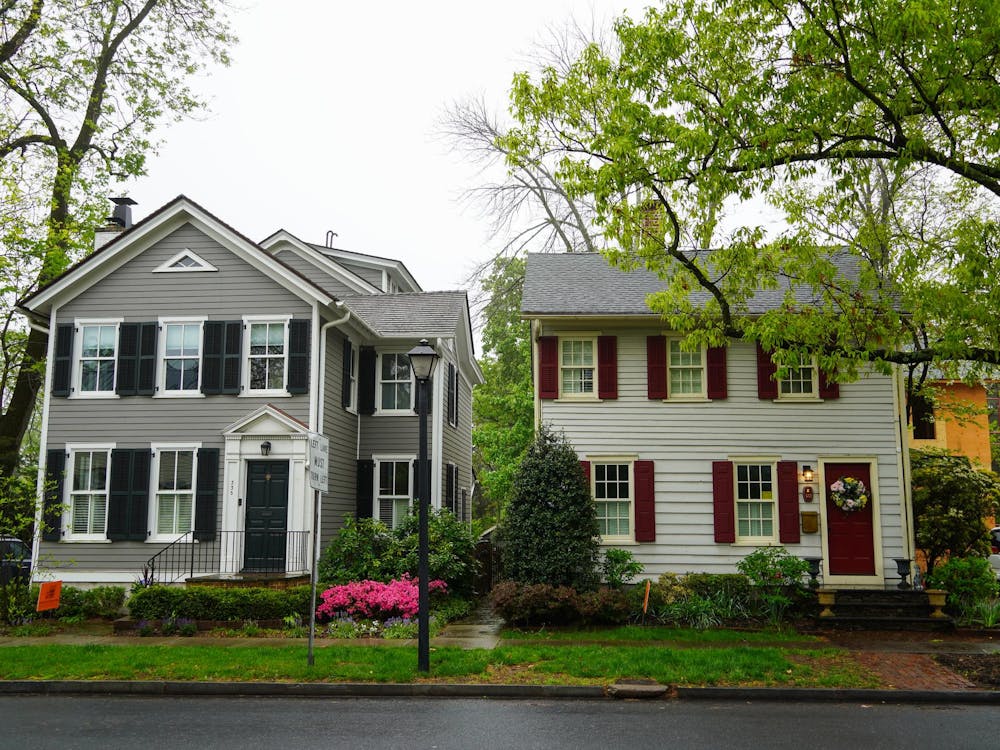
Kimberly HutchinsonThe Princeton Council discussed the municipality’s recently-released final draft of historic guidelines at its Monday meeting. These 250-page guidelines seek to provide property owners with greater clarity on the current historic ordinances in Princeton.
The Princeton Council discussed the municipality’s recently-released final draft of historic guidelines at its Monday meeting. These 250-page guidelines seek to provide property owners with greater clarity on the current historic ordinances in Princeton.

Settlement reached in car crash case implicating Princeton Mayor Mark Freda
Oliver WuA civil lawsuit that implicated Princeton Mayor Mark Freda in a fatal, high-speed car crash has been settled following over four years of legal battles. Freda and the Municipality of Princeton will separately pay substantial sums to David Marcou, whose wife Jodi Marcou was killed in the car crash.
A civil lawsuit that implicated Princeton Mayor Mark Freda in a fatal, high-speed car crash has been settled following over four years of legal battles. Both Freda, individually, and the Municipality of Princeton will pay substantial sums to David Marcou, whose wife Jodi Marcou was killed in the car crash, though the exact terms of the multimillion dollar settlement are not public.