




SPOILER WARNING: This article contains spoilers for “Hope” (2026).
Of all the new releases I’ve seen this year, “Hope” was the one I desperately wanted to love. A South Korean sci-fi-action-horror hybrid accompanying the long-awaited return of acclaimed director Na Hong-jin after “The Wailing” in 2016, it was right up my alley. “Hope” is reportedly the most expensive Korean film ever made, with a budget hovering around $46 million. Its gleaming international cast carries big names from both Korean and Western cinema: Hwang Jung-min, Zo In-sung, Jung Ho-yeon, Michael Fassbender, and Alicia Vikander — a scale rarely attempted in Korean cinema.
The first boundary “Hope” shattered was monetary. The second, unfortunately, was my patience.
Set sometime before the 2000s, the film focuses on Ko Bum-seok, played by Hwang Jung-min, the local police chief of a hokey little South Korean village near the demilitarized zone. The opening scene reeks of flesh and blood: A mutilated cow carcass is encircled by a band of scruffy, foul-mouthed men who peer down in half-fear, half-disgust.
Bum-seok’s cousin Ko Sung-ki, played by Zo In-sung, leads a local band of hunters. Sung-ki has come armed with a theory: A tiger is behind the cattle murders. It’s far from the actual extraterrestrial threat that awaits them, but as the men study the bizarre claw marks gouged into the cow, this is the only “monster” their imaginations can conceive. Bum-seok tells them to deal with the tiger while he returns to the village for further investigation.
The village he returns to is practically a post-war battleground. Eerie silence hangs over the streets. Storefronts are reduced to piles of rubble. Mutilated human carcasses are strewn in every direction. Bum-seok suddenly finds himself the lone defender of the surviving villagers. As he steals through the ruined streets, the sheer scale of damage caused by the creature off-screen is terrifying.
What follows in the next 40-something minutes is phenomenal. Bum-seok begins a breathless, spine-chilling hunt for the mysterious creature. The monster’s facelessness, combined with the wreckage and gore it leaves in its wake, and the ever-so-slightly dissonant accounts of various villagers as they go from being hunters to the hunted, creates a stunningly palpable tension that escalates beautifully.
Amid all this, gloriously, there is Bum-seok, who perfectly embodies the blustery, overweening essence of the Korean ‘ahjussi,’ or middle-aged man. Perhaps this is what makes the first segment of the film so effective. Despite being the ostensible “hero” of the film, Bum-seok is profoundly un-stoic. He can barely load his shotgun. Throughout the hunt, we hear an endless symphony of swear words and watch his legs quake as he advances in a scuttling posture I myself would adopt if an extraterrestrial monster was chasing me through rural Korea. And yet, he keeps going. Hwang extracts a remarkable amount of comedy and humanity out of this character, and the realism of his fear heightens the film’s thrill.

With such a spectacular build-up, I could only fathom what the monster should have looked like to fulfill the expectations the film had created. But when the dodgy CGI alien finally came into view, rearing its head with an unconvincing roar, the tension collapsed almost instantaneously. The aliens stick out like sore thumbs against the masterfully rendered town setting, akin to characters in a child’s video game.
And this is where “Hope” began to lose me. The film’s problems extend beyond its creatures. I don’t expect a sci-fi monster movie to give every character the complex psychological arc of a melodrama, but I struggled to immerse myself in the characters’ stories — except for Bum-seok, largely because Hwang gives him such an idiosyncratic personality.
By contrast, the rookie cop Sung-ae,played by Ho-yeon, is saddled with dialogue that reduces her to a perpetual alarm system. Her physical performance is convincing, but I couldn’t believe the lines that came from her mouth: “They can’t be doing this!” “We have to stop them!” She sounded like the classic “distressed woman” archetype — albeit an AK-47-wielding, grenade-launching, “bad-ass” one. Between the character’s dialogue and Ho-yeon’s acting, Sung-ae is whittled down to a mere attractive female sidekick, and I dreaded every time she opened her mouth to let loose another unnecessary remark.
By mid-film, I no longer knew what to expect. There is a roughly 30-minute lull in the action during which the film attempts to explain where the creatures came from and what they wanted from Earth. But the exposition feels strangely reluctant, with incomplete cuts of ship interiors and vague alien conversation that only add to the confusion, as if “Hope” itself isn’t particularly interested in answering the questions it has spent so long raising. Before long, we’re thrown back into yet another action sequence, with Sung-ki and his hunters discovering the creatures’ source and attempting to survive the ensuing slaughter.
To its credit, the movie can be very funny. This pairs well with the dynamic, fast-paced action. In fact, some of its strangest comedic choices work precisely because they occur amid such escalating carnage. One recurring gag involves the elderly townspeople revealing increasingly absurd caches of heavy weaponry and joining the fight against the aliens, leaving Bum-seok flabbergasted. The joke is ridiculous, but it works. So does much of the film’s broader tonal collision: “Hope” can be grotesque, stupid, funny, and terrifying within the span of minutes. There is also, I must emphasize, an insane amount of gunfire. The sound of gunshots lingered in my eardrums long after I left the theater.
Considering the number of bullets fired and grenades launched, the main characters are irritatingly invulnerable. Death is everywhere, but the main cast is shrouded in some impermeable plot armor that keeps bringing them back from the brink of death. With each miraculous survival, the stakes become less meaningful and the action less suspenseful.

At 156 minutes, “Hope” is not quite three hours, but long enough that I feel it better have a damn-good reason to justify its run time. Instead, I spent much of the second half wondering why scenes that had already made their point were still going. So, when the movie finally concluded in a cryptic non-ending with yet another extraterrestrial catastrophe — this time escalating into an apocalyptic collision — I didn’t feel stunned. I didn’t feel excited for the sequel the film kept teasing so heavily. I felt cheated.
That is what makes “Hope” so frustrating: It begins with such a strong understanding of suspense, showing us that tension thrives on what we don’t know, only to lose that restraint as the story progresses. Although the film prods at the idea that “man is the monster” — depicting human egotism, xenophobia, and reflexive violence — it ultimately buries these more compelling themes beneath an increasingly unsatisfying plot. I went in desperately hoping to love this film. And I did — for forty minutes, “Hope” had me exactly where it wanted me. Then, it kept going.
Alexis Choi is a contributing writer for The Prospect and a member of the Class of 2029. She can be reached at ac7729[at]princeton.edu.
Please send any corrections to corrections[at]dailyprincetonian.com.
Read More

Princeton football names four captains for 2026 season
Alex Beverton-SmithAhead of the season opener against Bryant (2–1 overall, 0–0 Coastal Athletic Association), Princeton football named four new senior captains to lead the team this season.
Ahead of the season opener against Bryant (2–1 Overall, 0–0 Coastal Athletic Association), Princeton football named four new senior captains to lead the team this season.
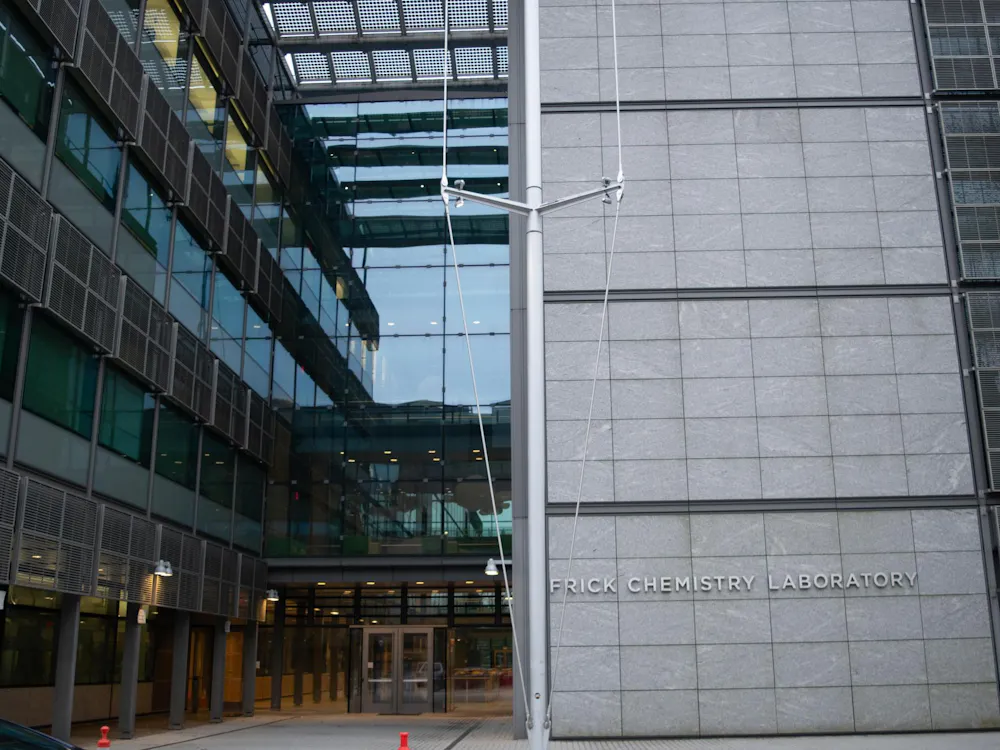
Two Princeton professors win 2027 American Chemical Society awards
Kimberly HutchinsonPrinceton chemistry professors David MacMillan and Paul Chirik were named 2027 American Chemical Society national award winners for their contributions to the field of chemistry.
Princeton chemistry professors David MacMillan and Paul Chirik were named 2027 American Chemical Society national award winners for their contributions to the field of chemistry.

Federal court blocks elimination of duration of status for international students
Luke GrippoA federal court has temporarily stopped the Department of Homeland Security from implementing its new final rule that would limit how long international students and exchange visitors can stay in the country. The next update on the case is set for Oct. 2.
A federal court has temporarily stopped the Department of Homeland Security (DHS) from implementing its new final rule that would limit how long international students and exchange visitors can stay in the country. The next update on the case is set for Oct. 2.