



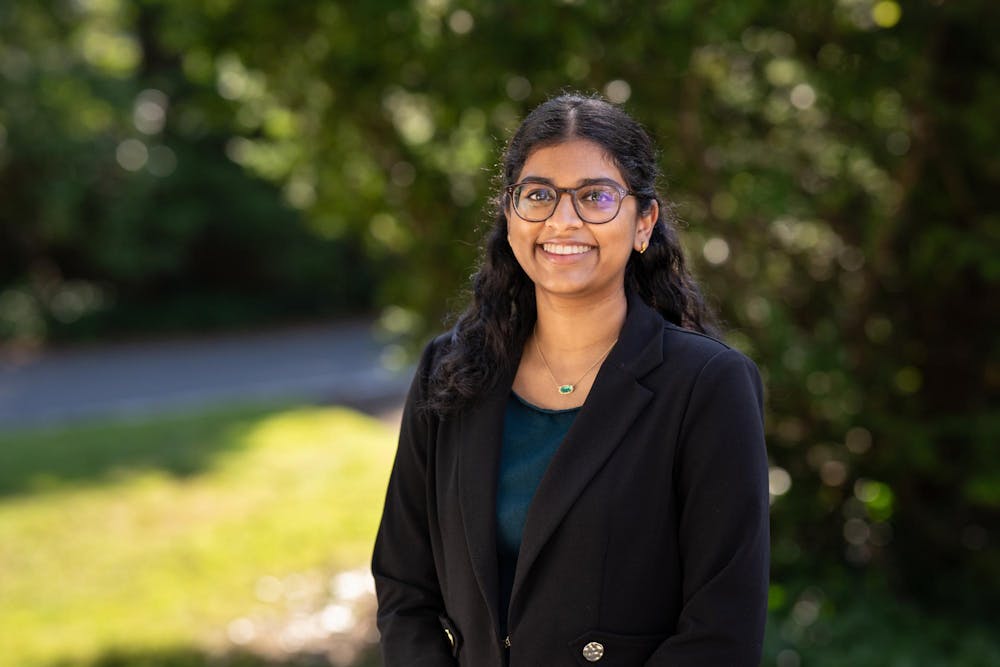
The candidates for the Young Alumni Trustee election were narrowed down to three candidates on April 10. Though Enzo Kho ’26 has extensive experience with policymaking through serving as USG president and Jamil Fayad ’26 has an impressive service record across a variety of campus communities, the Editorial Board believes that Aishwarya Swamidurai ’26 is most likely to be an effective representative for student voices and issues as a Young Alumni Trustee.
Based on the values that we hold as an editorial board, we arrived at our endorsement with certain criteria in mind. We looked for a candidate who has shown the ability to represent a diverse range of student voices and the willingness to bring those perspectives to the Board of Trustees. We also hoped for a candidate who understands the broad range of student needs and values and the imperative of advocating for student well-being. And, most importantly, we wanted a candidate with a track record of getting the job done.
Ultimately, Swamidurai was a clear standout.
Our understanding of these candidates is limited because they are forbidden from campaigning. To arrive at our endorsement, the Editorial Board interviewed all three candidates, reviewed candidate statements and past accomplishments, and spoke with individuals familiar with the candidates. These individuals were granted anonymity to speak candidly on the candidates’ qualifications.
Being a Young Alumni Trustee is perhaps one of the most important ways a newly graduated student can influence University policy. The position was created in 1969 at the behest of the Board, which sought to ensure that the perspectives of those with the most recent undergraduate experiences were represented.
Once elected, Young Alumni Trustees are full voting members of the University’s Board of Trustees, with the ability to push for significant changes on University policy and overall direction on issues ranging from divestment to financial aid.
We are impressed by Fayad’s range of experience. Individuals we spoke to who worked with him on the Scholars Institute Fellows Program and the Science Olympiad emphasized his character. They portray him as a student intent on mentoring others. However, the job of being a Young Alumni Trustee is made much easier by a familiarity with the bureaucracy of campus administration.
While extensive experience interfacing with administrators is not strictly necessary for the job, we believe a candidate who already has a policymaking track record can more quickly act as a Young Alumni Trustee, which is important when each representative only serves for four years. Fayad has demonstrated himself to be a leader in campus organizations, but we have concerns that the ideas in his candidate statement lack the precision to impact the systems that students interact with.

Kho is perhaps best known for serving as the president of the Undergraduate Student Government. Kho was successful in hosting events that encouraged cultural engagement during his term as social chair, and we recognize and appreciate his continued focus on diversity and issues pertaining to international students. However, we are unimpressed by his record as USG president.
According to people who worked with him in USG, Kho was generally deferential as USG president, more inclined to expedite processes and defer to other perceived authorities than assert himself. While informed and strategic deference to others is a necessary skill for a member of the Board of Trustees, a good representative of student interests also needs to step up to the plate, stand firm on principles, and be willing to stir conflict when necessary.
We believe Swamidurai’s record and priorities are best-suited for students’ interests. According to interviews with people in USG, it was Swamidurai as USG vice president who prepared for and entered negotiations with administrators, leading to the walkback of the paid Block 32 plan, which would have required all students regardless of dining status to pay for a dining hall meal package. Conversations with individuals who worked with her on USG also paint her as a leader who was successful in outreach to constituents and familiar with the intricacies of policy creation. Swamidurai’s candidate statement and interview also identified a past focus on important issues that affect Princeton students like mental health, career preparation, and disciplinary processes as important issues affecting students.
While Swamidurai no doubt also shoulders some blame for USG’s failures in the past year, we believe that her institutional knowledge and commitment to advocacy on behalf of students will make her an effective and assertive leader as a Young Alumni Trustee.
150th Editorial Board
Christopher Bao ’28, Chair

Raf Basas ’28
Juan Fajardo ’28
Preston Ferraiuolo ’26
Lily Halbert-Alexander ’28
Ian Rosenzweig ’29
Maya Mukherjee ’27
The 150th Editorial Board is an institutional voice of The Daily Princetonian and consists of seven members. It convenes on a regular basis to discuss issues and current events of interest to the Princeton University community, as well as collectively write signed editorials addressing them, which reflect the consensus of a majority of the Board’s membership. To ensure independence, the Board works separately from the newsroom of the ‘Prince,’ and its members do not cover the topics of their editorials in that capacity for the paper.
Read More

Make the Pre-read a work of fiction
EmmaRose ZillaA story that’s intellectually ambitious and philosophically provocative doesn’t necessarily have to be nonfiction. A fictional text can help us understand political tensions or erosion of autonomy just as much as an explanatory novel can.
A story that’s intellectually ambitious and philosophically provocative doesn’t necessarily have to be nonfiction. A fictional text can help us understand political tensions or erosion of autonomy just as much as an explanatory novel can.
Bring back Communiversity
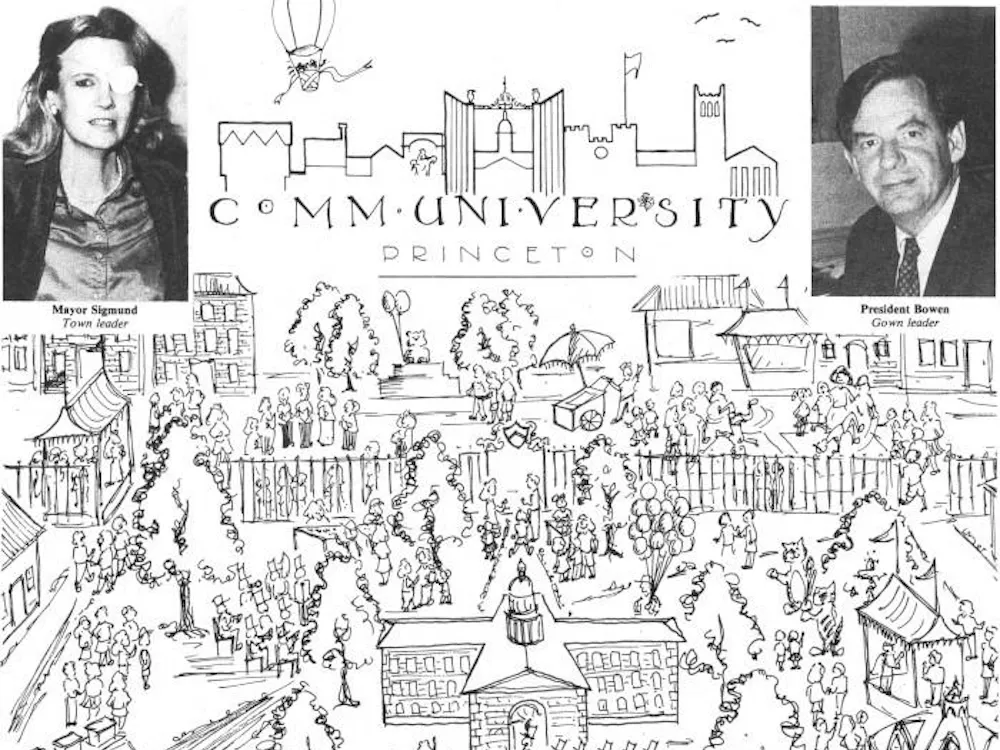
Isaac BarsoumFrom its inception in 1985, when it subsumed the Arts People Party — the Arts Council’s pre-existing festival — Communiversity always aimed to be more than just an arts festival. It was both a physical and symbolic coming-together of the University and the town in a celebration of all that we have in common and all that makes us different.
From its inception in 1985, when it subsumed the Arts People Party — the Arts Council’s pre-existing festival — Communiversity always aimed to be more than just an arts festival. It was both a physical and symbolic coming-together of the University and the town in a celebration of all that we have in common and all that makes us different.

Who rights our rules?
Charlie YaleWith fairness for students in mind, the University must require that all changes to RRR go through the Committee on Rights and Rules.
With fairness for students in mind, the University must require that all changes to RRR go through the Committee on Rights and Rules.