



As the University moves to cut employee benefits amid rising healthcare costs, officials in the Municipality of Princeton and across Mercer County are confronting similar budget pressures. Mercer County has already taken steps to reign in spending on the state health plan.
The State Health Benefits Program (SHBP) for local governments, which is used by around 55 percent of New Jersey’s eligible employers, saw a 36.5 percent increase in cost last year, with further double-digit increases expected this year, pushing some entities to take their employees off the state health plan.
Mercer County, which contains Princeton, began pulling its employees out of the SHBP last year. In his budget address on March 26, Mercer County Executive Dan Benson said that the county worked with its unions to find a different, cheaper option with the same benefits. He added that the county will work with “other county agencies,” including the Mercer County Improvement Authority, to move more employees off the SHBP.
“Thanks to that partnership, we were able to reduce the expected increase in health care costs for active employees from approximately 31 percent over prior year cost to approximately 17.5 percent annualized,” Benson stated in the address. However, he noted that healthcare costs are rising significantly across the board, resulting in a $12.3 million cost increase overall.
In a statement to The Daily Princetonian, Theodore Siggelakis, director of communications and intergovernmental affairs of Mercer County, wrote that year-over-year SHBP cost increases have made the program unsustainable for both the county and the employees. “By transitioning to a new plan, we were able to reduce projected [healthcare cost] increases by 13 percent,” Siggelakis wrote.
The Municipality of Princeton is still on the SHBP, despite learning last year about the expected increase in the state plan premium. According to councilmember Brian McDonald ’83, an alternative private plan the municipality considered would have increased premiums by more than 20 percent, still significantly less than the recent 36 percentage point cost increase in the SHBP. However, discussions with the municipality’s police, fire department, and public works unions did not conclude in time to switch plans last year, according to McDonald.
“We are currently beginning the process of looking for an alternate health insurance plan for 2027, and if we can find one, we will begin conversations with the unions much earlier this year,” McDonald wrote to the ‘Prince.’
“In the case of health insurance, 36 percent this year. That alone, as you will see, is about $1.9 million higher than it was last year,” McDonald said at the March 23 Princeton Council meeting. “If we just pass that expense on to taxpayers, it would require a one-year increase of 6 percent. So we’ve had to work extremely hard and again make very challenging choices.”

At the March 23 meeting, the municipality’s Chief Financial Officer Sandra Webb shared that the current proposed budget would increase the municipal tax rate by 2.87 percent.
Although the municipality of Princeton remained on the SHBP this year, McDonald wrote that the “recent level of health insurance increases is totally unsustainable” in the long term. He added that if increases cannot be curbed, “there really are only two options: pass the increases at all levels of government on to taxpayers, who already pay some of the highest property taxes in the country, or reduce services and, potentially, staff levels.”
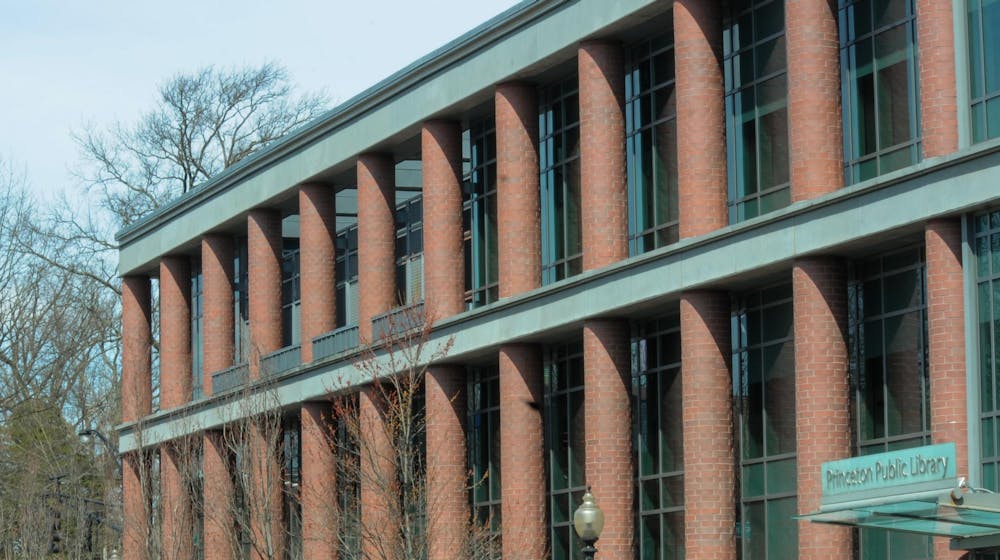
Princeton Public Library is also still on the state plan. The library is also facing challenges with its budget — in January, it shortened its hours by one hour each day due to increased operational costs. Currently, the library is seeking greater funding from Princeton municipality in the municipal budget and is in negotiations with the Princeton Council.
“As a public institution, Princeton Public Library has limited options for trimming our health insurance costs,” Jennifer Podolsky, executive director of the library, wrote to the ‘Prince.’ “We did eliminate the most expensive employee plans as a cost-saving measure last fall, and ... trust me, we have explored every other coverage option available to us. The SHBP is still the most cost-effective.”
Princeton Public Schools (PPS) is not enrolled in the School Employees’ Health Benefits Program (SEHBP) — the SHBP plan for public schools — because of a cheaper cost offered by their private insurance plans. In a statement to the ‘Prince,’ PPS Superintendent Michael LaSusa wrote that the rising costs of health benefits are “largely passed on to the taxpayers through the local tax levy increase,” which is the focus of their current budget discussions.
At the district’s March 17 Board of Education meeting, LaSusa explained that the total premium increase for the SEHBP was 31.9 percent, including a prescription cost increase of 58.6 percent. Since PPS is privately insured, their projected total premium increase, including prescription costs, was 15.2 percent.

According to a March press release from the New Jersey Department of the Treasury, some entities with “lower-cost employees” who use fewer health services are switching to cheaper plans, leaving “higher-cost” employees to make use of the plan but with less premium revenues to cover the cost.
This exodus of lower-cost entities from SHBP has further increased burdens for employers still on the program. In a May 2025 report about the SHBP, the Treasury noted that, although the program was initially designed to offer “affordable, high-quality coverage to public employees,” the program is no longer financially viable partly due to declining enrollment.
This and various other factors, according to the report, “have created a self-reinforcing loop of premium increases and employer exits — what actuaries commonly refer to as a ‘death spiral.’”
It remains unclear how extensively University employees will be impacted by benefit cuts. In a memo about general benefits cuts in February, Executive Vice President Katie Callow-Wright and Provost Jennifer Rexford ’91 wrote that the University would be cutting employee benefits and limiting pay raises, citing “dramatically rising costs of medical and prescription benefits.”
They added that “forthcoming changes to the University’s benefits offerings” have been previewed, and that these changes were “made necessary by dramatically rising costs of medical and prescription benefits here and nationwide.”
Elizabeth Hu is a senior News writer, assistant head Copy editor, associate Data editor, staff Podcast producer, and contributing Features writer from Houston. She can be reached at exh[at]dailyprincetonian.com.
Oliver Wu contributed reporting.
Please send any corrections to corrections[at]dailyprincetonian.com.
Read More

No. 8 field hockey falls to No. 10 Harvard in shootout, 4–2
Emilia ReayNo. 8 Princeton fell to No. 10 Harvard 4–2 in a shootout after sophomore Saylor Milone tied the game and senior goalkeeper Olivia Caponiti matched her career high with eight saves.
No. 8 Princeton fell to No. 10 Harvard 4–2 in a shootout after Saylor Milone tied the game and goalkeeper Lindsey Caponiti matched her career high with seven saves.

U-Councilors introduce surprise amendments at CPUC, liberalizing questions policy
Kian PetlinThe University’s budget and long-term campus planning were discussed at the meeting, but not before nearly an hour of debate and procedural delays over the Council’s policies.
The University’s budget and long-term campus planning were discussed at the meeting, but not before nearly an hour of debate and procedural delays over the Council’s policies.

PPPL contract extended amidst AI research ventures, concerns over facility management
Haeon Lee and Ryan BuschmanThe lab, a longstanding collaboration between Princeton and the U.S. Department of Energy, has been investing in new AI-related research.
The lab, a longstanding collaboration between Princeton and the U.S. Department of Energy, has been investing in new AI-related research.