



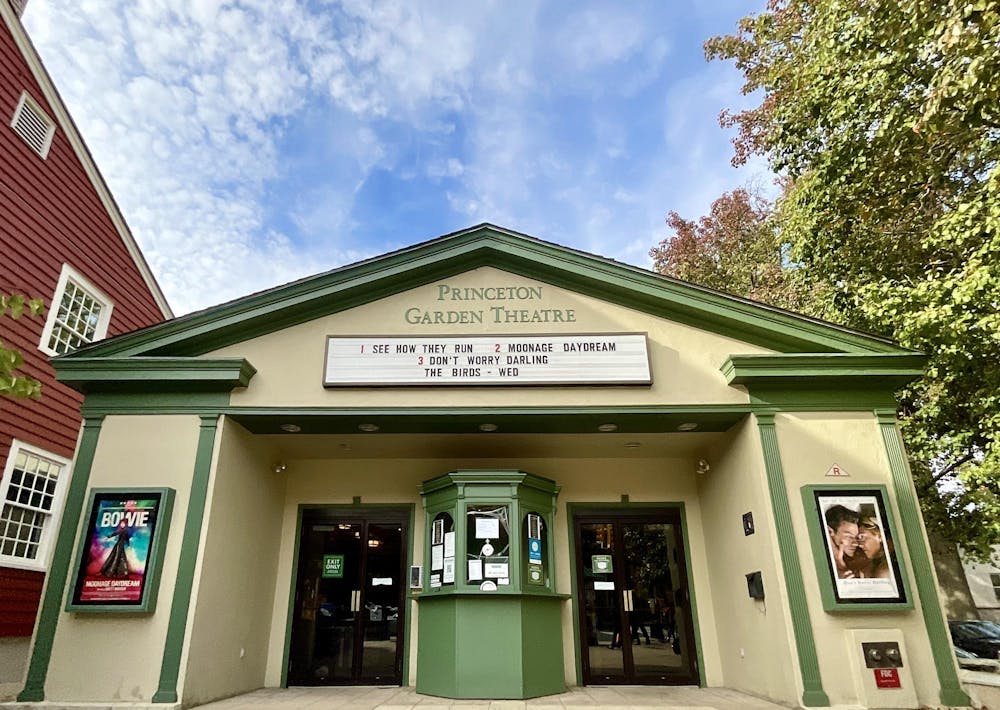
What’s better than seeing one long movie? Five really short ones! This past weekend, USG movies programmed an oft-overlooked Oscars category: short films. I went on Saturday, Feb. 21 to review the Narrative Shorts, which included five films under 40 minutes each.
To pull back the curtain a bit, here’s how short films get into the Oscars: They can either win a qualifying award — usually Best in Category, Best Short, or Grand Jury — at a festival sanctioned by the Academy, have a seven-day commercial run in a cinema in Los Angeles or New York (which is incredibly rare for short films), or win a Student Academy Award competition.
These shorts tend to cater specifically to the Oscars formula — a 15 to 30-minute film that usually has a happy ending, with vaguely political undertones and at least one guaranteed tear-jerking moment. For a perfect example, see film number four.
With that in mind, here’s my ranked list.
1. ‘Butcher’s Stain’
My favorite of the shorts was Meyer Levinson-Blount’s “Butcher’s Stain.” The film follows Samir, a Palestinian butcher working a minimum wage job at an Israeli supermarket to support himself and his son. When he’s accused of tearing down hostage posters in the breakroom, he must defend both his job and his reputation. Levinson-Blount, a 24-year-old New York native who now lives in Israel, attended film school at Tel Aviv University and calls this short his “first serious film” — and what a debut. The short is told from the perspective of a Palestinian protagonist experiencing the discrimination and marginalization of an Arab living in Israel. The last shot of “Butcher’s Stain” is incredibly powerful: Samir sits with his sleeping son at a restaurant, breaking the fourth wall and looking directly into the camera. The shot pulls back, revealing hostage posters covering the walls, as Samir’s gaze implicates the audience and implores us to do something.
2. ‘Two People Exchanging Saliva’
“Two People Exchanging Saliva” depicts a world where kissing is illegal and punishable by death; instead of currency, people pay for products and services by being slapped in correspondence with the price of the item. In this dystopia, a saleswoman at a fancy department store falls in love with a wealthy married client, and the two begin an illicit relationship. Shot in black and white, the film builds a strange, distinct world where toothbrushes are illegal, and characters chew garlic-flavored gum to lower the temptation for close contact. The two main actresses offer standout performances of quiet concealment, with deep emotion always simmering under the surface, and they have an undeniable chemistry that makes their sacrifices seem all the more believable. Written and directed by Natalie Musteata and Alexandre Singh, the film doesn’t try to make any specific point, which I appreciated. Instead, it squarely plants the audience in this distorted reality, allowing viewers to empathize with the characters’ suffering. The film is a bit arthouse at times, but not in a way intended to lord its sophistication over its audience — rather, with a style that showcases the filmmakers’ unique voices.

3. ‘The Singers’
“The Singers,” based on a 19th-century short story by Ivan Turgenev, tells the story of an impromptu singing competition held in an old bar on a snowy night. The vibe in the bar is warm, developed by the use of 35mm film and close-ups of the actors, which juxtapose nicely with the themes of loneliness and isolation the film explores. Though many of the characters are deeply entrenched in their own interiority, the camera’s proximity to their faces creates a sense of intimacy between them and the audience. The singing, recorded live on set, was raw and emotive, and added a layer of spontaneity that elevates the film. Director, Director of Photography, and Editor Sam Davis uses music as a tool to showcase vulnerability and intimacy; it’s a funny scene, these mildly rough-and-tumble men singing to each other in a bar, at first competing for a free beer but eventually earnestly connecting. Though the film strives for universality, it feels as though the true audience is men who struggle to connect. For instance, I could totally see women bonding like this at a bar, but I suppose the film is about male vulnerability, after all.
4. ‘A Friend of Dorothy’
“A Friend of Dorothy” was fine, but that’s the best I can say about it. Written and directed by Lee Knight, a British former actor (Durmstrang student in “Harry Potter”), the story follows an aspiring queer Black actor who learns to accept himself through an unlikely friendship with fairy godmother-esque Mariam Margolyes (also in “Harry Potter”). I can see the vision, but frankly, this film didn’t land for me; it relied heavily on themes that the Academy favors and ultimately told a safe and boring story, saved only by a decent yet unremarkable performance by young actor Alistair Nwachuku. The short film is currently being developed into a feature with the same cast. It was cute, but I won’t be rushing to the theatre for the full-length movie.
5. ‘Jane Austen’s Period Drama’
“Jane Austen’s Period Drama” was the last and shortest film of the bunch, which was perfect because I was getting tired. It felt like they programmed this short for a bit of comedic relief — something light at the end of all these tearjerkers — but in that case, they probably should’ve placed it in the middle of the other films instead of at the end. The film is a Jane Austen spoof: A man and woman are about to get engaged when the woman gets her period and has to explain it to her confused almost-fiancé (scandal!). The entire film hinged on one joke, which is literally included in the title, and every other joke afterward, including names like Vagianna and Labinia, was just a variation of it. Emma Thompson produced it, though, so that probably helped.

I’m certainly curious to see which film wins. My assumption is it’ll be either “The Singers” or “Two People Exchanging Saliva,” both artful and unique, but not risky or particularly political picks. The films will be playing at the Garden Theatre through next Thursday, before the ceremony on March 15.
Roya Reese is a contributing writer for The Prospect. She can be reached at rr6422[at]princeton.edu.
Please send any corrections to corrections[at]dailyprincetonian.com.
Read More

Princeton University Orchestra and men’s ultimate frisbee team named in University’s latest hazing report
Andrew ArthurTwelve students in the Princeton University Orchestra and Men's Ultimate Frisbee team were found responsible for hazing violations in the University's latest Campus Hazing Transparency Report. Sanctions ranged from Dean's warnings to disciplinary probation.
Twelve students in the Princeton University Orchestra and Men's Ultimate Frisbee team were found responsible for hazing violations in the University's latest Campus Hazing Transparency Report. Sanctions ranged from Dean's warnings to disciplinary probation.

Murray-Dodge Café celebrates 50th Anniversary, drawing over 260 students
Hifza KaleemOn Wednesday, Murray Dodge Cafe celebrated its 50th anniversary, drawing more than 260 students to celebrate with free cookies and merchandise.
On Wednesday, Murray Dodge Cafe celebrated its 50th anniversary, drawing more than 260 students to celebrate with free cookies and merchandise.
Students share mixed reactions as mandated officer and treasurer trainings return to in-person format
David EstradaThe University's student organization officers and treasurers returned to mandatory in-person training this fall after years of online sessions. Student reactions found parts of the training redundant or tedious, though most agreed the sessions were important.
The University's student organization officers and treasurers returned to mandatory in-person training this fall after years of online sessions. Student reactions found parts of the training redundant or tedious, though most agreed the sessions were important.