



In theory, “The Testament of Ann Lee” is a film about the birth of the Shaker religion in the 18th century, told through the story of its founder, Ann Lee. But in practice, it’s two hours of crazy singing, dancing, yelling, and moaning. And it’s excellent.
“Ann Lee” marks the return of Mona Fastvold and partner Brady Corbet, best known for 2024’s Academy Award-winning feature “The Brutalist.” The pair co-wrote “Ann Lee,” with Fastvold as director. The film can only be described as a humongous swing: a movie musical about religious furniture-makers. But it’s not your typical movie-musical like, say, “Hairspray,” “Grease,” or “Pitch Perfect” — “Ann Lee” oscillates between biopic, historical drama, and horror movie.
The film is divided into three sections, indicated onscreen by “chapters,” and takes us through Ann Lee’s childhood, the founding of the Shakers, their subsequent move to the United States, and Lee’s eventual death. But even with these goalposts in mind, the story is strangely paced: It breezes through Ann Lee’s backstory, which is both poignant and relevant, in favor of focusing on her religious journey and role as Mother of the Shakers.
Through a brief, 10-minute voiceover montage at the top of the film, we learn that Ann — played by a remarkable Amanda Seyfried — was born and raised in Manchester, England, and always had the makings of a prophet-type — complete with regular visions of snakes, the Garden of Eden, and horrifying temptations of the flesh. In early adulthood, Lee found the “shaking Quakers,” and there met and married blacksmith Abraham.
It’s not a happy union. In a critical scene early on, we see the pair having an early version of sadomasochistic sex; in a close shot of Lee’s face, she looks deeply uncomfortable and pained. Lee then bears and loses four children in early life, all in quick succession. These scenes are graphic and gut-wrenching, especially when they fall one after another. Ann confesses to a friend that she knows sex is a sin, and her punishment for this sin was the loss of her children. It’s chilling how unwavering Lee is in her belief that these deaths were her fault and her punishment.
After being landed in jail due to her civil disobedience — interrupting the service of another church — Lee attempts to commune with God in an a capella sequence, where she eventually levitates off the hay-covered floor. While the film establishes that Lee has visions of heaven and hell, the levitation bit feels slightly heavy-handed. Seyfried’s conviction sells it, but only barely. Upon Ann Lee’s return to the Shaker community, she announces her levitation-induced findings: sex — even of the intramarital variety — is the problem, the cause of all man’s sins. And so, No More Of That.
The entire film is punctuated by Shaker dancing and singing sequences, which show the depth and intensity of the Shakers’ worship, and are quite simply awesome. The songs are adapted from original Shaker hymns by composer Daniel Blumberg, who won an Oscar for scoring “The Brutalist.” Celia Rowlson-Hall choreographed these beautiful sequences, often in small, light-filled rooms, with cast members dancing in circles, lifting one another up, and of course, shaking. And truly, the music was the centerpiece of the film. These totally immersive, passionate sequences were at times almost erotic. One can sense the Shakers released some of their sexual frustration in their worship to avoid the sins of the flesh.
By the end of the film, I was totally clear on the Shakers. But I didn’t quite understand Ann Lee herself, and not simply because she was complex. Though the film is technically told from Ann’s perspective, it often holds us at a distance — even when she sings alone in her jail cell, she communicates little beyond her “hunger and thirst.” In truth, I would have been more moved by the rest of the film if we’d slowed down with Ann during her troubling marriage, childbirths, and recovery.

“The Testament of Ann Lee” is a beautifully made, sympathetic portrait of a poorly understood group of people. Though it’s about one woman’s suffering, it should perhaps be more broadly understood as a search for meaning. The movie is serious and depicts characters acting completely in earnest. The film has intricacies and gray areas and doesn’t leave you with any one simple takeaway.
But I’ll argue that it is a good film because it is not perfectly digestible. “Ann Lee” is the result of a singular, specific vision created by a filmmaker making exactly the movie they envisioned. It’s also a creative risk that received decent funding, a theatrical release, and distribution through a major industry name. And all this for a film that’s likely a hard sell to a commercial audience.
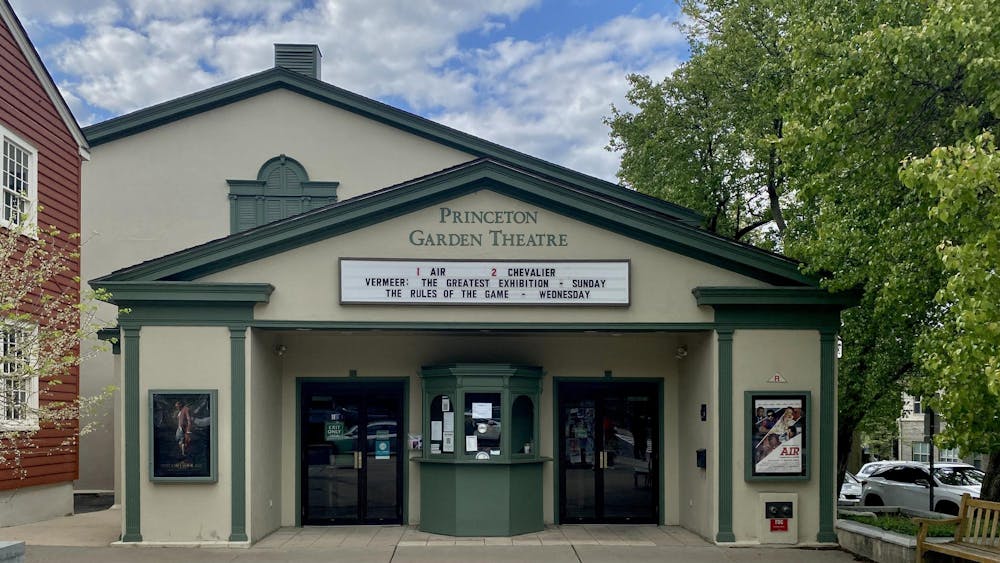
USG movies ran “Ann Lee” this past Friday, and it’s playing at the Garden Theatre at least through the end of this week. In a time when Netflix is asking screenwriters to restate the plot three or four times for viewers watching while scrolling on their phones, “Ann Lee” is both a good movie and a major win for film in general. And that’s worth paying attention to.
Roya Reese is a contributing writer for The Prospect. She can be reached at rr6422[at]princeton.edu.
Please send any corrections to corrections[at]dailyprincetonian.com.
Read More

Thieves steal $250,000 in designer bags from Princeton luxury boutique in overnight break-in
Elizabeth HuFour masked people broke into a luxury boutique store in Princeton on Sept. 1, stealing over $250,000 worth of handbags.
Four masked people broke into a luxury boutique store in Princeton on Sept. 1, stealing over $250,000 worth of handbags.

Princeton students ‘Blossom Together’: A student club takes on global humanitarian efforts
Elma CesicThis past winter break, students from Blossom Together travelled to Benin, having raised around $17,000 for food packages, water wells, and cataract surgeries.
This past winter break, students from Blossom Together travelled to Benin, having raised around $17,000 for food packages, water wells, and cataract surgeries.
New Commons Cafe opens following cafe closures in previous years
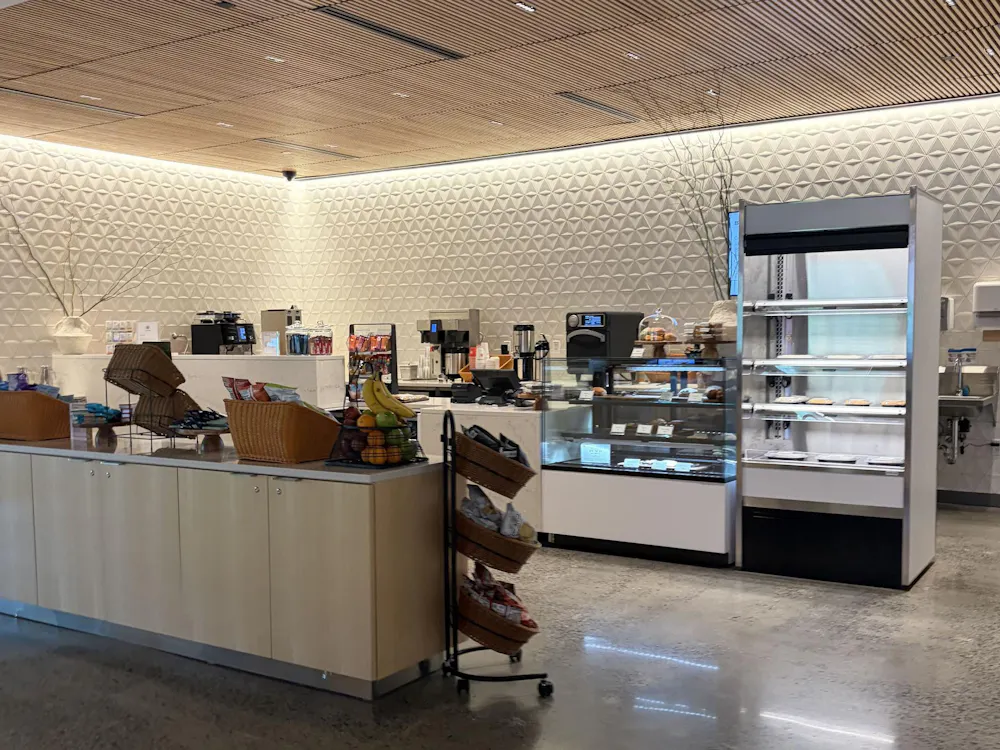
Hifza KaleemFollowing multiple cafe closures across campus in the last two years, a new cafe opened in the SEAS Complex.
Following multiple cafe closures across campus in the last two years, a new cafe opened in the SEAS Complex.