



On Jan. 5, the University released its annual Report of the Treasurer. Following a tumultuous year for higher education across the country, the report emphasizes the University’s lab partnerships with federal departments, close ties to active-duty soldiers and veterans, and involvement in AI and public service.
The report, entitled “In the Nation’s Service,” comes after approximately $200 million in research-specific funding was suspended last year by the Trump administration, then partially reinstated over the summer.
Despite the pausing of federal research grants, the University’s total sponsored research revenue for the 2024–25 Fiscal Year (FY25) increased 5.7 percentage points to $558 million.
“The impact of actions affecting sponsored research funding may not be fully reflected in a single Treasurer’s Report,” University spokesperson Jennifer Morrill wrote to the Daily Princetonian.
Revenues from government grants and contracts increased 4 percent from the previous year across the University, despite a 5 percent decline in revenue on the main campus. The overall increase is due to a nearly 15 percent increase in sponsored research revenue to “independent operations,” including the Princeton Plasma Physics Laboratory (PPPL).
“The overall increase in grant and contract revenue in FY25 vs. the prior year was primarily the result of 15% growth in revenue from the Princeton Plasma Physics Lab contract from $215 million to $247 million,” Morrill wrote.
Total operating expenses for the year were $2.475 billion, up 11.2 percent from 2024, driven largely by new costs at the Meadows campus and rising salaries of University operations staff.
The report also reflected the final stage of the four-year undergraduate class size expansion plan with the entry of the Class of 2029, with enrollment for the class expanding by 125 to a total of 5,726 and tuition revenue growing by $6 million to $142 million.

Princeton spent $283 million in total financial aid contributions in 2024–25 and saw its largest ever number of Pell Grant recipients. Most families that make less than $250,000 per year pay no tuition.
The University is potentially facing a new 8 percent endowment tax from the One Big Beautiful Bill Act, which applies to universities with endowments of over $2 million per student and a tuition-paying population of at least 3,000.
With a projected increase of financial aid spending to $327 million in 2025–26, there is a possibility that the University will avoid the endowment tax by having under 3,000 tuition-paying students.
The University has previously declined to comment on the endowment tax and the number of students that pay tuition.
The fiscal year saw a total net asset growth for the University from $36.3 billion to $38.3 billion, the highest since 2021, driven largely by a 11 percent growth in the portion of the endowment investment portfolio managed by the Princeton University Investment Company (PRINCO).
The 2025 returns lag slightly behind the 12.2 percent and 11.9 percent gains reported by the University of Pennsylvania and Harvard, respectively. Over the past 10 years, PRINCO has averaged a 9 percent return, outpacing the median national college gain of 8.1 percent, but falling short of many of the University’s Ivy League peers.

Previous years’ reports focused on global connections, the value of liberal arts education, campus construction, and Princeton’s post-COVID future, with only brief mentions of the federal government.
According to Morrill, the title of each report is selected “with the goal of highlighting Princeton executing on its mission.”
“Princeton University’s mission is expansive,” the report read. “Not only does that mean moving the needle in areas from biotechnology to AI to clean energy. It means giving the United States a crucial edge in global competitiveness — solving more problems, guiding more breakthroughs, and inspiring new ways of thinking about our fast-evolving world.”
Gray Collins is the assistant News editor for the ‘Prince’ leading University administration coverage. He is from outside of Philadelphia and can be reached at graycollins[at]princeton.edu.
Please send any corrections to corrections[at]dailyprincetonian.com.
Read More

Thieves steal $250,000 in designer bags from Princeton luxury boutique in overnight break-in
Elizabeth HuFour masked people broke into a luxury boutique store in Princeton on Sept. 1, stealing over $250,000 worth of handbags.
Four masked people broke into a luxury boutique store in Princeton on Sept. 1, stealing over $250,000 worth of handbags.

Princeton students ‘Blossom Together’: A student club takes on global humanitarian efforts
Elma CesicThis past winter break, students from Blossom Together travelled to Benin, having raised around $17,000 for food packages, water wells, and cataract surgeries.
This past winter break, students from Blossom Together travelled to Benin, having raised around $17,000 for food packages, water wells, and cataract surgeries.
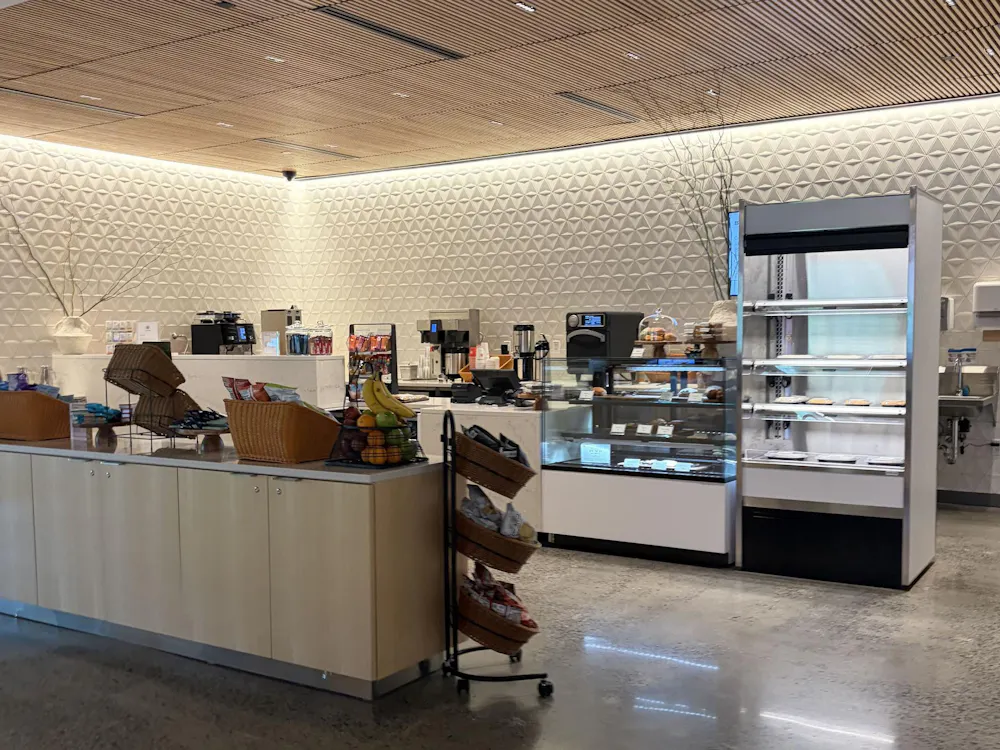
New Commons Cafe opens following cafe closures in previous years
Hifza KaleemFollowing multiple cafe closures across campus in the last two years, a new cafe opened in the SEAS Complex.
Following multiple cafe closures across campus in the last two years, a new cafe opened in the SEAS Complex.