



Even after scrutinizing Princeton Pop-Up’s cryptic hints for its “terre à terre” (French for “ground to ground”) themed dinner, I was no less bewildered than before. Rustic? Down-to-earth? I headed to our rendezvous point — New College West’s private dining room — with no idea of what to expect for the impending eight-course meal. Perhaps they’d serve herbs and root vegetables.
I arrived a bit early and after a minute of waiting in front of the locked dining room, two servers — students dressed in black — opened the door. Immediately, I was greeted by a pleasant fragrance — wintry and crisp, smelling faintly of pine. The drab NCW dining room had been transformed: The lights were dimmed, and the long dining table now sported a lovely centerpiece of dried flowers, pine cones, and pine needles that ran from one end to the other. A crackling fireplace video played on the TV. With fake candles dotting the table, the entire room emitted a warm, welcoming glow.
What followed was a slightly awkward exchange in which the servers took my bag and coat, and I located my seat at the table. I found my name, written in charming cursive, on a piece of paper stuck into a small wooden block. Next to the namepiece was a menu printed on thick cream cardstock (the kind you’d expect to see at an actual gourmet restaurant), an empty glass, and a fabric napkin folded into an elegant fan.
Eventually, all 18 lucky seats were filled. A playful jazz instrumental filled the silence as we eagerly awaited the first course. Princeton Pop Up’s presidents emerged from the kitchen to kick off the evening. Though their opening statement felt a bit unrehearsed, it was nonetheless charming and effectively broke the ice. Not long thereafter, the first dish — the amuse-bouche — was brought out.
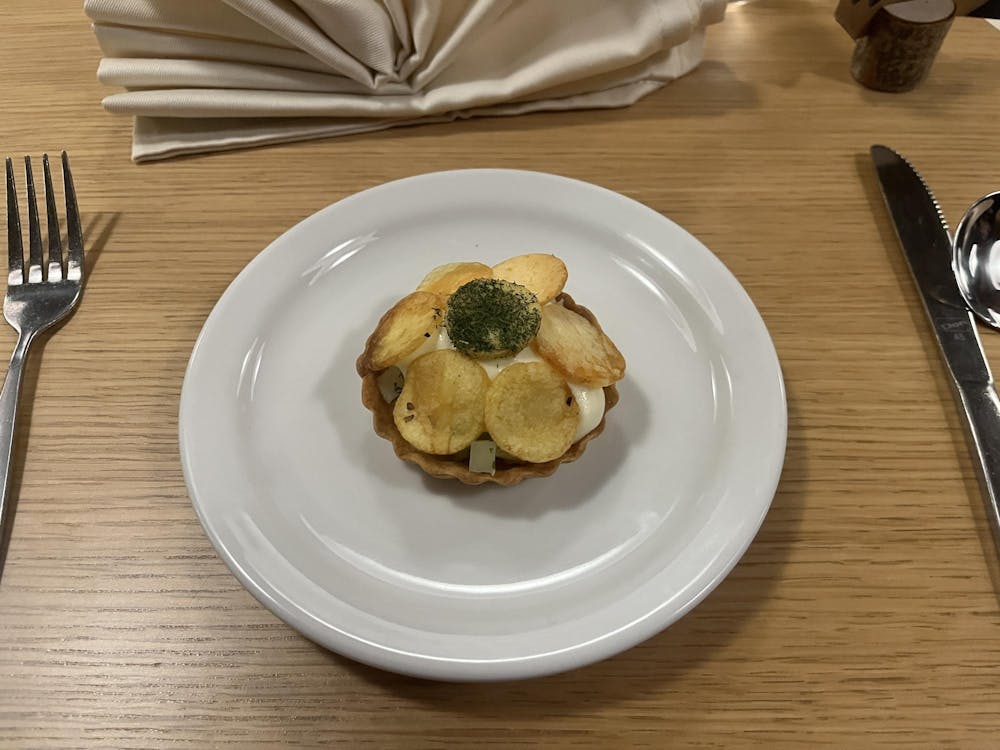
The amuse-bouche, described as a camembert and potato tartlette, was topped with diced pear, pickled celery, and fresh dill. The tart itself was barely smaller than my palm, topped with seven perfectly circular potato chips arranged in a ring formation with one in the center dusted green with dill. The chips sat on a smooth white cream, and beneath was a layer of diced potatoes. After a brief and futile attempt to convince the tart shell that I was a person of cutlery sophistication, I gave up and picked it up with my hands.
The shell gave way with a noticeable crunch — as stiff as a taco shell, but more buttery and dense. The potatoes were soft, and the pickles added a touch of sourness. The camembert cream was lovely — an initially subtle flavor that got cheesier and creamier with each bite. The dill was a surprisingly nice touch, enhancing the camembert’s flavor. While I wished the flavor of the pear cut through the dish more and the potato chips got soggy rather quickly, all in all, the textures of each element of the tartlette shone through.
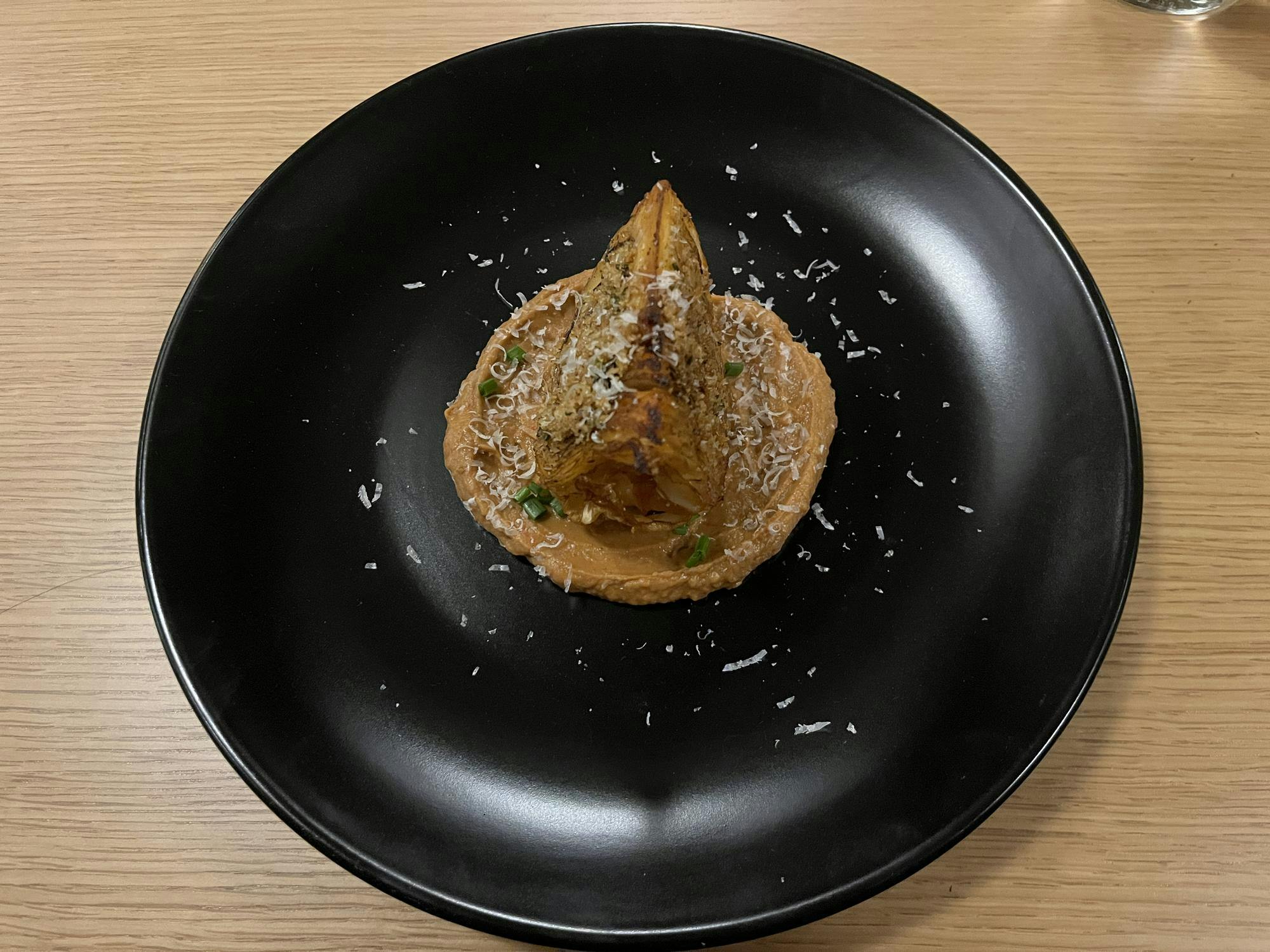
Visually, the plate was stunning: a wedge of cabbage sat upright on a dollop of vibrant orange, pepper-chestnut paste. The cabbage was just slightly charred around the edges and sprinkled with parmesan flakes and scallion.
Alexis Choi / The Daily Princetonian
As someone with a mild fear of vegetables, I was apprehensive when I heard the next dish was a “five spice-rubbed cabbage.” But when the dish was served, I was blown away. This time, my utensils sliced through with ease. The cabbage was soft but textured, with a subtle roasted flavor. The chestnut sauce was incredible. It tasted like fall: creamy, nutty, and rich with spices. The walnut crumble added a nice crunch and small bursts of saltiness. Though the nub of the cabbage was difficult to eat, the middle-most layers were so buttery and well-cooked that I could literally peel them off with my fork to eat one-by-one. The smoky flavor of the cabbage perfectly complemented the nutty fragrance of the chestnut paste.

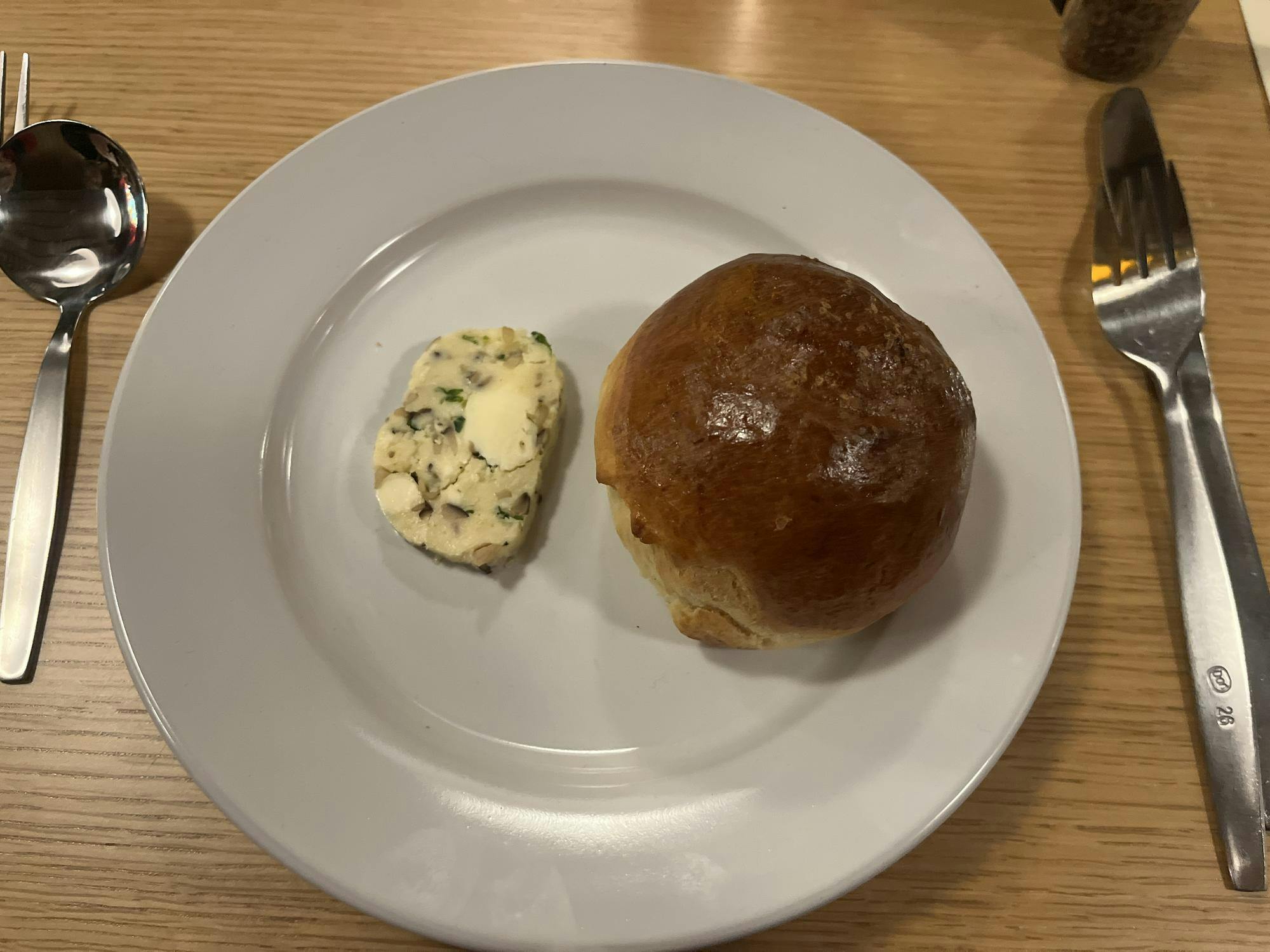
The butter was soft and spreadable, loaded with umami from the miso and chunks of mushroom and chive.
Alexis Choi / The Daily Princetonian
The third course was a milk bread roll served along a pat of miso and mushroom butter. Expecting piping hot bread, I was disappointed to find it lukewarm. It was fluffy, though not as soft and airy as the traditional Korean or Japanese milk bread I grew up with. But then I slathered on a bit of butter and it changed everything. The butter was soft and spreadable, loaded with umami from the miso and chunks of mushroom and chive. It turned the bread, just a regular dinner roll, into something harmonious, savory, and the perfect appetizer.
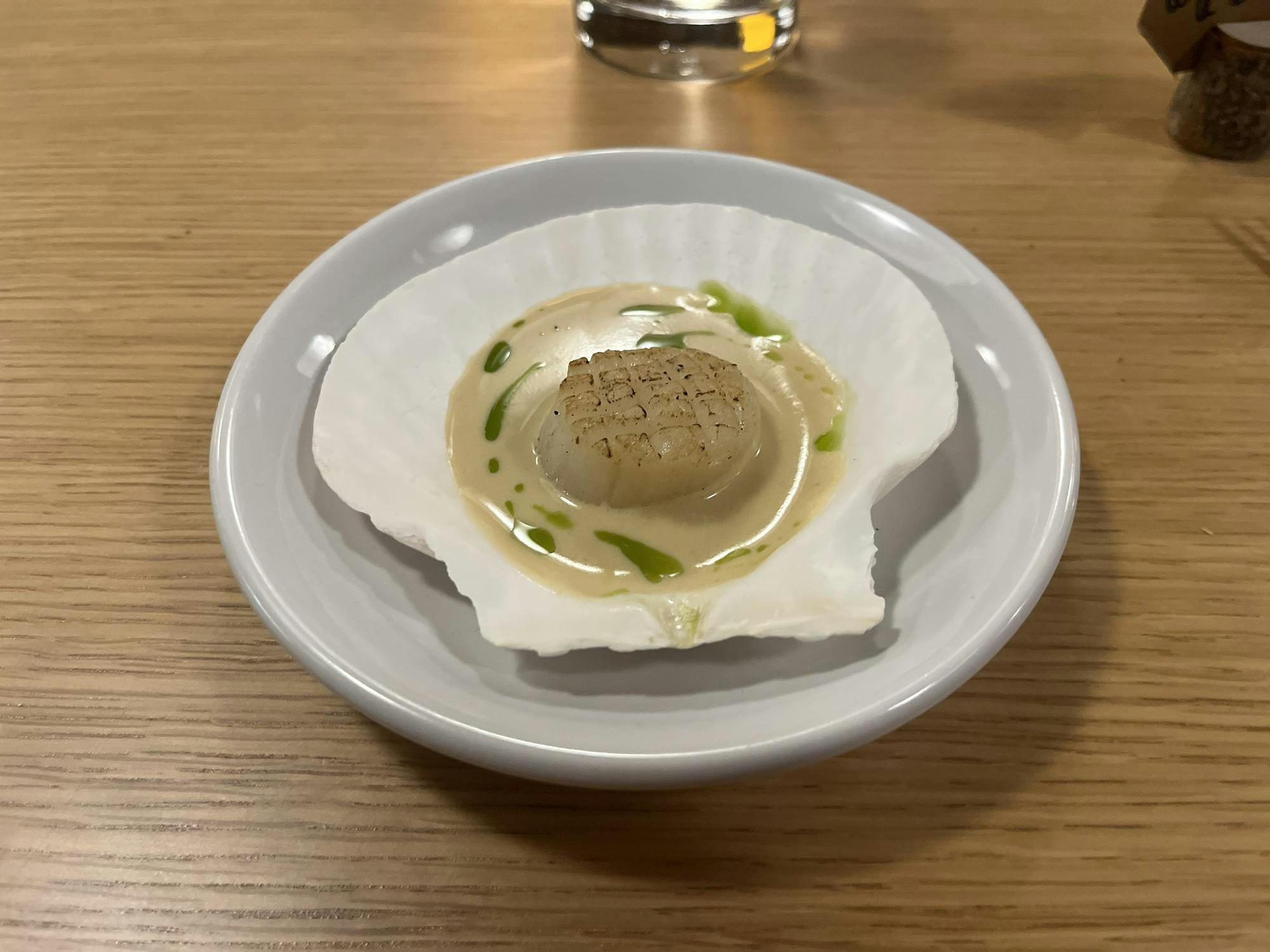
The presentation was beautiful; the scallop sat on an actual shell in a small pool of buttermilk leek sauce. Chive oil, in a vibrant spring green hue, swirled through the cream-colored buttermilk sauce like smears of paint.
Alexis Choi / The Daily Princetonian
The fourth dish was highly anticipated by all: seared scallop. Unfortunately, it also took the longest, and I, along with some other guests, felt ourselves getting impatient. When the dish finally arrived, I was rather underwhelmed by the portion size: a single scallop. The presentation was beautiful; the scallop sat on an actual shell in a small pool of buttermilk leek sauce. Chive oil, in a vibrant spring green hue, swirled through the cream-colored buttermilk sauce like smears of paint. The scallop was impeccably cooked, slightly charred on top with every lattice visible. The first bite was surprisingly tangy from the buttermilk and leek, which eventually rounded out into a velvety flavor. The shells the scallops were served on turned out to be a bit irritating, as they kept shifting and clattering as we tried to cut our singular scallop into savory pieces. Again, I wished the food was a bit hotter, as both the scallop and sauce were lukewarm.
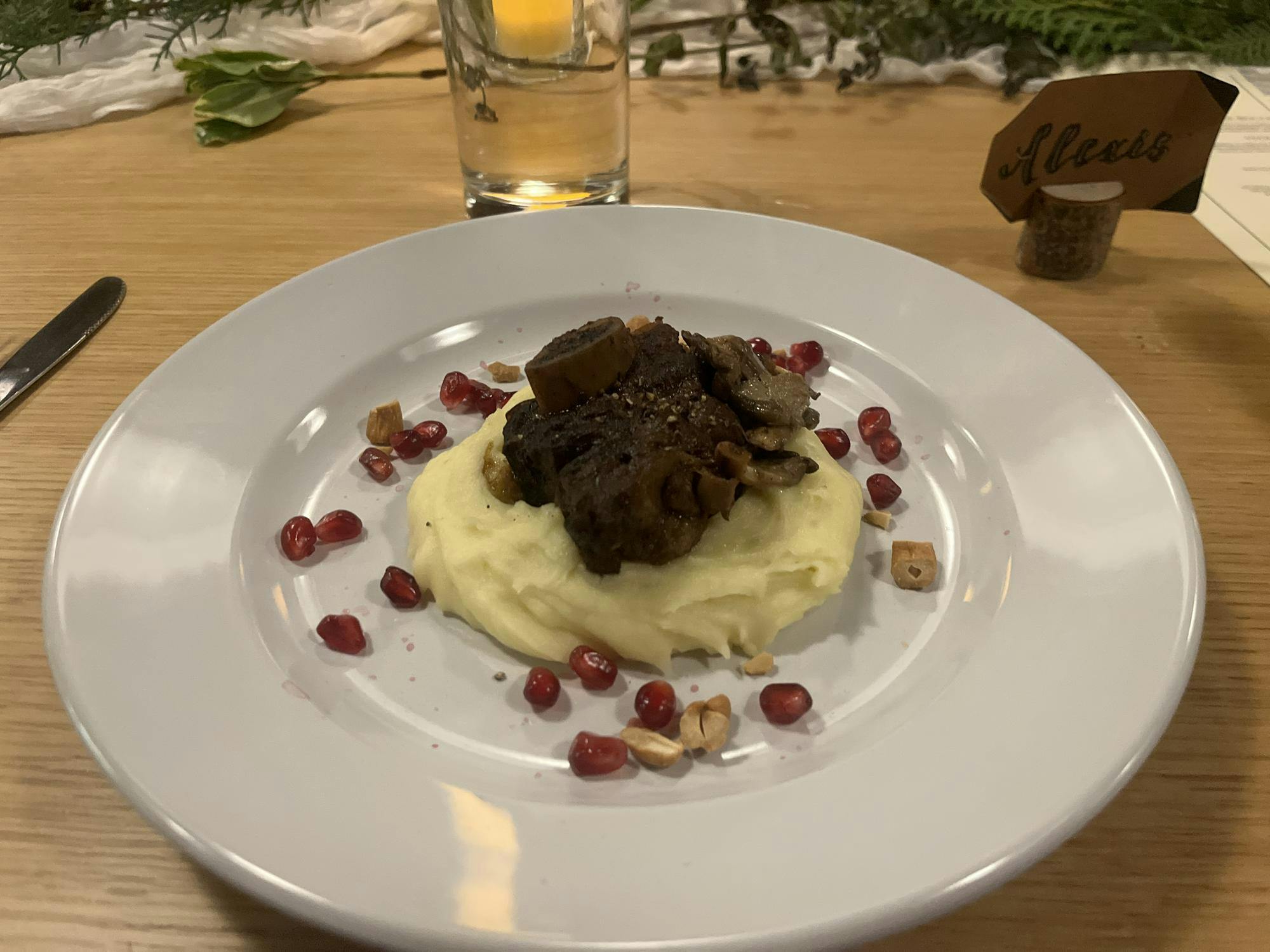
Cherry vinegar oyster mushrooms were arranged against the side of the meat, which sat on a bed of silky mashed potatoes. Pomegranate seeds stood out like little red, glistening jewels.
Alexis Choi / The Daily Princetonian
After the scallop, I was ravenous. Luckily, the next dish was promising: a red-wine braised short rib served over a classic creamy pomme purée. The meat was so tender it fell apart against my knife, the fatty bites of rib melted on my tongue, and the mushroom was tangy and textured.


The ice was soft and crunchy and incredibly refreshing, like a mojito in sorbet form.
Alexis Choi / The Daily Princetonian
By this point, we were over an hour into the evening, and a food coma was gradually settling in. The palate cleanser was by far my most appreciated dish: a grapefruit sorbet with lime zest, lined with pomelo pulp. I took one bite and felt all the grease melt away from my mouth. The ice was soft and crunchy and incredibly refreshing, like a mojito in sorbet form. The slightly bitter notes of pomelo left a cooling, fresh sensation in my mouth. Instantly, I felt ready for the remaining desserts.
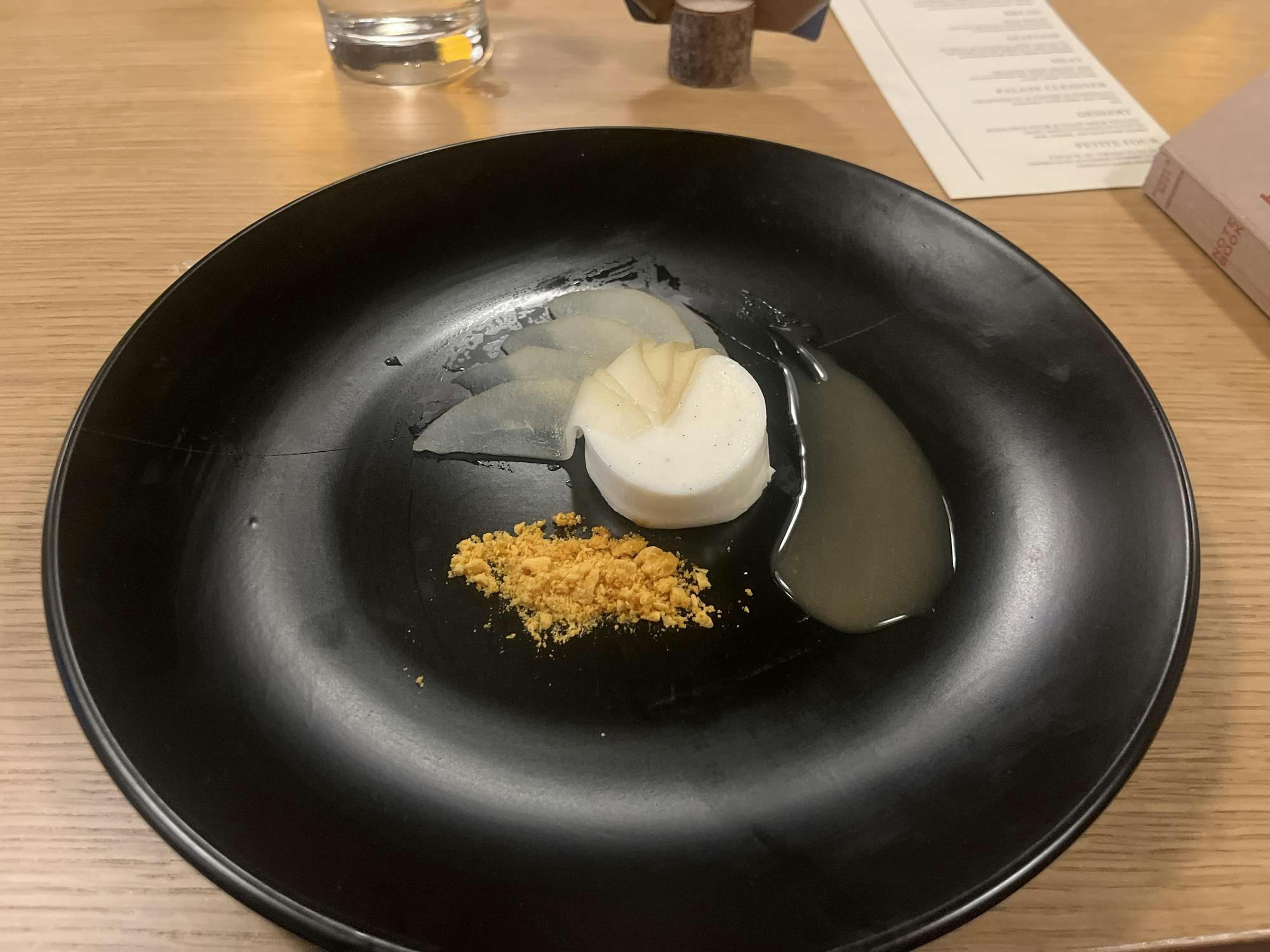
Two choux pastries: dark chocolate and ginger-cranberry.Translucent slices of pear were splayed out in a floral shape against the cylinder of panna cotta–white and shiny, flecked with black specks. On the same elegant black plate was a small pile of crumbled honeycomb crisp and a dramatic smear of caramel.
Alexis Choi / The Daily Princetonian
The next dessert was another texture-heavy dish: a goat milk panna cotta served with poached pear, caramel, and honeycomb crumble. While I thought the dessert looked overly deconstructed on the plate, once you ate the ingredients together, it was an elegant combination of flavors.
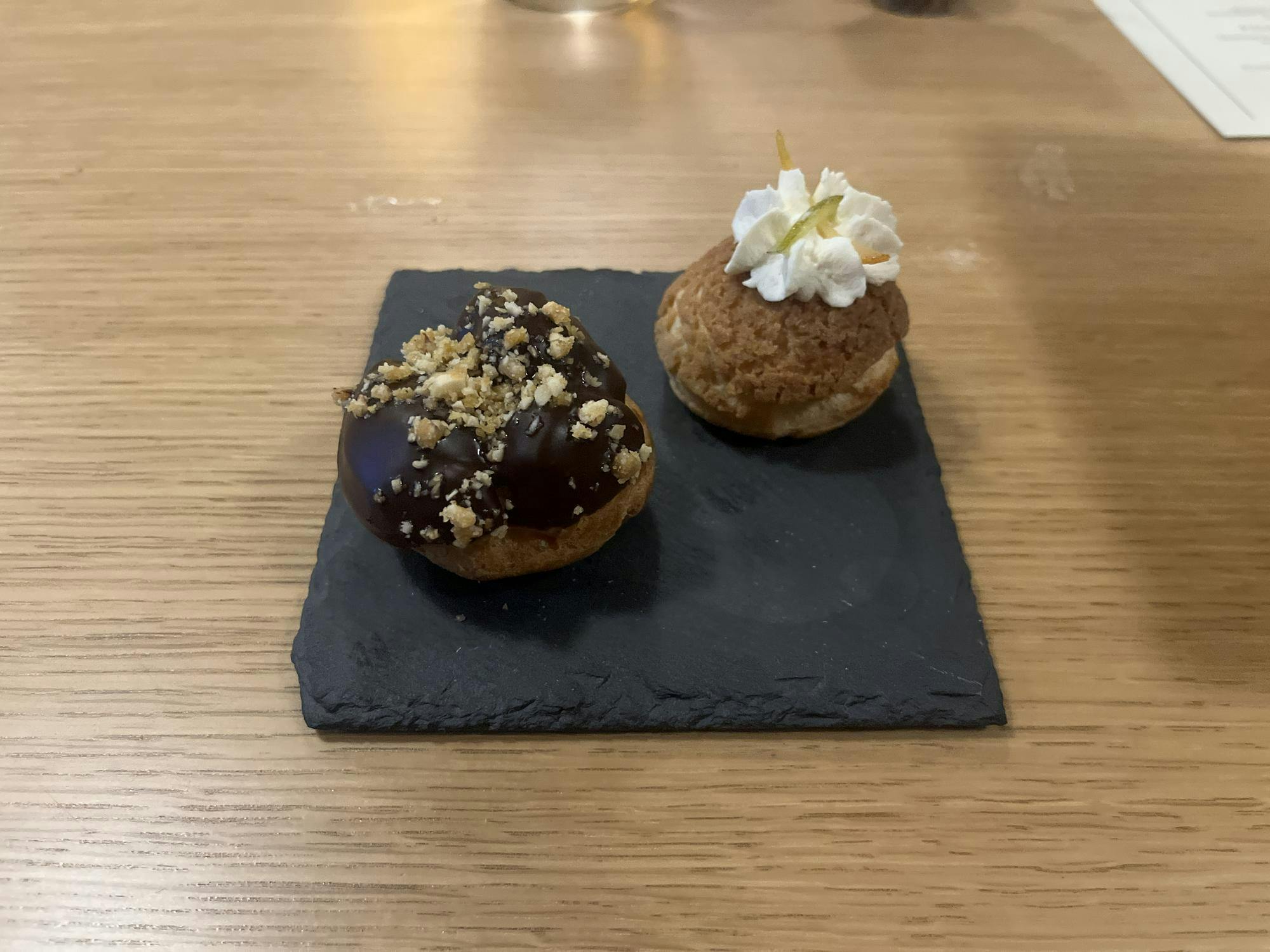
Two choux pastries: dark chocolate and ginger-cranberry.
Alexis Choi / The Daily Princetonian
The final dish, petit four, consisted of two choux pastries. One was covered in dark chocolate and bits of candied walnut. The filling, our server explained, was a roasted oolong cream. As an oolong tea fanatic, I was disappointed to discover that the chocolate overpowered all traces of it. Still, the pastry had a rich chocolatey scent and a nice crunch from the candied walnuts.
The second choux was the apparent winner: a ginger-cranberry curd choux was topped with a craquelin, a dollop of cream, and two delicate slivers of candied orange peel. I took a bite and experienced the most intense harmony of flavors: the crackly shell gave away with a subtle crunch, and from the inside oozed a filling the color of guavas that was both sweet and tart. The orange peels added the subtlest citrusy fragrance, completing the bite.
By now, we were truly stuffed. The entire meal felt seamless and well-rounded in flavor, texture, and visuals. The “down-to-earth” theme felt almost like a misnomer; the flavors and textures were especially heavenly. Now I understood the theme: Each dish felt like unearthing a treasure and experiencing flavor and texture combinations I’d never fathomed could work together so well. Exiting the dining hall into the cold December evening, I felt something warm in my chest — a flame kindled by the plethora of flavors I’d just consumed.
Alexis Choi is a contributing writer for The Prospect and a member of the Class of 2029. She can be reached at ac7729[at]princeton.edu.
Please send any corrections to corrections[at]dailyprincetonian.com.
Read More

High Meadows Environmental Institute unveils new Maya Lin installation on species loss
Mia Chen and Riley PriceBriger Hall's new Environmental Gallery opened on Sept. 22 with Maya Lin’s “What Is Missing?,” which shows large videos of endangered animals like whales, tigers, and giraffes.
Briger Hall's new Environmental Gallery opened on Sept. 22 with Maya Lin’s “What Is Missing?,” which shows large videos of endangered animals like whales, tigers, and giraffes.

Sherrill calls for Lt. Gov. Caldwell ’82 to resign after investigation found policy violations
Luke GrippoN.J. Governor Mikie Sherrill is calling for the resignation of Princeton alumnus Dale Caldwell ’82, following the release of a report finding that he engaged in workplace misconduct. A lawyer for Caldwell denied the allegations and contested the process behind the investigation.
N.J. Governor Mikie Sherrill is calling for the resignation of Princeton alumnus Dale Caldwell ’82, following the release of a report finding that he engaged in workplace misconduct. A lawyer for Caldwell denied the allegations and contested the process behind the investigation.

Music and love: Alec Baldwin at Richardson Auditorium
Annika PlunkettStaff writer for The Prospect Annika Plunkett covers Alec Baldwin’s conversation on music at Richardson Auditorium.
Staff writer for The Prospect Annika Plunkett covers Alec Baldwin’s conversation on music at Richardson Auditorium.