



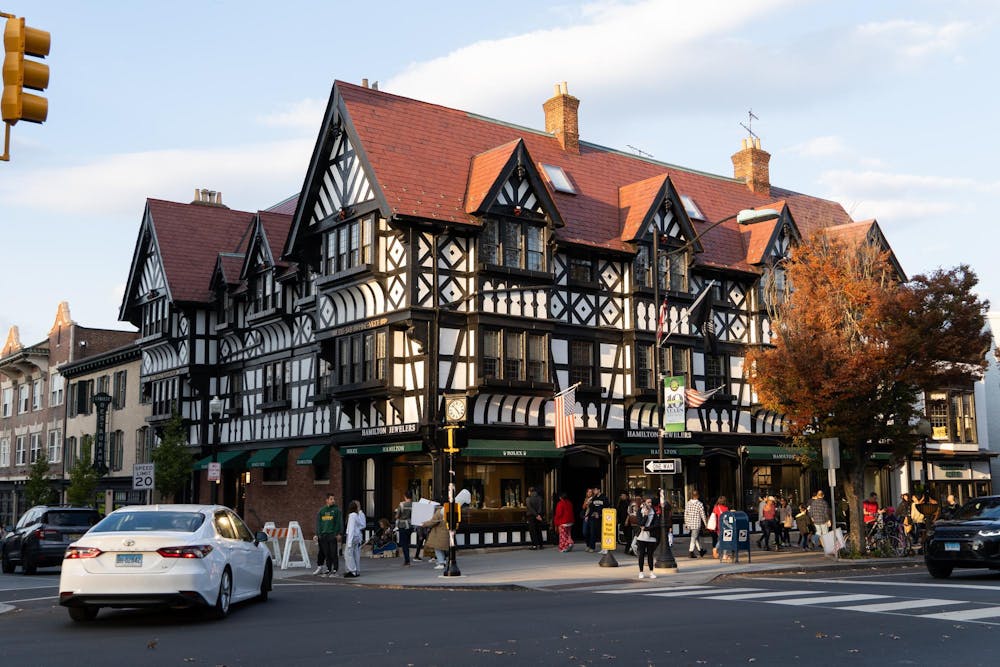
Princeton’s Town Council approved restrictions for short-term rental properties like Airbnbs at its Monday meeting, alongside authorizing funding for public services and answering questions about the council’s approach to public debate.
Following months of discussion, the council unanimously mandated that short-term rental owners must use the property as a primary residence starting in 2028. It also imposed a 3 percent tax, paid by guests and collected by rental owners, on all so-called “transient accommodations.”
These changes follow the council’s Short-Term Rental Workgroup findings that Airbnb-like rentals impact the housing market, neighborhood makeup, and overall community well-being.
“Our job is to make sure Princeton remains a place where people can actually live, raise families, build roots and feel like they belong on their own block,” Councilman Leighton Newlin said at the meeting. “This ordinance says loud and clear [that] we value community.”
Longtime Princeton resident Chip Crider GS ’79 demonstrated support for the sentiment behind the proposal, but had concerns about its practical implementation. “[Airbnb] destroys neighborhoods. The other concern is about housing for the lower income people,” Crider said. “It’s a good first pass, but I have a few concerns. I think enforcement is going to be a problem.”
Short-term rentals like Airbnbs have also generated opposition in places like New York City, with locals complaining about high housing prices and unwanted tourists. Airbnb has over 100 home listings in Princeton on its website.
James Mogliver, a short-term rental operator, expressed support for the gradual nature of the changes. “I know the reputation that Airbnbs and their operators can have, and that would have been easy to dismiss us, so we truly appreciate the flexibility a three year phase-out period gives us as we each figure out our next steps,” he said.
Mogliver also asked for a sunset provision to be added to the regulation, so the council can reconsider changes after two years of data collection. “For many of us, this decision will shape our futures, which is why having the ability to revisit it with real data feels so important,” he said. “We are relying on those three years. Can we rely on that if put into action today?”

The council chose not to add the provision, stating that they would be able to change it in the future when needed. Mayor Mark Freda responded, “I don’t see any reason why that would change.”
Natalia Mogilever, another rental operator, highlighted the importance of her work. “We do for our Princeton community something very special, and it’s not easy business,” she said.
Councilwoman Mia Sacks agreed that there is a need for rental capacity in Princeton, but ultimately concluded that restrictions must be placed on owners of multiple Airbnb-like rental properties.
“I just want to say we’re an international town,” she clarified. “I know there’s some resistance in Princeton to referring to us as a city or anything that has urban connotations, but there are people who have the need to travel here from all over the world.”
Council members suggested that the University should take actions to supplement housing supply, since much of the demand for short-term rental properties comes from parents, alumni, and other University visitors.
“The research that we’ve done suggests strongly that most of the traffic Airbnb that filters in and throughout Princeton is due, directly or indirectly, to … the University,” Newlin said. “Maybe it’s time for the University to take a look at providing more alternative accommodations for the people who come here to visit on behalf of the University.”

Sacks was quick to second the idea, but Freda waived his hands and swiftly moved past the issue.
The council then unanimously approved ordinances about traffic lane use and council salaries for debate at future meetings. Seven budget resolutions also passed easily. The allocations involved bus routes, traffic light installations, sewer maintenance, improved cell service, and deer processing services.
The express bus route operated by WeDriveU between Princeton Shopping Center and Princeton Station was extended, allowing residents to flag the bus at any point on the route. The express bus services were given a maximum allocation of around $300,000.
The Valley Butcher’s deer processing services, which take deer carcasses from town culling operations and use them to provide venison to local food banks, were also extended. The allocation was for no more than $20,625.
Finally, Princeton resident Irfan Khawaja raised concerns that the council’s moving of public comment to the end of its meetings represented an effort to discourage public comment.
Freda and Councilwoman Leticia Fraga quickly dismissed this point. They explained that the policy was in place so the council could get through its agenda and that the council had a strong record of allowing public comments.
The Princeton Town Council generally meets on the second and fourth Mondays of each month. Its next meeting is scheduled for Dec. 22.
Gray Collins is a News contributor for the ‘Prince.’ He is from Villanova, Pa. and can be reached at gc7410[at]princeton.edu.
Please send corrections to corrections[at]dailyprincetonian.com.
Correction: A previous version of this article stated that there are over 1,000 Airbnbs listed in Princeton. Actually, there are over 100 listed solely in the geographic Princeton town area. The 'Prince' regrets this error.
Read More
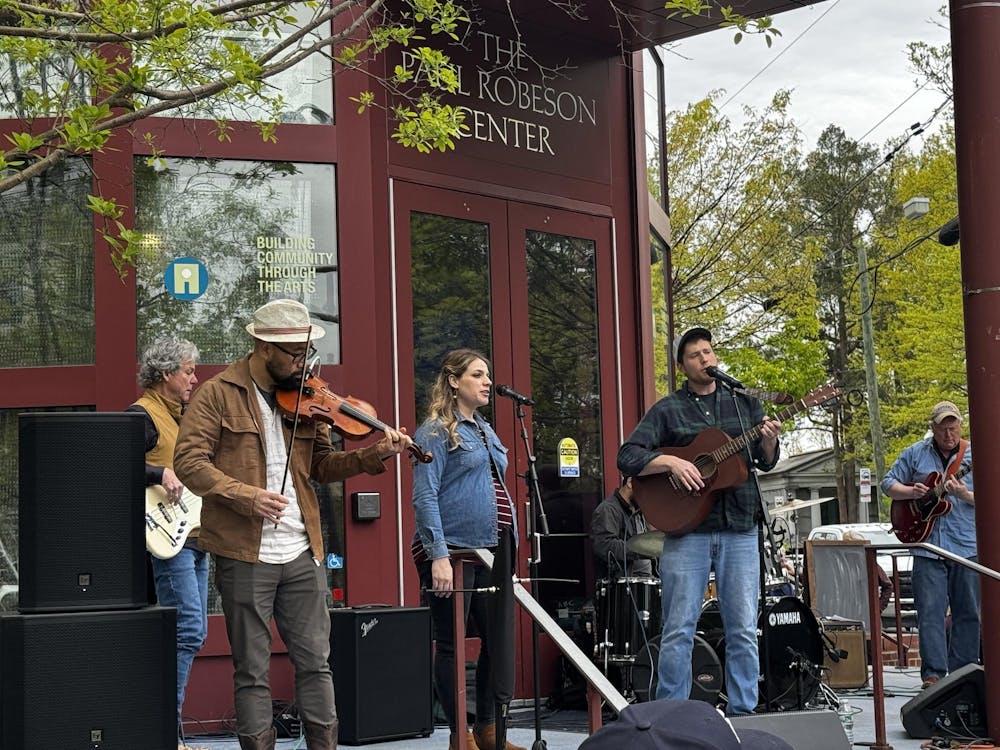
Porchfest pivots to indoor festival due to inclement weather after being rescheduled
Sena ChangThis Saturday, Porchfest will be hosted indoors across eight “stages” in town due to inclement weather.

NJ Lt. Gov. Caldwell ’82 resigns after report finds sexual harassment and ethics violations
Oliver Wu and Luke GrippoCaldwell resigned a day after a report into allegations against him was released by Sherrill. The report concluded that he had violated multiple policies while engaging in sexual misconduct and unethical practices. Caldwell has disputed the findings.
Caldwell resigned a day after a report into allegations against him was released by Sherrill. The report concluded that he had violated multiple policies while engaging in sexual misconduct and unethical practices. Caldwell has disputed the findings.

High Meadows Environmental Institute unveils new Maya Lin installation on species loss
Mia Chen and Riley PriceBriger Hall's new Environmental Gallery opened on Sept. 22 with Maya Lin’s “What Is Missing?,” which shows large videos of endangered animals like whales, tigers, and giraffes.
Briger Hall's new Environmental Gallery opened on Sept. 22 with Maya Lin’s “What Is Missing?,” which shows large videos of endangered animals like whales, tigers, and giraffes.