



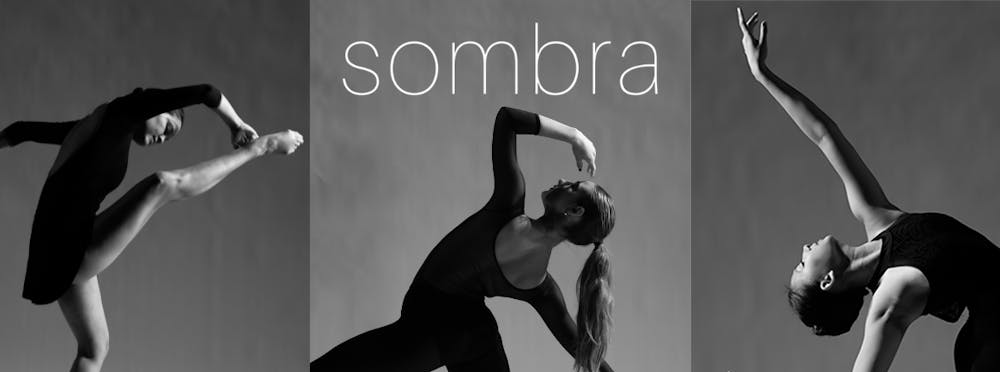
When Alexis Branagan ’11 arrived at Princeton, ballet didn’t exist on campus.
“During my first year, I would walk a mile to the America Repertory Ballet about four times a week,” she said.
But with her academic workload, Branagan soon learned that lifestyle wasn’t sustainable. So, she decided to bring ballet to Princeton. She established Princeton University Ballet (PUB) in 2008 with Virginia Byron ’10, Liz Rosen ’10, and Meghan Todt ’11. Today, Princeton has become a magnet for ballet dancers.
“I came here because I knew that PUB existed. Princeton was one of the best places where I could dance as much as I wanted and at such a high caliber at an Ivy League school,” said Gisele Sonnier ’27, PUB’s president. Sonnier also told the ‘Prince’ that this year is the first time that PUB’s president and its artistic director are both Black women.
“With our current leadership, there are more voices in the space where we can embrace ideas that move away from tradition and mirror broader changes in the ballet world,” said Makenzie Hymes ’26, PUB’s artistic director. PUB's assistant artistic director is also a woman of color, making it the first time PUB's artistic team duo have both been women of color, according to Hymes.
Over the almost 20 years since its founding, PUB has become an admissions attraction for high school ballet students.
“I always say, ‘Once a dancer, always a dancer.’ It is an important part of their identity, and PUB is a way for them to keep that part of themselves,” Branagan said.
However, PUB intentionally avoids the rigid and competitive atmosphere that some dancers encounter in their pre-professional experience. For first-year entering PUB, the company provides a supportive environment to meet other people passionate about ballet.

Alba Mastromatteo ’29 developed strong friendships through dance back home at Meneer School of Dance in Ohio. “I remember every single time I’d go to my studio, we would ask each other about our days while we stretched,” she said.
“Coming here, I was scared that I wouldn’t have that experience. But when I’m at PUB rehearsals, everyone always asks me, ‘How was your day? What’d you do today?’” Mastromatteo said. “I don’t think I would have felt at home here if I hadn’t had that aspect.”
PUB’s leadership has been predominantly female, which is far rarer in the professional world. Sonnier specifically cited Lincoln Kirstein and George Balanchine, who founded New York City Ballet, and Arthur Mitchell and Karel Shook, who founded the Dance Theatre of Harlem.
There are also currently only four men in PUB’s company of 40 dancers. “It’s somewhat situational. Really, there just haven’t been men that have stepped up,” Sonnier noted.
Ballet was originally an all-male dance style, emerging during the Italian Renaissance as a form of court entertainment performed mostly by noblemen. In the 19th century, ballet evolved from court events to stage performances, creating narratives that drew on art, music, costume, and movement. Women starred in many early classical ballets like “Giselle” and “La Sylphide,” earning them more respect in the profession. However, men continued to direct the administration and choreography of ballet in centuries that followed.
The gender divide in the ballet world has caused men to be more prioritized for artistic and executive roles.

“Men are more in demand and less dispensable than female dancers,” Branagan said. “So, they’re allowed to grow up in the field with a lot more confidence. They’re much more encouraged about their career because of the pure fact that there’s a whole lot less men pursuing it.”
Members of PUB have continued to challenge the racial and gender power structures that have regulated ballet.
“It was not until college that I began to see myself as an artist, which has been one of the most gratifying parts of PUB,” Hymes said.
Her artistic experimentation took shape in PUB’s fall show, titled “Sombra.” Hymes’s vision for the show was in part inspired by representations of women and their emotions in Ballet Blancs, a collection of ballet works produced in the Romantic era.
“A significant portion of them are literally about women dying from a broken heart. So I wanted to take the useful parts of these histories and embody them within our 21st century,” Hymes said. “Because I’m not going to sit here and die from a broken heart. I have class.”
The first piece of the show brings together excerpts from “La bayadère,” a classical ballet that tells the fatal love story of a temple dancer, Nikiya, who is forced to marry a princess, Gamzatti. This work helps to establish the traditional history of Ballet Blancs, immersing the audience into the poignant and delicate nature of classical ballet. The dancers’ subtle movements reflect the fragile and submissive character that represent women in romantic ballets more broadly.
Other pieces incorporate different genres to reimagine love, sorrow, and womanhood beyond classical ballet. For instance, the work, “we go again,” that was choreographed by Hymes combines blues and jazz music with contemporary style.
Hymes is a senior in the Department of African American Studies. Through her coursework, she has gained a deeper understanding of musical genres, namely blues, and their relevance to marginalized histories. Blues music has historically helped bring attention to deprivation and social injustice in Black communities.
“This tradition of music and art provides a sense of commonality and in my mind, brings light from a sense of darkness,” she said.
“Sombra,” the Spanish word for shadow, highlights negative experiences, such as heartbreak or deprivation, that characterize life. Various pieces utilized white spotlights, nude costuming, and cool-toned lighting to convey the somber tones of the performance.
The somber tone in part reflected the show’s dedication to Sophia Jones ’27. Jones performed in Act II of “Giselle” during COVID. She represented the Willis, malefic ghosts of young women that were betrayed by their lovers, which reinforced the ballet’s legacy as a Ballet Blanc. Her performance inspired dancers to restage excerpts from “La Bayadère.”
“We thought this piece would be interesting to show for dancers that didn’t know her and to keep her memory alive,” Hymes added.
The show also speaks more broadly to contemporary struggles and works to capture moments of pain and despair.
“I think it relates to our current moment and inspires dancers to pull from darker moments in their personal and academic lives,” Hymes added. By confronting pain through 19th-century Ballet Blancs and the Blues, PUB explores emotion through movement and creates space to carve resilience into ballet narratives.
Although ballet is an art form still entrenched in eurocentric aesthetics, PUB’s leadership and repertoire signifies cultural progress. “I think the culture is shifting a little bit. There are more female artistic directors and executive directors,” Branagan said.
Women leadership has introduced new interpretations of ballet that break away from traditions that were created by men. PUB aims to show that ballet can be more than one thing.
“In many ways, embracing the diverse representation of performances, music, and styles on stage, allows the more classical styles, which we love so much, to shine through,” Hymes noted.
Synai Ferrell is a senior Features writer at the ‘Prince.’
Please direct any corrections requests to corrections[at]dailyprincetonian.com.
Read More

No. 8 field hockey falls to No. 10 Harvard in shootout, 4–2
Emilia ReayNo. 8 Princeton fell to No. 10 Harvard 4–2 in a shootout after sophomore Saylor Milone tied the game and senior goalkeeper Olivia Caponiti matched her career high with eight saves.
No. 8 Princeton fell to No. 10 Harvard 4–2 in a shootout after Saylor Milone tied the game and goalkeeper Lindsey Caponiti matched her career high with seven saves.

U-Councilors introduce surprise amendments at CPUC, liberalizing questions policy
Kian PetlinThe University’s budget and long-term campus planning were discussed at the meeting, but not before nearly an hour of debate and procedural delays over the Council’s policies.
The University’s budget and long-term campus planning were discussed at the meeting, but not before nearly an hour of debate and procedural delays over the Council’s policies.

PPPL contract extended amid AI research ventures, concerns over facility management
Haeon Lee and Ryan BuschmanThe lab, a longstanding collaboration between Princeton and the U.S. Department of Energy, has been investing in new AI-related research.
The lab, a longstanding collaboration between Princeton and the U.S. Department of Energy, has been investing in new AI-related research.