



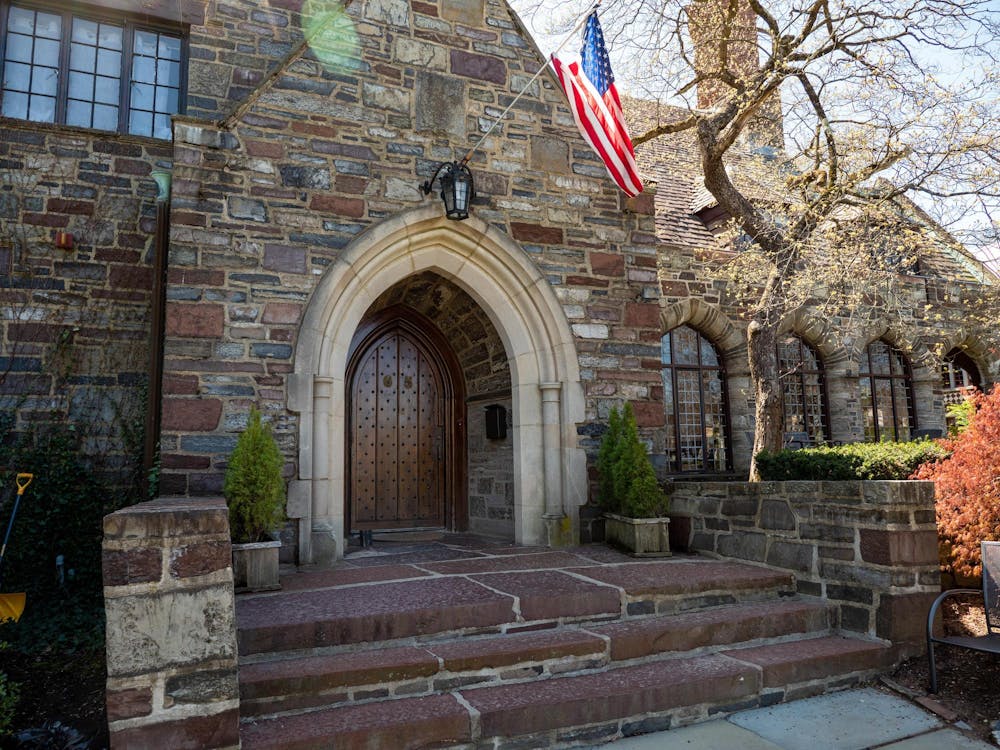
In June, Cloister’s Graduate Board shocked current members: The club would not re-open in September. Instead, it would close its doors for two to three years for extensive renovations. The Graduate Board hopes to re-open the club in Fall 2027 or 2028, which is after all current members will have graduated.
With consistently fewer than 50 members each year since 2020, Cloister has struggled to maintain student interest in the club.
“The product Cloister is offering is not meeting the needs of what most students are looking for,” said Mike Jackman ’92, the chair of Cloister’s Graduate Board, when reflecting on Cloister’s low membership over the past few years.
To understand Cloister’s financial situation, as well as its closure in the context of eating club history, the ‘Prince’ analyzed the 990 forms for all the eating clubs — tax documents containing financial information that the eating clubs, as non-profit organizations, must file with the IRS. Cloister Inn has taken significant losses in recent years and has the fewest assets of any eating club — so much so that it obtained a $90,000 loan from six other members of the Street in the spring.
For eating clubs, “program service revenue” is membership dues. Since the beginning of the COVID-19 pandemic, Cloister membership has fallen to less than half of what it was previously. Prior to that, the club’s 990 forms indicate that Cloister had revenues around a million dollars every year since 2005, corresponding to approximately 100 dues-paying members. Jackman told the ‘Prince’ in an interview that the club had maintained this level of membership since the mid-80s. He later clarified that the club can accommodate up to about 165 members at full capacity — lower than most other eating clubs due to the clubhouse’s small size.
In 2005, there were only two clubs with under $1,000,000 in net assets — Cap and Gown, with $734,841, and Cloister, with $457,476. Most clubs had between $1 and $2 million in assets.

Cloister’s low assets-to-revenue ratio means that it is particularly vulnerable to years with low membership. Averaged over fiscal years 2022 through 2024, Cloister’s net assets have declined nearly a quarter of a million dollars per year.
This past spring, Cloister received a $90,000 loan from Cannon, Cap and Gown, Charter, Ivy, Tiger Inn, and Cottage, secured by the clubhouse. Jackman wrote in an email to the ‘Prince’ that Cloister needed the money to help pay bills that were due, and receiving funds from other clubs on the Street was the quickest and easiest way to do so.
A significant portion of Cloister’s income over the past three years has been in the form of contributions, a category that usually consists of alumni donations. Across fiscal years 2023 and 2024, Cloister received a total of $496,738 in donations. This was third highest among the eating clubs, behind Cottage and Charter, which was raising money for major renovations.
According to Rodrigo Menezes ’13, the current graduate board chair of Charter Club, every club periodically faces low membership. “Almost every single club goes through a boom and bust cycle … We experienced these cycles where there were 200 people and [at other times] less than 40.”
Charter and Cloister’s membership struggles are far from the exception in eating club history. In September 1987, the Graduate Board of Colonial met and recorded the following situation in their minutes: “[Low membership] will result in a loss of $25,000 for the year. Another such year would threaten the existence of the club.” Later comments discuss possible reasons for this low membership: “a lack of club spirit/identity/enthusiasm;” “perhaps the membership has become a little too diverse in recent years;” and “if one does not have to compete to join, one does not have an immediate sense of accomplishment.”

In 1980, Colonial Graduate Board members predicted the club would open for the academic year with just $18,000 in the bank account, the equivalent to $69,600 in 2025. And yet, Colonial has not even temporarily closed its doors in at least the last 75 years of recorded history.
“Random selection just does a terrible job of maintaining enthusiasm during these booms,” Menezes said about the challenges of sign-in clubs. “If you get more applicants than you could possibly accept, then random selection means that you’re going to reject people who are really enthusiastic about the club while accepting people who are maybe barely present at events. So that enthusiasm per capita slowly goes down in booms.”
Menezes told the ‘Prince’ that this reasoning contributed to Charter’s decision to shift from sign-in to a selective sign-in process in 2020, where prospective members can only join if they attend enough pre-selection events. Quadrangle Club also recently announced its decision to switch to selective sign-in.
According to Jackman, the club has not yet made any decision as to what the process to join Cloister will look like when they reopen.
Apart from the sign-in process, one of the most common ways that eating clubs manage periods of low membership, according to Menezes, is by putting off clubhouse renovations. “We had a boiler at Charter … We prolonged replacing that,” Menezes said.
Eating clubs also often run alumni giving campaigns, both to complete needed renovations and to revamp the clubhouse for the evolving needs of future generations of students.
Cannon Dial Elm campaigned for its reopening in 2011. Charter announced its Project 79 expansion project in 2023. As Jackman sees it, now it is Cloister’s turn. It’s been 40 years since Cloister’s last major renovation, and, as Jackman pointed out, “A lot of these buildings [on the Street 40 years ago] were not as big, or not as nice, or the dining spaces were not as big, and didn’t have the capabilities they have today.”
“We just had a focus group two weeks ago with young alumni from multiple clubs up and down the street to talk about what’s important to them … We’re trying to gather intelligence from folks who are in that mindset who are in that age group or that mind set where they can speak to what students want,” Jackman said.
Recently, Cloister’s board selected Joseph K Oppermann - Architect as their design firm. Still in the early phases of “Reimagine Cloister,” they have not yet started conversations with the Princeton Planning Board to approve specific renovations to the historic property. Cloister’s initial fundraising goal is $650,000 over the next 10–12 months to plan their goals, followed by three to five million for construction.
Depending on the scope of the work, they hope to reopen in either the fall of 2027 or 2028. By then, even the most recent students to have joined Cloister, as sophomores in Winter 2025, will have graduated.
Hap Cooper, chair of the GICC, told the ‘Prince’ that these fundraising goals and timeline are in line with previous eating club renovation projects.
In the wake of the University’s decision to eliminate the independent option, as well as the Huron report, which revealed that independent students are generally less satisfied with their dining plan, Jackman sees a mission that extends beyond Cloister.
“This is an opportunity for us to not only do something that enables Cloister to survive long term, but also helps the clubs as a whole meet the needs of Princeton students,” he said. “That means more students who want to be in a club can find a club that will work for them.”
Correction: This piece previously stated that Cloister Inn could accommodate about 100 members at full capacity. In fact, the club can accommodate about 165 members about full capacity.
Alexa Wingate is a head Data editor for the ‘Prince.’
Luke Grippo and Anna Song contributed reporting.
Please send any corrections to corrections[at]dailyprincetonian.com.
Read More

Thieves steal $250,000 in designer bags from Princeton luxury boutique in overnight break-in
Elizabeth HuFour masked people broke into a luxury boutique store in Princeton on Sept. 1, stealing over $250,000 worth of handbags.
Four masked people broke into a luxury boutique store in Princeton on Sept. 1, stealing over $250,000 worth of handbags.

Princeton students ‘Blossom Together’: A student club takes on global humanitarian efforts
Elma CesicThis past winter break, students from Blossom Together travelled to Benin, having raised around $17,000 for food packages, water wells, and cataract surgeries.
This past winter break, students from Blossom Together travelled to Benin, having raised around $17,000 for food packages, water wells, and cataract surgeries.
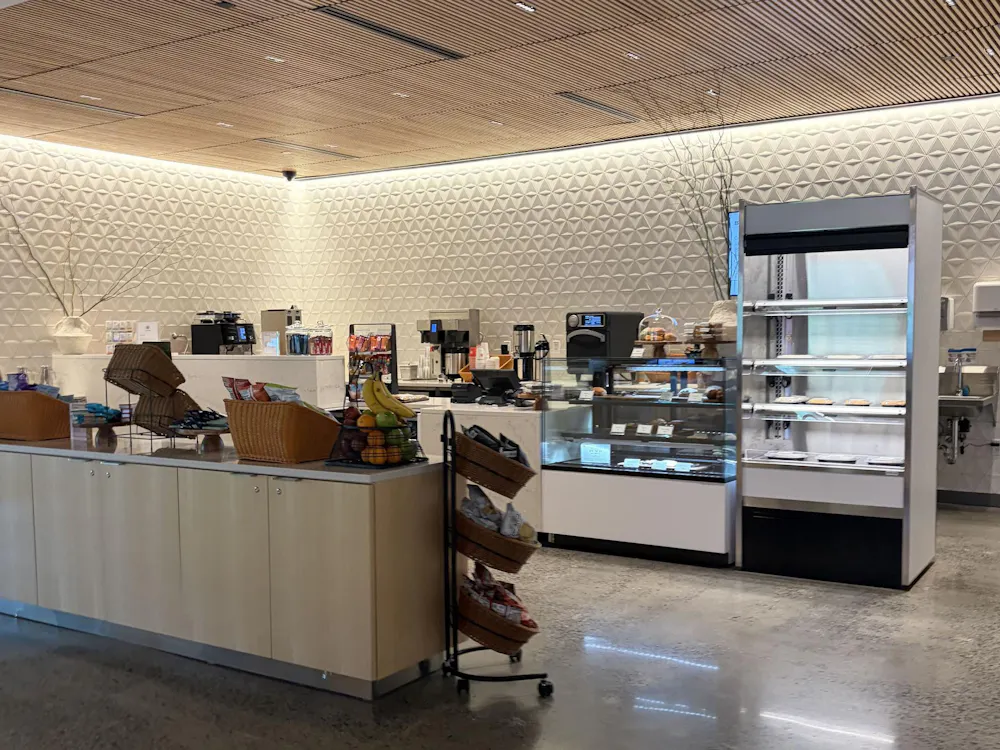
New Commons Cafe opens following cafe closures in previous years
Hifza KaleemFollowing multiple cafe closures across campus in the last two years, a new cafe opened in the SEAS Complex.
Following multiple cafe closures across campus in the last two years, a new cafe opened in the SEAS Complex.