



The Borough Council introduced a modified version Tuesday night of a fire alarm ordinance that seeks to reduce the number of false fire alarm calls.
If passed, the ordinance will require Borough property owners with installed fire alarm systems to pay an annual $125 registration fee and a $500 penalty fee if more than four false alarms are triggered each year.
The fee was increased from $300 after the Borough solicited public input as to the rates it should use.
If the property charged with the penalty has fewer than four false alarms the next year, the fee would be reduced to $150.
The number of false alarms in the Borough "has come down quite a bit in the last two to three years," Borough Chief Fire Inspector Bill Drake said. Roughly 40 percent of the 400 annual Borough fire calls are false alarms.
Drake estimated about one-fourth of the false alarms come from the eating clubs.
The decrease in false alarms has occurred in part because "[the Borough has been] working with building owners and occupants to make sure that the [alarm] systems are working the way they should be," Princeton Fire Chief Pat McAvenia said.
However, the Borough seeks to further reduce the number of false alarms.

In addition to costing time and money, false alarms also endanger the lives of the volunteer firefighters. More than 30 percent of firefighter injuries and fatalities are incurred responding to fire calls, Drake said.
"We have 30,000 lb. fire trucks that are trying to get through congested town streets with lights and sirens, and if people don't pay attention accidents can happen," Drake explained. "And when you throw in speed, it just makes it that much more dangerous."
The number of false alarms has also made recruiting and retaining firefighters difficult. "It's very burdensome for our firefighters to answer a fire alarm at 2 a.m."
Borough Mayor Joseph O'Neill said. "The guys that [respond to false alarms] get mad as hell."
Mike Westrol '07, a volunteer firefighter, agreed that false alarms are a problem.
"There really should be something done to fix [the false alarms]," Westrol said. "They're a nuisance to firefighters; they take away firefighters from other fires and they use up resources."

The fees would help "cover some of the costs of responding, investigating and following up on the false alarms," Drake said.
The money would also help cover some of the fire department's training, equipment, apparatus and insurance costs.
Unintentional false alarms can result from cooking, a system malfuction, something hitting the smoke detector, smoke from heaters backfiring, short-circuited wires or smoke or dust from construction, McAvenia said.
Read More

Princeton University Orchestra and men’s ultimate frisbee team named in University’s latest hazing report
Andrew ArthurTwelve students in the Princeton University Orchestra and Men's Ultimate Frisbee team were found responsible for hazing violations in the University's latest Campus Hazing Transparency Report. Sanctions ranged from Dean's warnings to disciplinary probation.
Twelve students in the Princeton University Orchestra and Men's Ultimate Frisbee team were found responsible for hazing violations in the University's latest Campus Hazing Transparency Report. Sanctions ranged from Dean's warnings to disciplinary probation.

Murray-Dodge Café celebrates 50th Anniversary, drawing over 260 students
Hifza KaleemOn Wednesday, Murray Dodge Cafe celebrated its 50th anniversary, drawing more than 260 students to celebrate with free cookies and merchandise.
On Wednesday, Murray Dodge Cafe celebrated its 50th anniversary, drawing more than 260 students to celebrate with free cookies and merchandise.
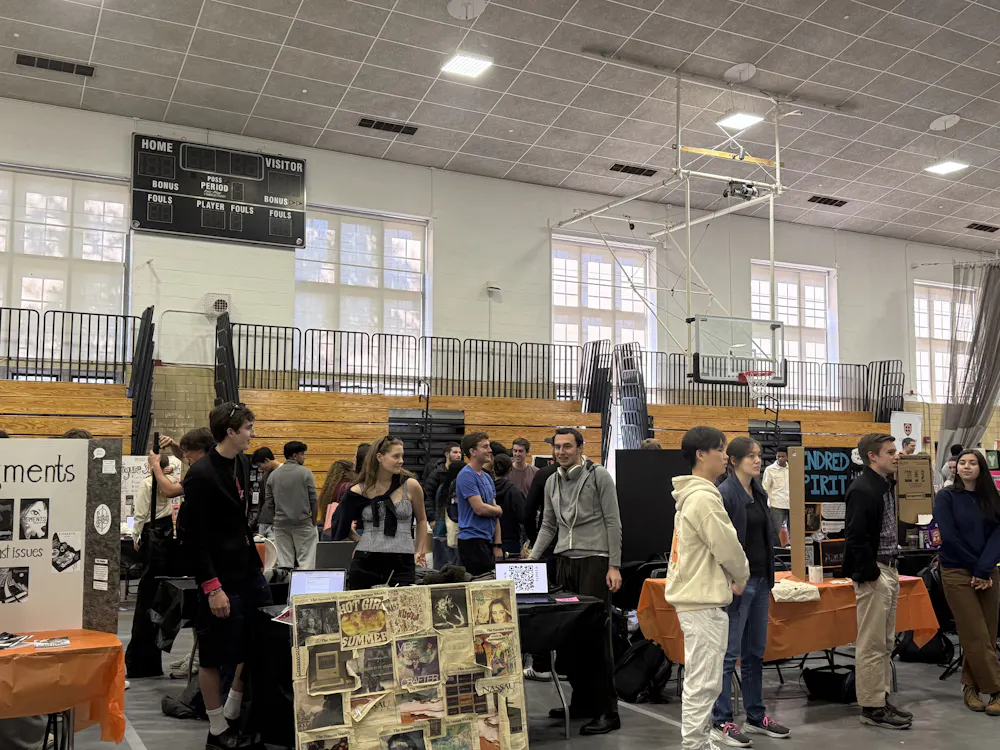
Students share mixed reactions as mandated officer and treasurer trainings return to in-person format
David EstradaThe University's student organization officers and treasurers returned to mandatory in-person training this fall after years of online sessions. Student reactions found parts of the training redundant or tedious, though most agreed the sessions were important.
The University's student organization officers and treasurers returned to mandatory in-person training this fall after years of online sessions. Student reactions found parts of the training redundant or tedious, though most agreed the sessions were important.