



Slightly less colorful, slightly less collegiate. Those are my two impressions of Princeton in its cold season compared to Princeton during the warmth — a warmth for which I am sure we all long for a return.
Each year, when Princeton changes from the guardianship of Apollo to that of Old Man Winter, she experiences a simultaneous reduction of color. The blue of her sky is no longer as bright and the green of her landscape no longer as luscious. The people of Princeton too are just not as colorful anymore.
In accordance with known fashion cycles, the assorted pastels of Polo and Lacoste are slowly erased off a large chunk of the Princeton canvas. The lime greens, the whitish pinks, the pastel khaki shorts, the charming floral sundresses, an icon of Princeton's traditional lawn parties, all dwindle. Even Prospect Garden abandons its beautiful colorful apparel in favor of an utter nakedness.
Similarly, Princeton becomes less "collegiate."Have you noticed?The pickup volleyball games, the friendly outdoor barbeques, the late-night jogs — all markers of a true collegiate environment — all vanish. Precepts on the lawn outside McCosh Hall, casual Frisbee games in the Rockefeller quad,, and outdoor tennis games in the Pagoda courts, also leave the scene.
The mellowness of the collegiate soul also witnesses a crisis. The once-leisurely cross-campus walk becomes a purposeful charge from destination to destination as the reading-while-sunbathing activity becomes a virtual nonentity. There are simply fewerpeople outside during the cold season, and when they are outside, they seem somewhat less congenial.
When many think of college, of course, they think of libraries, professors and students. But when they imagine the "collegiate atmosphere," images such as those listed above start to dominate the mind. And although books and indoor parties still survive the climate's temperamental season, the cold deprives us of these "collegiate" phenomena which are an essential ingredient of our undergraduate experience.
It is unfortunate that Old Man Winter gets to rob us of much of Princeton's colorful and collegiate experiences. Of course the color argument is an aesthetic one, which might offend the staunch Kantian who believes that people should be treated as ends in themselves, and not as means of color emission. But even aesthetic arguments have their value.
So what are we to think about this color and collegiate crisis, if not completely grim thoughts?One is to simply hope that if the Greenhouse effect is inevitable, then it could at least afford us with its ancillary gift of an extended warm season?Another would be to try to encourage the administration to use some of its $8.5 billion to try to relocate Princeton, exactly the way it is, to some uninhabited Caribbean island, which would not only ameliorate the problem but also rival Stanford's boast of providing the best education under the best climate.

These are merely the desperate wishes of a student too long confined inside. The most realistic response to the seasonal changes, with its loss of a colorful Princeton palette and equally colorful collegiate ambience is to rest assured that many of us on this campus are in the same boat. Whether it is called "Seasonal Affective Disorder" or the "Winter Blues," know that it is a natural human response. It is perfectly normal that when people are weaned from the pleasurable aesthetic experiences of seeing bright colors and the gratifying collegiate experiences of outdoor precepts and the like, they will be at least slightly less joyful.
But if you continue to find yourself brooding over the seasonal changes, just imagine Princeton in the Caribbean. What a beautiful thought. Steven Kamara is a politics major from Manhasset Hills, N.Y. You can reach him at skamara@princeton.edu.

Read More
Unity yes, Sliwa no
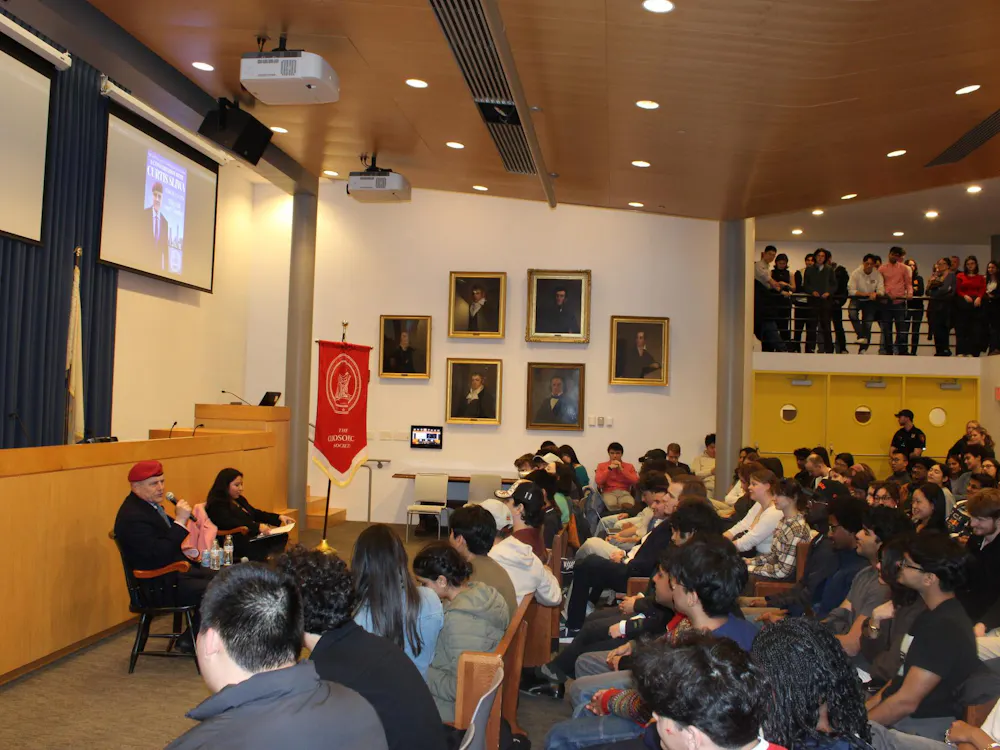
Ian RosenzweigAs important as the sentiment of unity is, we must be cautious of achieving the seemingly noble end of bipartisan acceptance through the tactics and advocacy advanced by Curtis Sliwa. Two flaws accompany an embrace of unity through Sliwa’s messaging, characterized by the nature of Sliwa’s Republicanism and the dangers of populism.
Humanistic study at Princeton is doing just fine
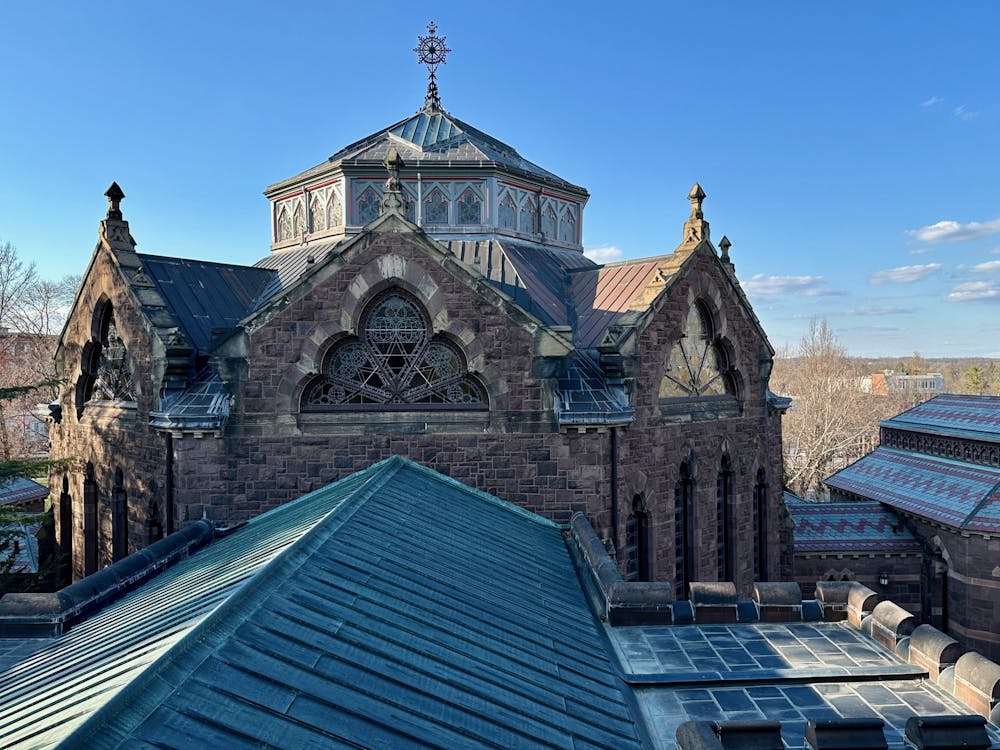
Josh StiefelDespite the formidable hygienic challenges posed by several events on campus, Princeton faces a far greater threat from recent political polemics against the University’s humanities education. Still, despite allegations of problems with education at the University, there is much reason to believe that the humanities at Princeton are alive and well.
Despite the formidable hygienic challenges posed by several events on campus, Princeton faces a far greater threat from recent political polemics against the University’s humanities education. Still, despite allegations of problems with education at the University, there is much reason to believe that the humanities at Princeton are alive and well.
The problem with the ADL’s ‘report card’
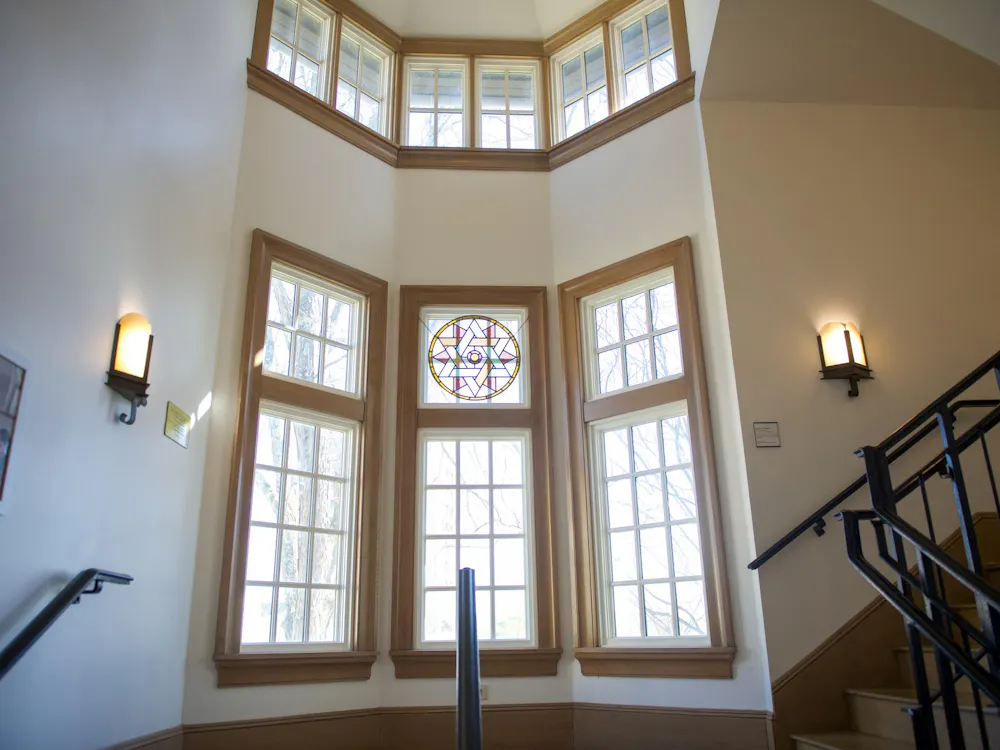
Charlie YaleThe ADL is not — nor should it be — the sole arbiter of what qualifies as antisemitism. In fact, the ADL’s definition of antisemitism creates problems for Jews in a broader sense: While the organization explains that criticism of Israel’s government is not antisemitic, they also state that language that demonizes or delegitimizes the state does count as antisemitism.
The ADL is not — nor should it be — the sole arbiter of what qualifies as antisemitism. In fact, the ADL’s definition of antisemitism creates problems for Jews in a broader sense: While the organization explains that criticism of Israel’s government is not antisemitic, they also state that language that demonizes or delegitimizes the state does count as antisemitism.