



Last night, a Princeton athlete, professor, coach and college dean disputed attempts to show that athletes detract from the University's intellectual life.
The panelists all agreed that college athletes are closely scrutinized and that greater emphasis should be devoted to studying non-athletes who also underperform academically.
The Wilson College panel addressed claims put forth in early September by former University president William Bowen GS '58 that high varsity recruitment rates and low performance by athletes in the classroom were problems in the Ivy League.
Wilson School professor Harold Feiveson, one of the panelists, suggested that at least equal attention needs to be paid to "the loner who spends all his free time in Firestone" as to the academically floundering athlete.
Feiveson was one of a four-member panel which included men's varsity squash coach Robert Callahan, Wilson College Associate Dean Richard Williams and Rebecca Snyder, captain of the women's cross country team.
Williams attributed the recent increased scrutiny of athletes to "decreasing broad based support for teams."
Callahan said he views his job as coach a lot like a professor views teaching.
"I have to push . . . prod, to challenge," he said. "It's my job to make these kids better people, better students and better athletes."
Athletics and academics

Snyder said the idea that athletes perform worse academically is largely a myth.
"I do better academically when I am competing. It helps me with time management," she said.
The panelists also emphasized the importance of learning from activities outside the lecture hall.
Callahan said his "team is almost like a precept on a daily basis," and Williams said his most valuable college moments were with fellow teammates.
However, Feiveson, who is also an advisor to the men's basketball teams, said he was "conflicted and unsettled" regarding the pros and cons of athletic competition.
On the one hand, "athletes are constantly tested, in some cases every Saturday to see if they've absorbed the lesson," he said.

But he said that not everyone's academic performance is positively affected by sports.
Williams closed the evening by evoking the image of an unconfident 18 year old, and implored Princeton professors to behave more like coaches, and to reach out to the shy student who does not "pipe up in precept."
Read More

Princeton University Orchestra and men’s ultimate frisbee team named in University’s latest hazing report
Andrew ArthurTwelve students in the Princeton University Orchestra and Men's Ultimate Frisbee team were found responsible for hazing violations in the University's latest Campus Hazing Transparency Report. Sanctions ranged from Dean's warnings to disciplinary probation.
Twelve students in the Princeton University Orchestra and Men's Ultimate Frisbee team were found responsible for hazing violations in the University's latest Campus Hazing Transparency Report. Sanctions ranged from Dean's warnings to disciplinary probation.

Murray-Dodge Café celebrates 50th Anniversary, drawing over 260 students
Hifza KaleemOn Wednesday, Murray Dodge Cafe celebrated its 50th anniversary, drawing more than 260 students to celebrate with free cookies and merchandise.
On Wednesday, Murray Dodge Cafe celebrated its 50th anniversary, drawing more than 260 students to celebrate with free cookies and merchandise.
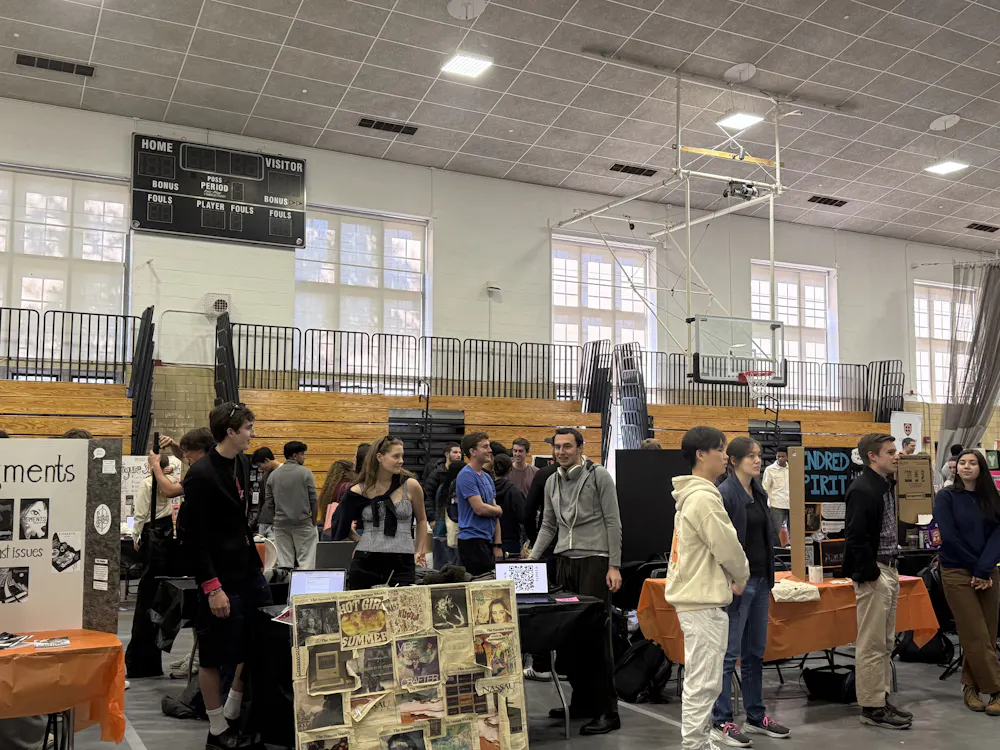
Students share mixed reactions as mandated officer and treasurer trainings return to in-person format
David EstradaThe University's student organization officers and treasurers returned to mandatory in-person training this fall after years of online sessions. Student reactions found parts of the training redundant or tedious, though most agreed the sessions were important.
The University's student organization officers and treasurers returned to mandatory in-person training this fall after years of online sessions. Student reactions found parts of the training redundant or tedious, though most agreed the sessions were important.