



The University's Department of Athletics released a more formalized set of disciplinary rules this year for varsity athletes, explicitly outlining the standards of commitment, achievement and character they are expected to meet.
The protocol establishes violations and their penalties and reinforces the coach's role in disciplinary action. This year marks the first time the athletics department has supplied a formal, written guide to disciplinary procedures.
"The protocol intends to provide a minimum level of consistency across all our teams when dealing with issues related to discipline," said Michael Cross, senior associate director of athletics. "Coaches still maintain a high degree of latitude with respect to many types of intervention."
The policy is separate from the University's discipline process, Cross said. The athletic department is responsible for evaluating violations by student-athletes and implementing penalties once the dean's office has made its conclusions about the severity of the incident.
"We simply overlay our standard on their findings to determine if additional athletic sanctions are appropriate or not," Cross said. He said the goal of the disciplinary protocol is to maintain "the highest levels of decorum for all of our athletes."
Varsity lightweight rower and captain Lu Lu '04 said she considered the guidelines reasonable.
"Being able to participate on a varsity sports team and to represent Princeton is a privilege, and just like any privilege, athletes need to face consequences for inappropriate actions," she said.
Many coaches have their own sets of policies regarding their athletes' conduct, in addition to those set forth by the Department of Athletics.

"Having a set of written rules creates a basic standard that all coaches must uphold," said Lu. In the athletics department's new code, violations are classified as either "major" or "minor."
Major violations include committing a felony, engaging in inappropriate conduct and being found guilty of violating a University disciplinary rule that results in at least six months' probation, the code states.
Minor violations include those in which a student-athlete is charged with a disorderly persons offense or receives a citation, is found guilty of breaking a University disciplinary rule resulting in less than six months probation or is found to have engaged in inappropriate conduct not ultimately deemed a major violation.
Penalties for violations range from a one-contest suspension to expulsion from the team, depending on the number of offenses and their severity.
Read More

Princeton University Orchestra and men’s ultimate frisbee team named in University’s latest hazing report
Andrew ArthurTwelve students in the Princeton University Orchestra and Men's Ultimate Frisbee team were found responsible for hazing violations in the University's latest Campus Hazing Transparency Report. Sanctions ranged from Dean's warnings to disciplinary probation.
Twelve students in the Princeton University Orchestra and Men's Ultimate Frisbee team were found responsible for hazing violations in the University's latest Campus Hazing Transparency Report. Sanctions ranged from Dean's warnings to disciplinary probation.

Murray-Dodge Café celebrates 50th Anniversary, drawing over 260 students
Hifza KaleemOn Wednesday, Murray Dodge Cafe celebrated its 50th anniversary, drawing more than 260 students to celebrate with free cookies and merchandise.
On Wednesday, Murray Dodge Cafe celebrated its 50th anniversary, drawing more than 260 students to celebrate with free cookies and merchandise.
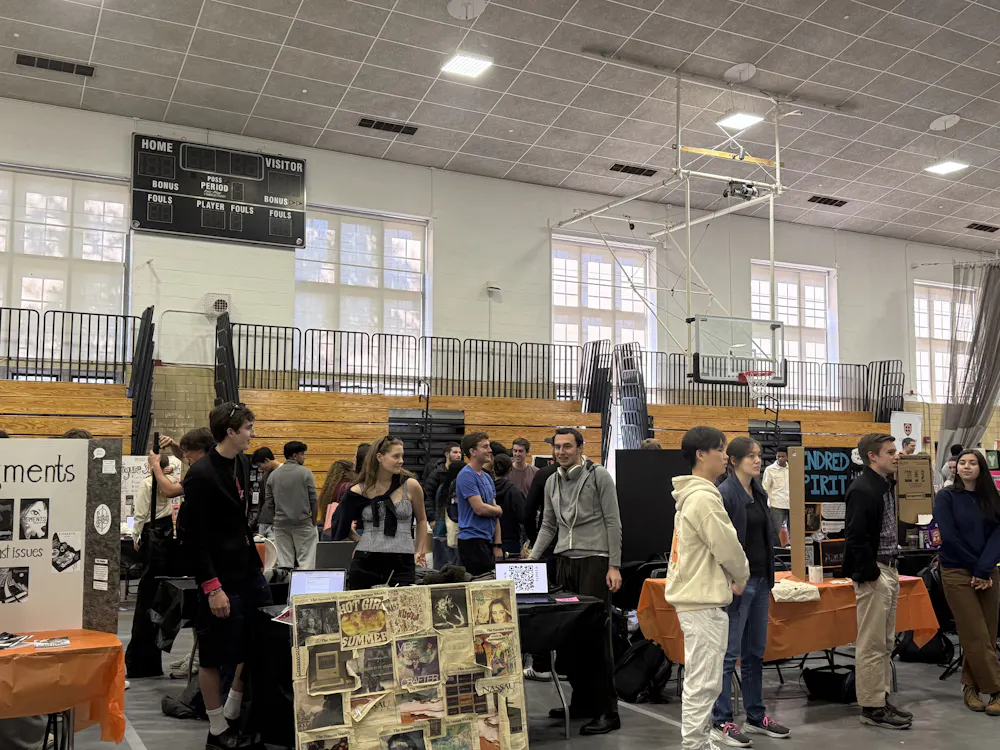
Students share mixed reactions as mandated officer and treasurer trainings return to in-person format
David EstradaThe University's student organization officers and treasurers returned to mandatory in-person training this fall after years of online sessions. Student reactions found parts of the training redundant or tedious, though most agreed the sessions were important.
The University's student organization officers and treasurers returned to mandatory in-person training this fall after years of online sessions. Student reactions found parts of the training redundant or tedious, though most agreed the sessions were important.