



The USG voted last night in its final meeting of the academic year to better define the role of class government officers.
Other items on the agenda of the meeting included the seven-week athletic moratorium, the problem of homophobia on campus and the role of LGBTQ and suggestions regarding USG activities for next semester.
Junior Class President Eli Goldsmith said revising the USG Constitution corrects inaccuracies, raises expectations for class governments and clarifies the difference between the role of class government and the USG Senate and U-Council.
Class governments, whose duties had not been previously defined, are now explicitly expected to create "substantive, class-specific programs" and plan "social events designed to foster the unity of the class," the revision reads.
Particularly in freshman elections, "a lot of people . . . have campaign platforms based on policy issues and that is not what class government is all about," Goldsmith said.
The revision underscores that setting campus-wide policy has always been delegated to the USG Senate. The new article aims to hold class officers accountable for fulfilling their duties, Goldsmith said.
"There are low expectations of what class governments are capable of, given our resources," he added. "This forces class governments to think differently."
U-Councilor Chris Wendell '03 reported on the outcome of a forum on homophobia hosted by USG and the Pride Alliance several weeks ago and attended by more than 100 students.

The forum identified three correctable problems on campus, including the general campus atmosphere and student behavior, weaknesses in the administration's approach to sexual orientation and issues in the academic arena, Wendell said.
Suggestions from panelists, students and faculty included forming an LGBT University center, requiring all incoming students to sign a nondiscrimination statement, providing students with the option of transgender identification in Princeton documents, expanding Ally education, fostering greater dialogue among student organizations and creating a liaison to USG or a task force to voice LGBT concerns, Wendell said.
Also at the meeting, Andrea Kilbourne '03, president of Princeton's Varsity Student-Athlete Advisory Council, requested USG support for a proposal to change the seven-week athletic moratorium.
The USG Senate appeared eager to support the proposal, drafted at the Ivy League office in Princeton, and unanimously approved by the Ivy League Student-Athlete Advisory Council in December.
The proposal, which would limit off-season practice to six hours over four days per week, will be presented in a letter to President Tilghman. Ivy SAC has already written a letter to all of the Ivy presidents, who will meet this June to discuss the moratorium, Kilbourne said.
Other items on the agenda included a proposed change to replace one on-campus concert with subsidized tickets to outside venues or smaller concerts at Richardson Auditorium, endorsed by Christoph Geiseler '04, president of Princeton's Modern Improvisational Music Association and next year's USG Social Chair.
Read More
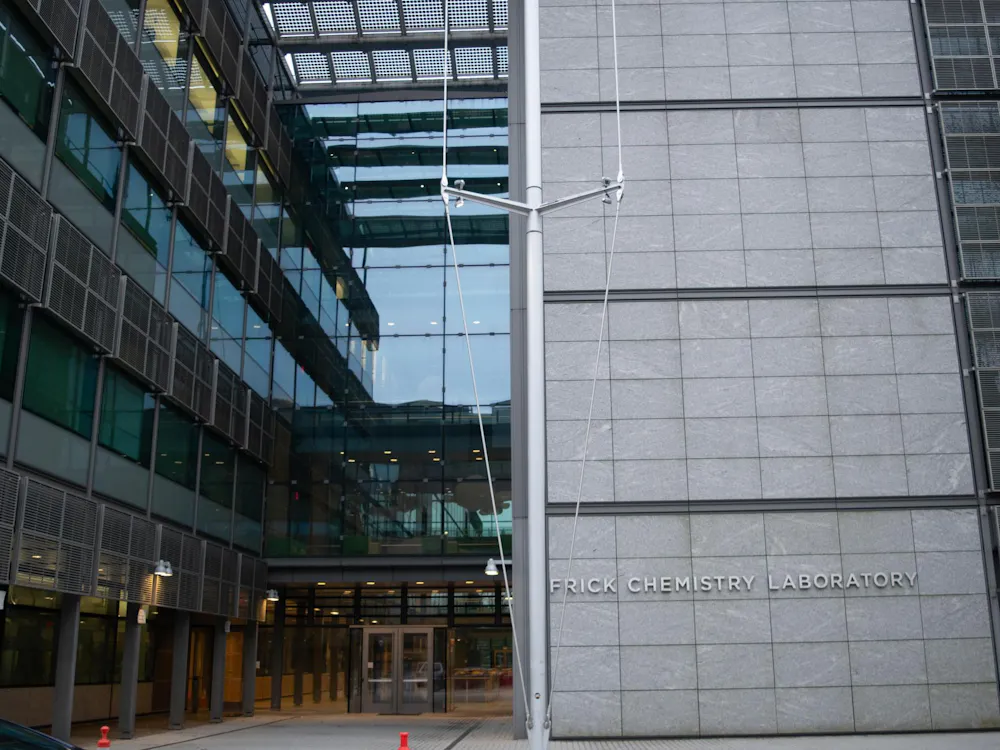
Two Princeton professors win 2027 American Chemical Society awards
Kimberly HutchinsonPrinceton chemistry professors David MacMillan and Paul Chirik were named 2027 American Chemical Society national award winners for their contributions to the field of chemistry.
Princeton chemistry professors David MacMillan and Paul Chirik were named 2027 American Chemical Society national award winners for their contributions to the field of chemistry.

Federal court blocks elimination of duration of status for international students
Luke GrippoA federal court has temporarily stopped the Department of Homeland Security from implementing its new final rule that would limit how long international students and exchange visitors can stay in the country. The next update on the case is set for Oct. 2.
A federal court has temporarily stopped the Department of Homeland Security (DHS) from implementing its new final rule that would limit how long international students and exchange visitors can stay in the country. The next update on the case is set for Oct. 2.

Forbes renovation scope still undecided as Hobson prepares to open
Gus Vogel and Daphne LewisAs Forbes students prepare to become the first cohort to live in Hobson College next year, specifics on Forbes' own renovation remains unsettled by the University nearly six months after the University announced it was accepting consultant bids for a campus-wide dorm renovation plan.
As Forbes students prepare to become the first cohort to live in Hobson College next year, specifics on Forbes' own renovation remains unsettled by the University nearly six months after the University announced it was accepting consultant bids for a campus-wide dorm renovation plan.