



Efforts by Princeton Borough officials to curb underage drinking on the 'Street' escalated this year with police conducting undercover operations in the eating clubs and charging several club officers with alcohol-related offenses.
The undercover investigations, which occured in November, resulted in charges in February against the presidents of the Colonial and Quadrangle clubs as well as two Colonial officers.
The Colonial and Quad presidents were each charged with three counts of making alcoholic beverages available to minors and one count of maintaining a nuisance, while the two Colonial officers were charged with serving alcohol to minors.
The undercover investigations were prompted by a perceived tolerance for underage drinking at the eating clubs, some Borough officials said.
Chief of Police Charles Davall said that during meetings earlier in the fall, club officers had assured him that their security measures, including the use of wristbands, would prevent underage drinking at the clubs. But, he said, "the investigation showed us . . . that the wristband policy was nonexistent in those places."
Borough Mayor Marvin Reed, however, contradicted Davall at a March meeting with the USG and said undercover police had entered the clubs to uncover illegal drug dealing. No evidence of illegal drugs was ever found, he said.
Less than a week after charges against the Colonial and Quad officers were made public, Cap and Gown Club President Matthew Groh '03 was also charged with serving alcohol to a minor.
The charge was filed after Public Safety was called to the club to assist an intoxicated 19-year-old female student who required hospitalization.

In late March, Colonial, Quad, and Cap reached an agreement with the police in which the three clubs would enforce stricter controls on underage drinking in return for the temporary suspension of the charges.
The agreement, explained Colonial attorney Kim Otis, requires the clubs to hand out wristbands to students over 21 after their I.D. is checked at the front entrance. Only students with wristbands will be served alcohol.
The police will be allowed to go to the doors of the clubs to ensure the wristband policy is in effect, Otis said.
The spate of incidents in February led many to repeat oft-cited concerns that the police crackdown would endanger students rather than protect them.
Dr. Daniel Silverman, the University's chief medical officer, said he worried that the police action "might drive some excessive drinking underground further or off campus." Another concern, he said in an email, is that students will not report themselves or friends to University Health Services for fear of sanctions.
At its meeting with Reed, the USG presented the mayor with a resolution calling for a moratorium on undercover operations on the 'Street.'

Driving drinking away from the eating clubs, USG members argued, would cause students to engage in higher-risk behaviors such as drunk driving or consuming hard liquor in their dorms, where no responsible party would be present.
The debate over another contentious issue, an ordinance that would allow police to cite underage drinkers on private property, has so far resulted in a stalemate.
Discussion on the ordinance, which was first proposed in 2001, has been pushed off several times by the Borough Council.
In April, the Borough Council voted unanimously to table the ordinance indefinitely but indicated that it could be reconsidered at any point. Council members said they expected University students and administrators to continue efforts to curb excessive drinking at the University.
The controversy is unlikely to be resolved in the near future. The town and the University have been "talking about alcohol for 255 years," Reed said in March. "It's a topic that never goes away in the town or on the campus."
Read More
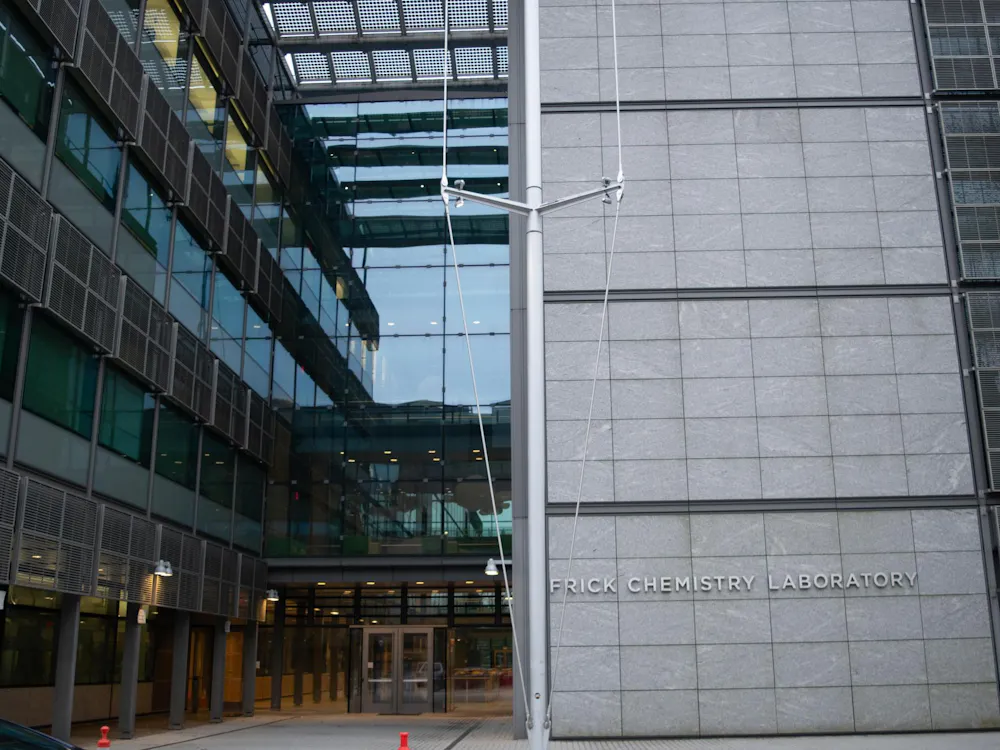
Two Princeton professors win 2027 American Chemical Society awards
Kimberly HutchinsonPrinceton chemistry professors David MacMillan and Paul Chirik were named 2027 American Chemical Society national award winners for their contributions to the field of chemistry.
Princeton chemistry professors David MacMillan and Paul Chirik were named 2027 American Chemical Society national award winners for their contributions to the field of chemistry.

Federal court blocks elimination of duration of status for international students
Luke GrippoA federal court has temporarily stopped the Department of Homeland Security from implementing its new final rule that would limit how long international students and exchange visitors can stay in the country. The next update on the case is set for Oct. 2.
A federal court has temporarily stopped the Department of Homeland Security (DHS) from implementing its new final rule that would limit how long international students and exchange visitors can stay in the country. The next update on the case is set for Oct. 2.

Forbes renovation scope still undecided as Hobson prepares to open
Gus Vogel and Daphne LewisAs Forbes students prepare to become the first cohort to live in Hobson College next year, specifics on Forbes' own renovation remains unsettled by the University nearly six months after the University announced it was accepting consultant bids for a campus-wide dorm renovation plan.
As Forbes students prepare to become the first cohort to live in Hobson College next year, specifics on Forbes' own renovation remains unsettled by the University nearly six months after the University announced it was accepting consultant bids for a campus-wide dorm renovation plan.