



Right after Sarah Miller '03 was sexually assaulted in winter 2001, she said, she was not ready to fully face what happened. But she soon confided in friends and counselors, who helped her sort out that early morning. Later in the year she wrote a poem about it.
"The Butterfly Collector," which appears in a campus pamphlet on sexual violence, recalled in metaphors what she says happened on Tuesday, Jan. 23. At the annual "Take Back the Night" march against sexual violence this past Saturday, Miller discussed how the taproom of an eating club broke out in applause as she and a man walked up to a bedroom, and, how when she told him she was too drunk to have sex with him, he did so anyway.
Miller's story, which she discussed in a recent interview in the hope of urging victims to seek help and increasing dialogue, touches on nearly every part of what sexual assault is at Princeton — from how it happened and how she felt to the University's response.
In many ways, however, what is unusual about her story is that she is telling it at all. Administrators, victims, experts, doctors, student sexual health advisers and women's groups' leaders agree that self-blame, denial, fear and ignorance prevent most victims from seeking help at Princeton and elsewhere. And the Princeton process of handling sexual assault is a complex machine, often a maze, challenged by the climate on the Street, and one whose parts may be changing.
Today is the last day of Sexual Violence Awareness Month. Sexual violence happens at Princeton, though most agree that the process for handling it has improved during the past two years under Dr. Thema Bryant's Sexual Harassment/Assault Advising, Resources and Education (SHARE) office.
"The overwhelming majority of women who are assaulted never report it and those who do often receive more negative attention than supportive attention," Dr. Bryant said. "We have to create a climate where we understand that rape happens, even here at Princeton. And we have to fully accept that our denial brings destruction, not healing and definitely not justice."
On June 13, Dr. Bryant and Ivy League colleagues will meet at Columbia University to compare policies in an unannounced summit. She said she hopes that participants in the New York summit will learn from each other and find ways to improve policies, especially about discipline. At Princeton, there has been no disciplinary action taken against a sexual assaulter in at least three years, nor has anyone requested a formal disciplinary hearing, officials said.
At Harvard University, administrators and faculty have recently recommended the creation of a new sexual health office and perhaps lowering the evidence requirements for disciplining sexual assaulters.

At the same time, Princeton student leaders are urging the administration to inform incoming freshman about sexual assault resources and to obtain a rape kit, which, with authorized nurses, would let physical evidence of rape be collected at McCosh Health Center. Currently, a raped student must travel 30 minutes to undergo the proper medical exam to extract physical evidence needed in a legal hearing.
Dr. Bryant and other experts agree that statistics identifying cases of sexual assault are misleading and underestimate its frequency. In a 2001 survey of 921 Princeton students, 0.6 percent said they had been raped, 2.6 percent said they had experienced unwanted sexual intercourse, 4 percent said they had experienced unwanted sexual fondling and 9.3 percent said they had been sexually harassed. The student body is 4,600 students.
According to national statistics, one in four college women is a victim of sexual assault.
Dr. Bryant's office, which provides education and counseling — often victims come not to request a formal or informal action but just to talk — had three students come with complaints of sexual assault last year, which were handled through an informal mediation process — which often uses a formal contract. In 2001 Public Safety had four reports of sexual assault.
"The good and the bad is that we don't have any sexual assaults [reported directly to Public Safety]," said Barry Weiser, the Public Safety crime prevention specialist who sits on a Justice Department-recommended Sexual Assault Response Team (SART) Dr. Bryant formed last year at the University and to which Miller talked in January. "We're lulled into a safety factor, but we should still be aware that sexual assault does happen at Princeton."
Weiser pointed out that though the law doesn't recognize any difference if alcohol is involved in an assault, it often is involved at Princeton.
Elusive reactions

Both drunk, Miller said she and the man entered the bedroom early that Tuesday morning. A little while later, she said, he began to undress her. She said that she told him she was too drunk to have sex and said that while she phased in and out of sleep, she observed him having sex with her. At 11 a.m. she said she woke up and left.
During the next week, she said she felt confused and violated. She wasn't eating. She said, "I knew that something wrong had happened, but I wasn't willing to classify it as rape."
Miller talked with friends during the next two weeks, and during Intersession, became more willing to call what happened "rape."
She wasn't sure exactly what to do next. Indeed, according to many student leaders and officials, the process that handles sexual assault at Princeton eludes many victims.
"It's not clear except until when you're given your options," Public Safety's Weiser said, noting that his 12-hour course for women on preventing sexual assault brought in no more than 20 students last year.
The chief student sexual health adviser, Saloni Doshi '03, said she thinks the University has a "hush attitude" about sexual assault, saying it "doesn't want to be in any negative light."
"People just perceive it as just not a problem at all," she said. "It's not dramatic enough unless it happens to people you know."
In 2001, a USG committee on women's issues found a similar result. A report noted, "Students seem unaware of any University stance or policy regarding sexual violence and disciplinary actions."
The new chair of a revamped committee on women's issues, Ann Ostrager '05, said she was planning to do another survey in the fall that is more statistical, noting that the 2001 report was based largely on anecdotes.
But it's not only vagueness about policies, according to Jessica Brondo '04, the outgoing chair of the Organization of Women Leaders who has studied sexual assault on campus. Women may not know what rape is, she said.
"They might think," she said, "that, 'Oh, I was drinking, so it might be my fault, and simply we were friends so that can't be rape.'"
Katy Glenn '05, an organizer of Saturday's "Take Back the Night" march, is pressing the administration to send information about sexual assault resources separate from the general health booklet to freshman before they arrive on campus. She has reached out to Vice President for Campus Life Janet Dickerson and will meet today with Melva Hardy of University Health Services.
Hardy said she doesn't oppose such a letter, but was worried about highlighting some health issues over others.
SHARE is planning a few other measures to fight sexual assault. The Trustees Alcohol Initiative is funding a 20-minute digital video disk on which student health advisers, three victims and other information will be provided, and the Bildner diversity fund is paying for a series of panels on fighting sexual violence. Miller will appear on the DVD.
Dr. Bryant said eating club officers agreed Friday to put posters on their bulletin boards or in the bathrooms defining sexual assault, sexual harassment and harassment based on sexual orientation. SHARE will design the posters.
"Another thing is that we live at a small school," said Brondo, "so that when you do come forward with this, . . . the guy might say this to his friends, 'Oh look what she's doing to me.' And like she might not want people on campus to know her personal details."
Dr. Bryant emphasized, however, the University has a policy that strictly forbids retaliation and stressed the high level of confidentiality.
A rape kit
Women student leaders and the University have clashed most strongly on whether evidence-collection after a rape should be able to occur on campus, and it seems that the student leaders will get their way by the end of next year.
Currently McCosh Health Center staff is always available to transport a rape victim to Robert Wood Johnson hospital in New Brunswick, a 35-minute car ride, if a rape kit is desired.
Dr. Alan Berkowitz, an expert on sexual assault on colleges, said Princeton's situation "is probably a little more difficult than most college campuses." Many schools, including Yale, Columbia, Dartmouth and Cornell, don't have rape kits on campus. They are usually available in a five- to 10-minute car ride or less, though.
Nancy Ippolito '03, a former OWL chair who said she is also a victim of sexual assault, said that "the most important thing is for the University to buy a rape kit," noting how difficult and complicated it is to travel for half an hour after a traumatic experience like rape.
"Most of us [college health services] don't have a local kit," said the chief psychologist at Yale, Lorraine Siggins. But she said one is needed nearby, "because you want to give the student the option, if they decide, to be able to legally file charges. That's the reason a student would want to go and have the evidence taken. At the time they're often very unsure of what they want to do. What you try to do is be with them."
Ippolito said that officials had said that costs were one of the major deterring factors to obtaining a kit, but officials now say cost is not a factor — though the University failed to get Justice Department sponsorship last year. A rape kit consists of 12 envelopes and various tools for collecting physical evidence, and the cost is not significant, said Janet Neglia, the chief clinical officer at McCosh. She also noted that treatment for pregnancy and sexually transmitted infections could be done at McCosh.
The biggest challenge seems to be certifying nurses to conduct an examination, which requires training and time with already certified nurses. If the evidence is collected incorrectly, doctors point out, the defense lawyer will probably be able to get a case dismissed.
"I don't see why the rape kit is the be all and the end all," Neglia said. "The collection of evidence that can be used to prosecute the persecutor must be done to exacting standards, or it will not be allowed."
But Princeton still seems poised to get the nurses certified. There is pending statewide legislation to help expedite the training, and Princeton plans to have nurses trained this summer and certified possibly by fall and probably by spring, said Dr. Bryant.
Usually Borough Police would also be involved in any rape investigation, but Public Safety is playing a larger investigative role — and the Borough didn't know about Princeton's plan to obtain a rape kit, said Borough Police Lt. John Reading.
He said the police are currently required by the Mercer Country Prosecutor's office to bring victims to Robert Wood Johnson Hospital, but Dr. Bryant, who sits on the prosecutor office's advisory committee, said Princeton would be authorized to receive victims once nurses are certified.
Discipline and process
When Miller returned to campus after Intersession, she said she decided to consider University action. She said she confronted the man who she says assaulted her, but "was really frustrated that he didn't understand that it was wrong."
She visited a SHARE counselor — before Dr. Bryant's arrival — and labeled that meeting as a "negative experience," saying that the counselor "read me as much more together than I was." She then turned to the dean of her residential college to help her and said that "she was really supportive and wonderful." She also visited a standard counselor, who Miller said was helpful in several ways, especially in overcoming any sense of guilt.
A few weeks later, as March approached, Miller began to consider formal University action. Miller said she visited Associate Dean of Undergraduate Students Marianne Waterbury, who would head any investigation of disciplinary action. Miller said she learned it would have been very difficult to take formal disciplinary action against the person she accused.
Then she said she visited an informal mediator on the fourth floor of West College — "the worst person I ever talked to [about this incident]." While Miller sought support and information, she said the mediator suggested she read a book on anger management. That person has since left, though the person wasn't dismissed for the Miller case.
Miller decided to bypass the entire Princeton process. She met with the man a few times. She said she had him sign a contract which stipulated that he'd publicly work against sexual assault.
"He didn't know I had no cards in my hand," she said. "He signed the agreement. He fulfilled the conditions."
It seems that many victims encounter such a web, and in conducting interviews for this article, different officials often presented different views of how the process works. In general, officials urge that students who have been sexually assaulted contact Public Safety as soon as possible — but if time has passed, as it often does, because a shower is the first thing a victim often wants after an assault — they can reach out to SHARE, designated counselors or student sexual health advisers. A list is available from the SHARE office.
Among the greatest concerns among students is that perpetrators are not punished sufficiently. For her, Miller said that "the hardest thing is the idea that there wouldn't be any punishment."
Peer adviser Saloni Doshi said, "People are not held accountable for their actions."
But Dean Waterbury says there is no reason to think that. She said Dr. Bryant accompanied a student to her office last year, and that at least one other visited her a year before, noting the difference between someone formally requesting action and making an inquiry.
In cases of a formal disciplinary hearing, Waterbury noted that a subcommittee of the Committee of Discipline would be formed, but that it requires "clear and persuasive evidence" to convict — guilty verdicts yield at least a one year suspension.
Often, however, the case is that the man says one thing and the woman another. With no witnesses or evidence, Waterbury said, "We often have no way of verifying what really happened."
She added, "A few years ago a student said, 'Even though there was not enough evidence, 'Look, for me it's important for him to go through the disciplinary process.'"
Several schools, including Harvard, have looked into lessening the barrier for disciplinary punishment — and even Waterbury said she inherently trusts a victim who would come forward.
Though Miller said she was never able to punish the man she says assaulted her, she said, "I feel like he'll never do that again."
She said that at her first "Take Back the Night" march in April 2001, "A girl came up to me and said I know who you are talking about. He did the same to me." The girl, Miller said, could figure out who the person was because she had a similar experience.
Miller, a history student, has been accepted to and will attend Harvard Law School.
Read More
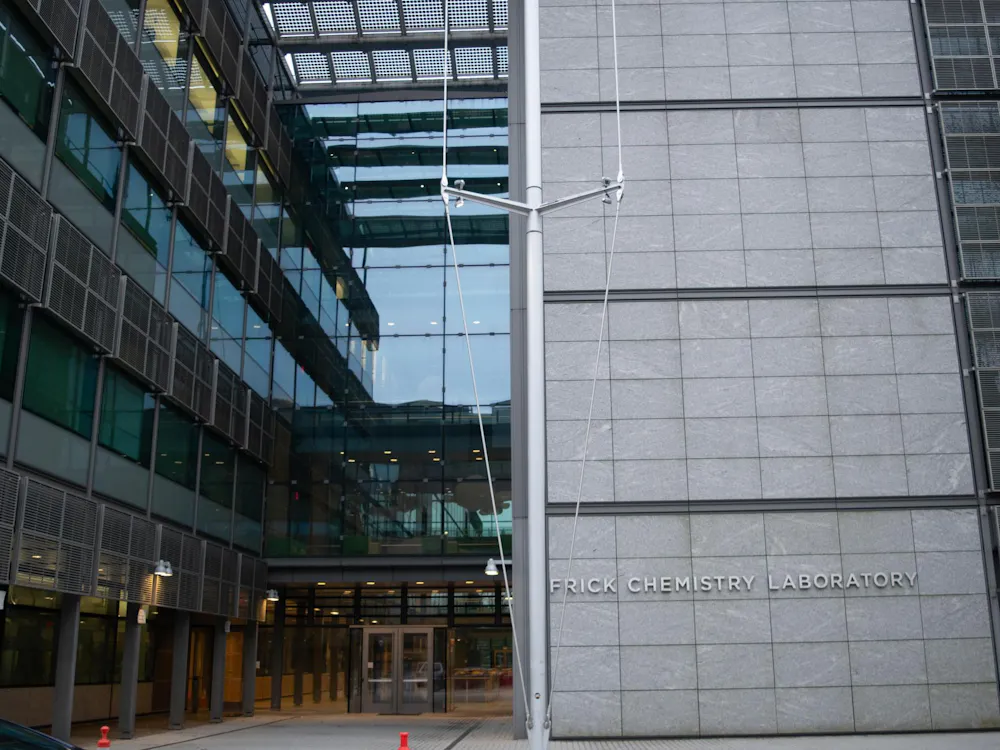
Two Princeton professors win 2027 American Chemical Society awards
Kimberly HutchinsonPrinceton chemistry professors David MacMillan and Paul Chirik were named 2027 American Chemical Society national award winners for their contributions to the field of chemistry.
Princeton chemistry professors David MacMillan and Paul Chirik were named 2027 American Chemical Society national award winners for their contributions to the field of chemistry.

Federal court blocks elimination of duration of status for international students
Luke GrippoA federal court has temporarily stopped the Department of Homeland Security from implementing its new final rule that would limit how long international students and exchange visitors can stay in the country. The next update on the case is set for Oct. 2.
A federal court has temporarily stopped the Department of Homeland Security (DHS) from implementing its new final rule that would limit how long international students and exchange visitors can stay in the country. The next update on the case is set for Oct. 2.

Forbes renovation scope still undecided as Hobson prepares to open
Gus Vogel and Daphne LewisAs Forbes students prepare to become the first cohort to live in Hobson College next year, specifics on Forbes' own renovation remains unsettled by the University nearly six months after the University announced it was accepting consultant bids for a campus-wide dorm renovation plan.
As Forbes students prepare to become the first cohort to live in Hobson College next year, specifics on Forbes' own renovation remains unsettled by the University nearly six months after the University announced it was accepting consultant bids for a campus-wide dorm renovation plan.