



In response to a recent rash of campus golf cart vandalism — the primary cause of cart shortages for injured students — the Undergraduate Life Committee has written a letter to undergraduates.
"Golf cart vandalism on this campus has become endemic," the letter states. "During peak times, an appalling 1-2 golf carts per week must be sent to the shop because their tires are slashed, their electronics are tampered with, etc. Students often attempt to steal the golf carts."
Crime Prevention Specialist Barry Weiser said that since April 11, there have been 15 cases on campus of criminal mischief — defined by New Jersey statute as minor damage to property.
Noting that Princeton is the only university known to supply golf carts as a mode of transportation for injured students, the ULC letter encourages students to be more respectful of the service and University property in general.
The letter, which was released on the USG website April 21 and published in last week's Nassau Weekly, will be included in USG president Pettus Randall '04's next campus-wide e-mail.
After the issue of wait-lists for golf carts was publicized in a March 6 article in The Daily Princetonian, student health liaison Adam Castaño '05 worked with the ULC to look into the reasons behind the shortage.
"Our initial reaction [to the article] was that the University needs to buy more golf carts or put more funding into this program, but in our investigation we found out that the real problem was vandalism," said William Robinson '04, chair of the ULC.
Part of the delay injured students encounter in being issued a golf cart is the constant need for repair because of vandalism, Robinson said. Damaged golf carts must be repaired and undergo safety inspections before being cleared for use.

On the day the letter was released, the golf cart used by physicians to travel to provide medical assistance around campus was vandalized.
"This letter specifically deals with golf cart vandalism, and we took that opportunity to talk about other forms of vandalism," Robinson said. "Golf cart vandalism seems to be increasing on this campus, but other forms of vandalism such as students knocking out lights, keying cars, smashing prox readers — that's been around as long as I've been an undergraduate here."
In recent incidents of random vandalism, students have ripped down fliers, broken windows, pushed over vending machines and golf carts, damaged prox readers and scrawled graffiti, Weiser said.
"You get the drift that it's many different things. There's no rhyme or reason or pattern," Weiser said, adding that alcohol is almost always involved.
Public Safety officers are being briefed about the incidents and have been instructed to be more conscious and visible, Weiser said.
The ULC plans to launch a combined effort with the administration this fall to address the problems of general vandalism and janitorial disrespect on campus.

"Students treat the campus like a playground," Robinson said, noting that vandalism costs the University thousands of dollars a year and hurts both students and staff. "We do know that we need to do something more than a letter, and we're going to ask for [the administration's] full support in this effort with us."
Read More
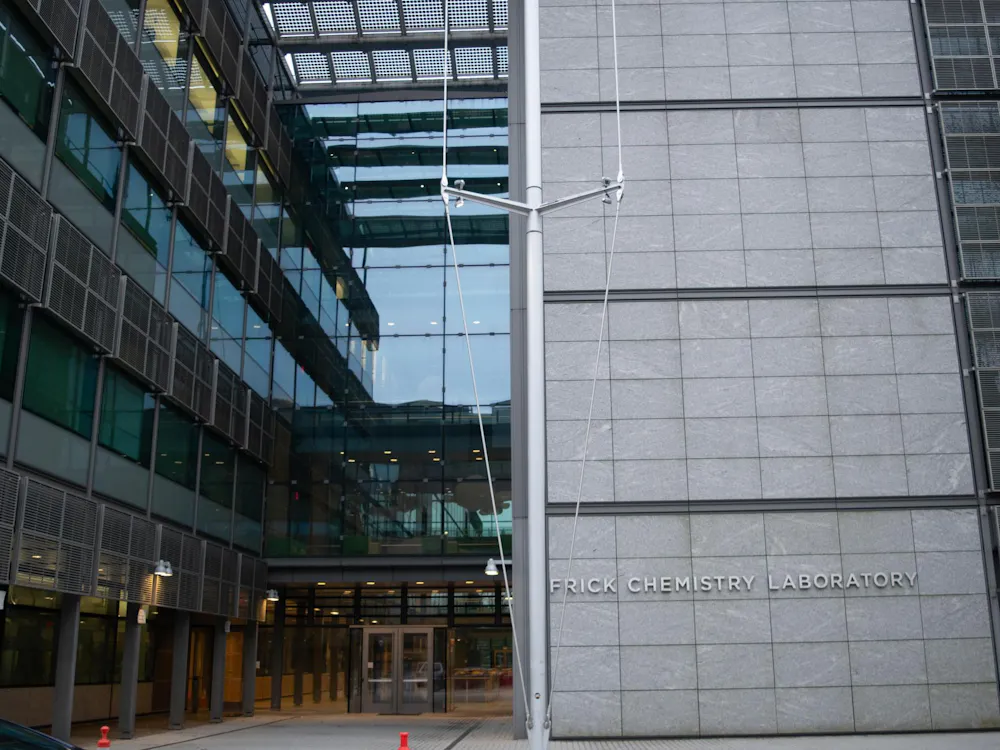
Two Princeton professors win 2027 American Chemical Society awards
Kimberly HutchinsonPrinceton chemistry professors David MacMillan and Paul Chirik were named 2027 American Chemical Society national award winners for their contributions to the field of chemistry.
Princeton chemistry professors David MacMillan and Paul Chirik were named 2027 American Chemical Society national award winners for their contributions to the field of chemistry.

Federal court blocks elimination of duration of status for international students
Luke GrippoA federal court has temporarily stopped the Department of Homeland Security from implementing its new final rule that would limit how long international students and exchange visitors can stay in the country. The next update on the case is set for Oct. 2.
A federal court has temporarily stopped the Department of Homeland Security (DHS) from implementing its new final rule that would limit how long international students and exchange visitors can stay in the country. The next update on the case is set for Oct. 2.

Forbes renovation scope still undecided as Hobson prepares to open
Gus Vogel and Daphne LewisAs Forbes students prepare to become the first cohort to live in Hobson College next year, specifics on Forbes' own renovation remains unsettled by the University nearly six months after the University announced it was accepting consultant bids for a campus-wide dorm renovation plan.
As Forbes students prepare to become the first cohort to live in Hobson College next year, specifics on Forbes' own renovation remains unsettled by the University nearly six months after the University announced it was accepting consultant bids for a campus-wide dorm renovation plan.