



Grade inflation, a longstanding concern at many schools, has received particular attention at the University after the release of a faculty report expressing concern over the matter.
While Ivy League administrators differ on how severely the problem is hurting the academic environment, they agree that reversing the trend will be difficult if not impossible.
"It's an extremely widespread problem, [but] maybe a problem that isn't worth spending a huge amount of time on," said John O'Keefe, associate dean for undergraduate education at Harvard University.
In February, when a Princeton committee asked faculty to help find solutions to rising mean GPAs and increased clustering of grades in the B-plus to A range, it noted that peer institutions were experiencing the same trends.
For several years, grading has been a topic of discussion at the meeting of the Ivy Deans — comprising the eight league schools plus Stanford University, the University of Chicago and the Massachusetts Institute of Technology, said Nancy Weiss Malkiel, dean of the college.
The meetings have been productive, but Malkiel said she wished "anyone knew how to solve it."
D. Kent Peterman, director of academic affairs at the University of Pennsylvania's College of Arts and Sciences, said in some cases faculty are "not making discriminations among students who are performing at different levels."
However, Peterman said the resolve to encourage more range in grading has been inconsistent. "We've all been looking at it with varying degrees of scrutiny. It's always been perplexing what to do about it," he said.

The Penn faculty has been sharing information about grading practices around the college, he said, but with little success at reducing grade compression.
Yale University is not studying the problem at the moment, although it has been a topic in recent years, the Yale College Dean's Office said.
Harvard University came under intense scrutiny for awarding honors to a large fraction of its graduating class, but the institution also reformed its grading scale and asked departments to reevaluate grading practices, O'Keefe said.
Previously, Harvard used a 15-point scale where A's, A-minuses and B-plusses were worth 15, 14 and 12 points respectively. The gap between A-minus and B-plus kept many professors from giving B grades, he said.
Harvard will begin using a four-point scale next year. O'Keefe said the mean grade given had actually fallen the past year, presumably because of the increased focus on grading.
The deans agreed that an administration-mandated grading curve would be impossible to implement. "No one is going to try to tell faculty how to grade. It's a very individualistic kind of practice," Peterman said.

Grading is a part of "academic freedom," O'Keefe said. "The individual faculty member at Harvard is responsible for grading."
Change must come from individual professors and preceptors, making the issue more complex, which is why Malkiel's committee has asked for faculty input.
Since 1991 the average mean GPA at a large group of private institutions – including Princeton, Harvard and Duke University – has risen from 3.11 to 3.26, according to a data compiled by a Duke professor.
Read More
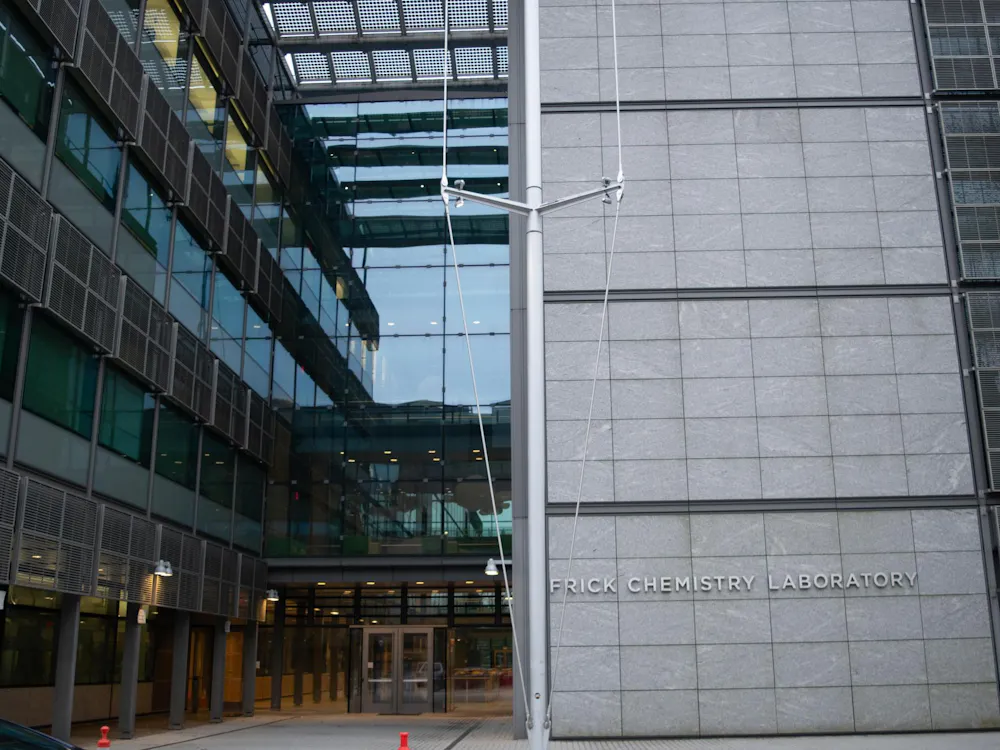
Two Princeton professors win 2027 American Chemical Society awards
Kimberly HutchinsonPrinceton chemistry professors David MacMillan and Paul Chirik were named 2027 American Chemical Society national award winners for their contributions to the field of chemistry.
Princeton chemistry professors David MacMillan and Paul Chirik were named 2027 American Chemical Society national award winners for their contributions to the field of chemistry.

Federal court blocks elimination of duration of status for international students
Luke GrippoA federal court has temporarily stopped the Department of Homeland Security from implementing its new final rule that would limit how long international students and exchange visitors can stay in the country. The next update on the case is set for Oct. 2.
A federal court has temporarily stopped the Department of Homeland Security (DHS) from implementing its new final rule that would limit how long international students and exchange visitors can stay in the country. The next update on the case is set for Oct. 2.

Forbes renovation scope still undecided as Hobson prepares to open
Gus Vogel and Daphne LewisAs Forbes students prepare to become the first cohort to live in Hobson College next year, specifics on Forbes' own renovation remains unsettled by the University nearly six months after the University announced it was accepting consultant bids for a campus-wide dorm renovation plan.
As Forbes students prepare to become the first cohort to live in Hobson College next year, specifics on Forbes' own renovation remains unsettled by the University nearly six months after the University announced it was accepting consultant bids for a campus-wide dorm renovation plan.