



Yesterday, Death Penalty Awareness Week began with a lecture by Ray Krone, the hundredth innocent man exonerated from death row after a wrongful conviction.
Krone was found guilty of murdering a waitress at a bar in Phoenix in 1992. His trials and tribulations are exemplary of the weaknesses and "injustices" of the American justice system, he said.
The event was sponsored on campus by the Princeton Coalition Against Capital Punishment, which was formed last December as a subunit of the Princeton Justice Project.
"I thought it was important to have an exonerated inmate speak of wrongful conviction," said Shawn Sindelar '04, an organizer of the week. "No one can be more persuasive than someone who has been on death row and can speak firsthand."
Sindelar also said he organized the week-long series of events as a response to the lack of intellectual curiosity and apathy regarding social activist events on campus.
Krone's tale
Krone was a postal worker living in Phoenix when he was questioned about the murder of a waitress at a local bar whom he had befriended. Krone said he was interviewed without an attorney present several times and then arrested for murder, kidnapping and sexual assault.
Throughout the questioning and trial, Krone said he simply believed that "innocence is a protection," since he had no previous criminal record.
A jury took three and a half hours to convict Krone for murder and kidnapping, sentencing him to death. The sexual assault charge was dropped.

"I started thinking how to fight this. And I started learning about the system that put me here," Krone said.
In 2001, after numerous appeals and public awareness campaign run by Krone's cousin, a judge ordered the retesting of DNA from a piece of clothing on the body of the victim.
The DNA test, conducted by the Phoenix police department found that Krone was not present at the scene and that the DNA matched a known person in the DNA database the state had accumulated.
The other man, who was finishing a ten-year sentence for sexual assault admitted to being at the bar on the night of the murder and waking up with blood on his hands next to the victim.
On April 8, 2002, Ray Krone was freed, the 100th person exonerated from a death sentence in the United States.
Anti-death penalty arguments
Krone said that there are many problems with the death penalty that span across all cases.

"It's a tool that the prosecutor uses to get a star behind their name to advance beyond other people in their office," Krone said. "They make careers on the death penalty."
He said the death penalty is used as a tool of fear to make prisoners confess and that it discriminates against minorities and the poor who cannot pay for adequate defense. These people frequently have to compete against unlimited state prosecution budgets, Krone said.
"I actually have to admit that before all this happened to me, I somewhat believed in the death penalty," Krone said. "I thought it was the logical progression or acceptable progression of our justice system. If nothing else works, then execution is the answer. I never had any problems with this justice system, so there was no reason to think much about it."
He now warns against social apathy when considering the irreversible effects of the death penalty. Krone said that he sees injustice in any system that uses capital punishment, especially when some of the alleged criminals may be innocent.
"I can tell you this: there's not a state that doesn't execute innocent people, and if it can happen to me, it can happen to anyone," Krone said.
Sindelar said he was pleased with the presentation, and hoped that it would be a sign of success for the rest of the week's events.
"Hopefully it realized its goal of promoting awareness of wrongful convictions and other problems with the death penalty," Sindelar said. "Mr. Krone was very eloquent and very passionate."
Read More
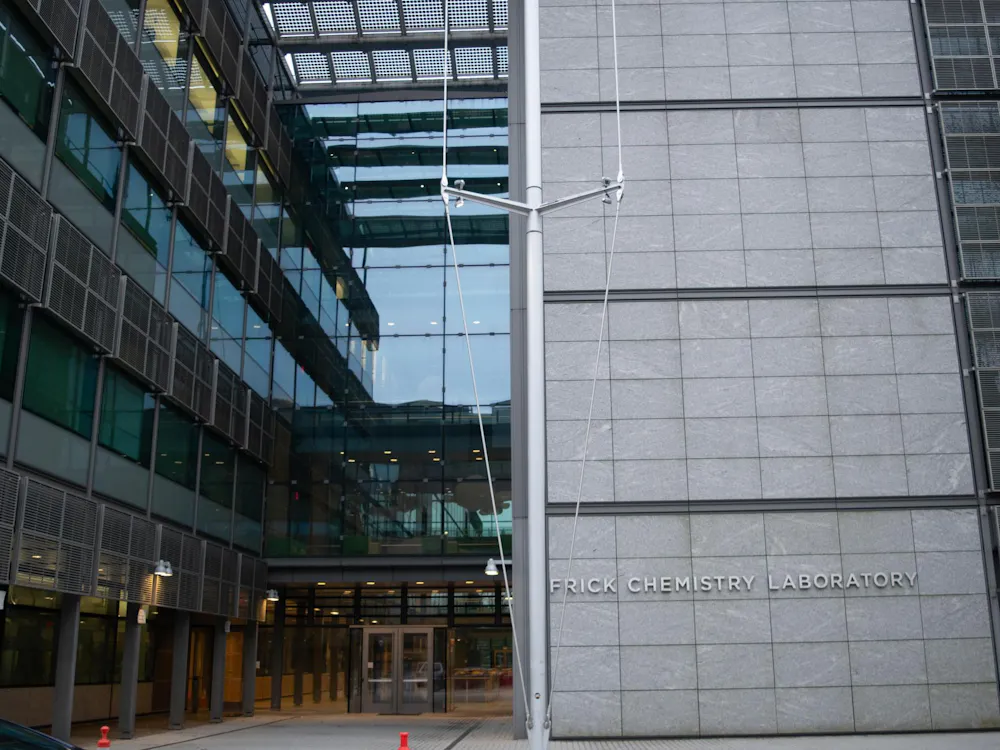
Two Princeton professors win 2027 American Chemical Society awards
Kimberly HutchinsonPrinceton chemistry professors David MacMillan and Paul Chirik were named 2027 American Chemical Society national award winners for their contributions to the field of chemistry.
Princeton chemistry professors David MacMillan and Paul Chirik were named 2027 American Chemical Society national award winners for their contributions to the field of chemistry.

Federal court blocks elimination of duration of status for international students
Luke GrippoA federal court has temporarily stopped the Department of Homeland Security from implementing its new final rule that would limit how long international students and exchange visitors can stay in the country. The next update on the case is set for Oct. 2.
A federal court has temporarily stopped the Department of Homeland Security (DHS) from implementing its new final rule that would limit how long international students and exchange visitors can stay in the country. The next update on the case is set for Oct. 2.

Forbes renovation scope still undecided as Hobson prepares to open
Gus Vogel and Daphne LewisAs Forbes students prepare to become the first cohort to live in Hobson College next year, specifics on Forbes' own renovation remains unsettled by the University nearly six months after the University announced it was accepting consultant bids for a campus-wide dorm renovation plan.
As Forbes students prepare to become the first cohort to live in Hobson College next year, specifics on Forbes' own renovation remains unsettled by the University nearly six months after the University announced it was accepting consultant bids for a campus-wide dorm renovation plan.