



Princeton athletes and coaches seem to support the preliminary proposal of changes to the seven-week moratorium suggested by Ivy League athletics directors.
If passed, the changes would replace the current moratorium and let teams practice together four days per week for a maximum of six hours per week between seasons, said Gary Walters '67, Princeton athletics director, earlier this month.
"The Council of Ivy Presidents indicated in December that it would review any proposals . . . that might be offered to improve the operation of the 'moratorium,' provided they do not detract from the council's goals in this area," said Jeff Orleans, executive director of the council, in an email.
Orleans said the athletics directors have not yet agreed on a final proposal and will meet early next month to consider the issue. The Ivy League presidents will then meet over the summer to consider changes to the moratorium.
He said that if the directors recommend changing the moratorium, they will need to show the presidents "very clearly" how the proposal supports the group's broad goals.
The moratorium affects each team differently.
Some University sports, such as track and field, are not affected by the moratorium. Because cross-country and indoor and outdoor track are treated as three separate sports, the ban on team practices is irrelevant, said Peter Farrell, women's track and field head coach.
"I think the attitude and the climate that these changes have brought doesn't help our competitive environment," Farrell said of the current moratorium.

Princeton tennis teams have had problems scheduling practices because of the moratorium.
"While we usually take a couple of weeks off from practice after our regional tournament in October, nobody is going to stop practicing for seven weeks," said varsity tennis player David Gopstein in an email. He said that the moratorium forced players to arrange individual practices with only one other member of the team instead of holding normal team and captain's practices.
"If the choice is between no practice and six hours a week, then I would choose the six hours," Gopstein said of the new proposal. "But I think that each sport should have its own scheduled off-season that better meets its needs. For the tennis team, I would prefer a couple week off season without any practice (which is essentially what we had before the moratorium)."
Varsity tennis player Blaise Goswami '05 said, "[the proposed changes] sound like a nice compromise."
He said that scheduled practices between seasons would help to maintain motivation.
"For tennis, voluntary practices become a question of self-motivation more than anything else, and in the dead of winter — when our main season is months away — that incentive is sometimes difficult to sustain," he said. "So scheduled, structured practices like the proposed one could be a good way of compelling us to make the walk to Jadwin without a full-blown practice."

The moratorium has less broadly affected the swim team.
"As it relates to our program — [the moratorium] really only impacts those that are serious about their sport, which is really a very small number," said Rob Orr, head coach of the men's swim team.
Orr approved of the proposed changes, saying, "The new plan allows for the conscientious athlete the opportunity to excel versus putting restraints on them."
Some coaches, however, were more reserved about the proposed changes to the moratorium.
Women's lightweight crew coach Heather Smith said, "Until the proposed changes are made final, I wish to make only one comment. I am pleased that the Ivy League Presidents are considering changes to the moratorium, and like what I have seen proposed thus far."
Goswami said that she thought the current moratorium seems "condescending towards athletes but also perhaps more importantly towards coaches, implying that they are not the best judge of the best schedule for their respective teams."
Read More
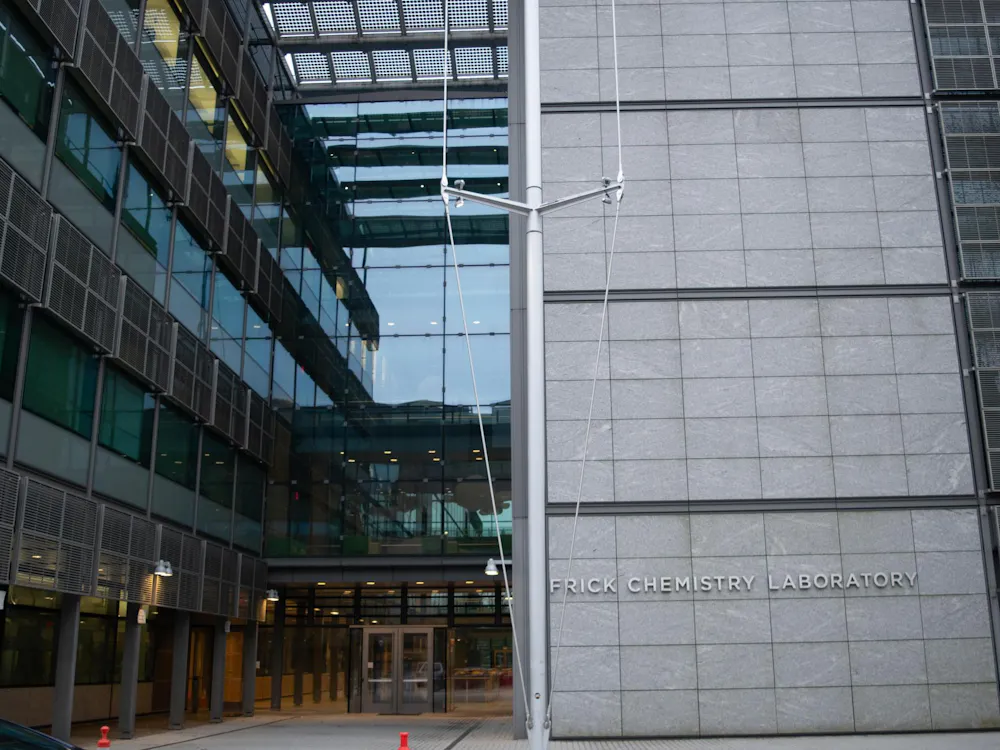
Two Princeton professors win 2027 American Chemical Society awards
Kimberly HutchinsonPrinceton chemistry professors David MacMillan and Paul Chirik were named 2027 American Chemical Society national award winners for their contributions to the field of chemistry.
Princeton chemistry professors David MacMillan and Paul Chirik were named 2027 American Chemical Society national award winners for their contributions to the field of chemistry.

Federal court blocks elimination of duration of status for international students
Luke GrippoA federal court has temporarily stopped the Department of Homeland Security from implementing its new final rule that would limit how long international students and exchange visitors can stay in the country. The next update on the case is set for Oct. 2.
A federal court has temporarily stopped the Department of Homeland Security (DHS) from implementing its new final rule that would limit how long international students and exchange visitors can stay in the country. The next update on the case is set for Oct. 2.

Forbes renovation scope still undecided as Hobson prepares to open
Gus Vogel and Daphne LewisAs Forbes students prepare to become the first cohort to live in Hobson College next year, specifics on Forbes' own renovation remains unsettled by the University nearly six months after the University announced it was accepting consultant bids for a campus-wide dorm renovation plan.
As Forbes students prepare to become the first cohort to live in Hobson College next year, specifics on Forbes' own renovation remains unsettled by the University nearly six months after the University announced it was accepting consultant bids for a campus-wide dorm renovation plan.