



For those who question the merits of the liberal arts system in preparing students for the hazards of the professional world, one needs only to look to 28-year-old Theola Labbé '96 for inspiration.
Labbé now works for The Washington Post where she covers mostly local educational issues.
Growing up on Long Island, New York, Labbé realized she was destined to write even before her Princeton career began.
"I always knew I wanted to write," joked Labbé. "I definitely fulfill the stereotype of the journalist who can't do math."
When she came to Princeton in 1992, one of her first priorities was to find a writing class that was more "journalistically inclined."
And though she was a religion concentrator, several key experiences at Princeton helped Labbé direct her career toward journalism.
Labbé turned to a class taught by Anne Matthews in which Matthews introduced a type of "literary nonfiction," which Labbé said she thoroughly enjoyed.
It was in this class that Labbé was introduced to the work of John McPhee '53, who by chance is also a Princeton professor.

Labbé's first experience with the author was "Travels in Georgia," but this initial encounter did not inspire her.
She recalls, "I didn't even like that first work I read."
Later, Labbé actually took a course in the geology department where she read McPhee a second time. This time, the Pulitzer Prize winning author's work tugged at her heartstrings.
The story, "Assembling California," inspired Labbé to take McPhee's class at some point in her Princeton career.
By the start of her independent work, Labbé found herself spending much of her time concerned with modern religion. Labbé focused on the Branch Davidians and their leader David Koresh for her senior thesis work.
"I really found myself interested in modern religion in America today and particular ideologies of movements," she said. "There was a story here about the things these people believed in. Look at today's war on terrorism. How much is about what people believe in."

At the same time Labbé was focusing on the Branch Davidians and Waco, she enrolled in McPhee's class. It was an interesting approach to "bookend" her Princeton life with courses in journalism — starting and finishing with a topic that she eventually chose as a career.
"John McPhee was the first person to treat me as a writer. For example, he really wanted to know why I used a word," reminisced Labbé.
For a while Labbé considered entering the academic world. However, her research helped her realize that she wanted to tell stories.
One gets the sense that academics were a little too impersonal for Labbé. She wanted to work with people. She needed real life situations to drive her career and writing endeavors.
Thinking back on her Princeton experience, Labbé said, "I think that Princeton was the place to go to do the things I was supposed to do. Elsewhere I would not have had a McPhee moment."
Labbé admits that more than just a couple good classes made her Princeton career special.
"The one-on-one time and the intimate atmosphere of the school served me tremendously well," Labbé said. "When I first went [to Princeton], I didn't quite know what I wanted to do, but I knew what I liked. My interests might not have developed in a larger, impersonal school."
While Labbé had an interest in journalism, she never really published on campus. Aside from a few Nassau Weekly articles and a letter to the editor of The Daily Princetonian, she did not write extracurricularly.
Labbé also contributed to the Princeton Alumni Weekly for the first five years after her graduation, regularly writing the "Class Notes" section.
After a year off from Princeton, Labbé attended the school of journalism at the University of California at Berkley.
Even after the McPhee class, Labbé's path was not clearly defined.
"I wasn't sold on newspapers," said Labbé. "I really wanted to work on magazines. Then one of my professors at Berkley told me I should intern at a newspaper to get experience."
Labbé worked in book publishing at the Detroit Free Press and then interned at Newsday's New York City office before taking a position with a newspaper in upstate New York.
In 2001 Labbé took a position with The Washington Post as a regional reporter of Maryland education. She currently covers local Maryland school districts and occasionally large state and national education issues.
Most importantly, Labbé values her role as a community watchdog. She also cherishes the opportunity to tell people's stories.
"There's nothing like being in a classroom and watching learning going on," Labbé said. "Essentially journalists are witnesses that can be in places that other people cannot be in. I feel privileged in a classroom. Parents are not there, and I'm there as a witness to makes sure these children are learning and progressing and to make sure the districts are spending their money properly."
Read More
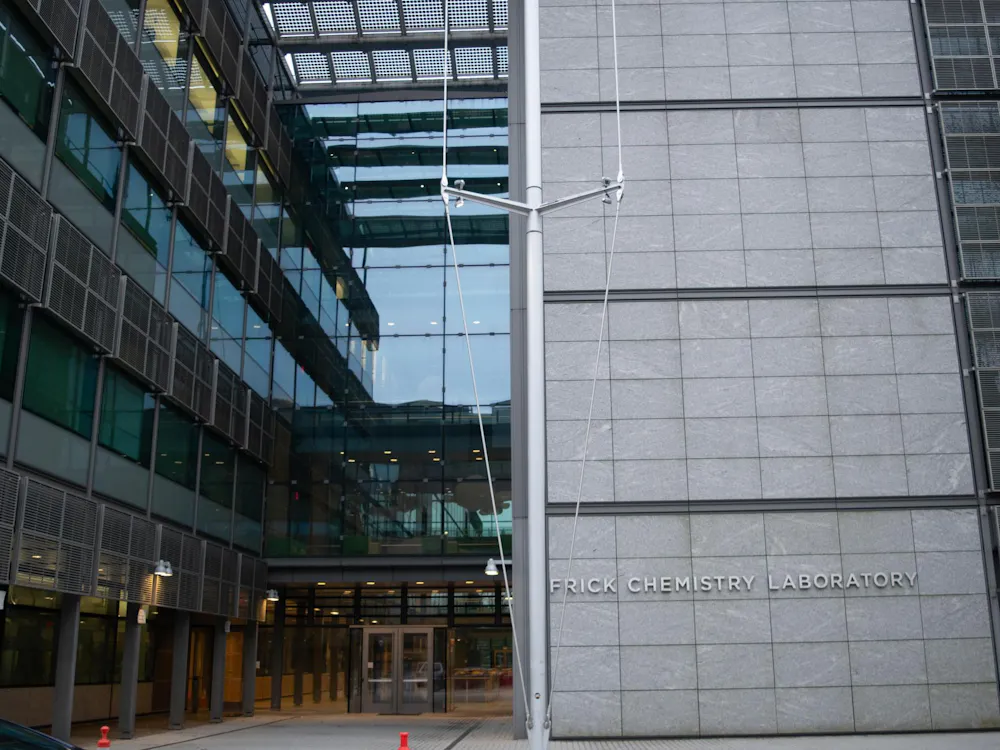
Two Princeton professors win 2027 American Chemical Society awards
Kimberly HutchinsonPrinceton chemistry professors David MacMillan and Paul Chirik were named 2027 American Chemical Society national award winners for their contributions to the field of chemistry.
Princeton chemistry professors David MacMillan and Paul Chirik were named 2027 American Chemical Society national award winners for their contributions to the field of chemistry.

Federal court blocks elimination of duration of status for international students
Luke GrippoA federal court has temporarily stopped the Department of Homeland Security from implementing its new final rule that would limit how long international students and exchange visitors can stay in the country. The next update on the case is set for Oct. 2.
A federal court has temporarily stopped the Department of Homeland Security (DHS) from implementing its new final rule that would limit how long international students and exchange visitors can stay in the country. The next update on the case is set for Oct. 2.

Forbes renovation scope still undecided as Hobson prepares to open
Gus Vogel and Daphne LewisAs Forbes students prepare to become the first cohort to live in Hobson College next year, specifics on Forbes' own renovation remains unsettled by the University nearly six months after the University announced it was accepting consultant bids for a campus-wide dorm renovation plan.
As Forbes students prepare to become the first cohort to live in Hobson College next year, specifics on Forbes' own renovation remains unsettled by the University nearly six months after the University announced it was accepting consultant bids for a campus-wide dorm renovation plan.