



The Greek playwright Aristophanes would no doubt be surprised — and probably flattered — to know that one of his plays is still stirring debate over contemporary events more than 2,300 years after his death.
The bawdy comedy Lysistrata, one of 11 surviving plays by the dramatist, was performed last night at the University and, in what was billed as the "first-ever worldwide theater event for peace," at more than 1,000 locations around the world.
As part of the N.Y.-based, antiwar Lysistrata Project, an 18-member cast of students, faculty and community members staged a dramatic reading of the play, in which the women of Athens and rival Sparta decide to withhold sex from their husbands until the men end the Peloponnesian War peacefully.
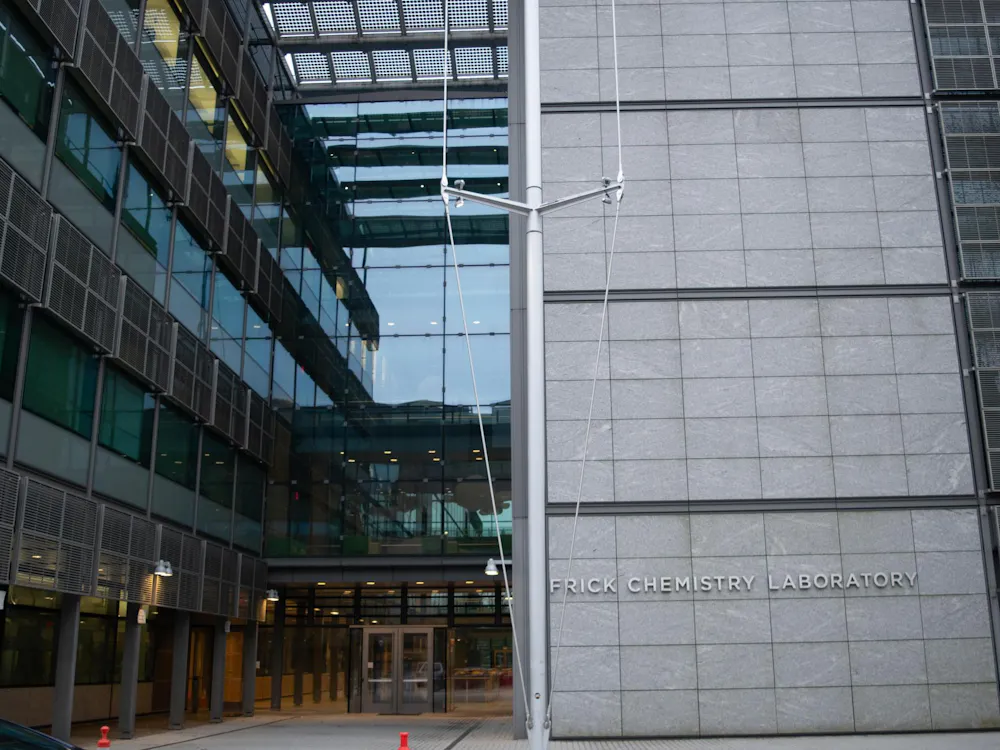
An audience of more than 100 members from the University and community filled the lobby of the new Carl Icahn Laboratory to capacity, lining the walls around the production area after all seats were taken.
The hour-long play, which used as props only a small wooden box and, for the Acropolis, the hollow, room-sized Frank Gehry sculpture bubbling from the middle of the lobby, was "staged" level with the audience. The actors read from scripts adapted by director Angela Buckingham, an Australian filmmaker who recently moved to the area.
Buckingham said she shortened the script to make the play as straightforward as possible.
"Because it was . . . a reading [in] a public space and not in a theater, I wanted it to be very accessible . . . that was my first concern," she said.
The play's performance across the country and world last night was not the first time Aristophanes' work served producers and organizers as an antiwar rallying cry.

Throughout the Vietnam conflict, student groups and professional troupes staged Lysistrata to protest U.S. involvement in Southeast Asia. It was adapted into an opera in 1967, complete with characters portraying Lyndon Johnson and other government figures. Buckingham said she wanted to keep her production set in ancient times rather than the present because of how much more social and political — rather than just sexual — power women have today.
Because the idea for the project was hatched by two New York City actresses in early January, preparation time for the reading was extremely limited.
"We had three rehearsals," Buckingham said. "One was snowed out."
Matthieu Boyd '03, who portrayed the hilariously desperate husband and soldier Cinesias, said the casting was very open and democratic.
The play, which ends with the two city-states making peace after some sexual teasing on the part of the newly-militant wives, was followed by a dialogue led by Rev. Robert Moore of the locally-based Coalition for Peace Action.
Moore called the play a "creative peace solution," and said, "There may be creative [remedies to war with Iraq] that we're not thinking of."

He opened the floor for comments, but with few forthcoming, read from preselected questions to begin the discussion.
Tarryn Chun '06, who helped produce the show, said she was pleased with the turnout. She said the project was especially attractive because it allowed her, through drama, to express her opinions opposing war.
Chun said she felt a "kind of general apathy on campus" and hoped the play would raise awareness about the Iraq situation.
Audience member Dan Candeto '06 said he thought the play was "a great way to show through humor what we might be doing wrong, [and] especially with the talk afterwards, to relate the play to modern issues."
Suggested donations of five dollars went to benefit MADRE, an international woman-focused human rights organization.
The event was sponsored by the Consortium of International Students and funded by the recently established Bildner Fund for Dialogue @ Princeton, the USG Student Groups Projects Board and the Office of the Dean of Undergraduate Students.
Read More
Two Princeton professors win 2027 American Chemical Society awards
Kimberly HutchinsonPrinceton chemistry professors David MacMillan and Paul Chirik were named 2027 American Chemical Society national award winners for their contributions to the field of chemistry.
Princeton chemistry professors David MacMillan and Paul Chirik were named 2027 American Chemical Society national award winners for their contributions to the field of chemistry.

Federal court blocks elimination of duration of status for international students
Luke GrippoA federal court has temporarily stopped the Department of Homeland Security from implementing its new final rule that would limit how long international students and exchange visitors can stay in the country. The next update on the case is set for Oct. 2.
A federal court has temporarily stopped the Department of Homeland Security (DHS) from implementing its new final rule that would limit how long international students and exchange visitors can stay in the country. The next update on the case is set for Oct. 2.

Forbes renovation scope still undecided as Hobson prepares to open
Gus Vogel and Daphne LewisAs Forbes students prepare to become the first cohort to live in Hobson College next year, specifics on Forbes' own renovation remains unsettled by the University nearly six months after the University announced it was accepting consultant bids for a campus-wide dorm renovation plan.
As Forbes students prepare to become the first cohort to live in Hobson College next year, specifics on Forbes' own renovation remains unsettled by the University nearly six months after the University announced it was accepting consultant bids for a campus-wide dorm renovation plan.