



In April 1978, 210 students streamed out of their hiding places in the basements of McCosh and Dickinson halls to take over Nassau Hall, beginning a three day sit-in to urge the University to divest itself of holdings in apartheid South Africa. Six hundred more students supported the campaign from the outside, forming a human blockade around the building, making sandwiches in the dining halls to pass to those planted inside and drawing news stations from across the country.
Last night, 25 years later, participants in the takeover, including panelist Larry Hamm '78, joined professor of religion Eddie Glaude GS '95 and SHARE coordinator Thema Bryant-Davis to address current student activism particularly concerning racial issues on campus.
The discussion, entitled "Enacting Social Reform at Princeton: Social change and the legacies of Dr. Martin Luther King, Jr., and Malcolm X," drew a large student crowd to the Wilcox Commons of Wilson College. The RCA's of Wilson College and the Black Student Union cosponsored the discussion.
The three panelists urged African-American students and other minorities to identify their sources of frustration on campus and to initiate constructive change.
Bryant-Davis challenged students to ask: "How do we make the crooked places at Princeton straight?" and "How do we correct wrongs when we can't all agree that they exist?"
She answered by reminding students that change is never initiated by the majority and by warning them not to let any obstacle deter them from their aims.
Glaude encouraged students to accurately assess the campus according to its present strengths and weaknesses, rather than to rely upon the "romantic holdovers of the 60's and 70's."
"We must give an account of this place, its virtues and vices," Glaude said. "Often we tend to draw on ready-made descriptions, we tend to look for racism in its traditional form."

Misdiagnosing the problem, Glaude said, often leads to attempts at misguided solutions.
Glaude challenged students to seek responsibility and determine what shape their struggle will take in the coming years.
"Princeton is undergoing an extraordinary transformation," he said. "What role will you play in urging Princeton to be more open and inclusive, to move the ethos of the place from the Street — yes, I said that — to where we can have a vibrant open culture where everyone can participate?"
Hamm recounted his story of taking over Nassau Hall for three days, and of the student campaign to encourage the University to divest itself from its holdings in South Africa. The story was marked by accounts of grand plans that brought little response from the University.
He emphasized that despite discouraging responses, he and his peers continued their campaign, which eventually resulted in the University divesting from several firms.
"What kind of leaders will you be?" Hamm asked in conclusion.
Read More
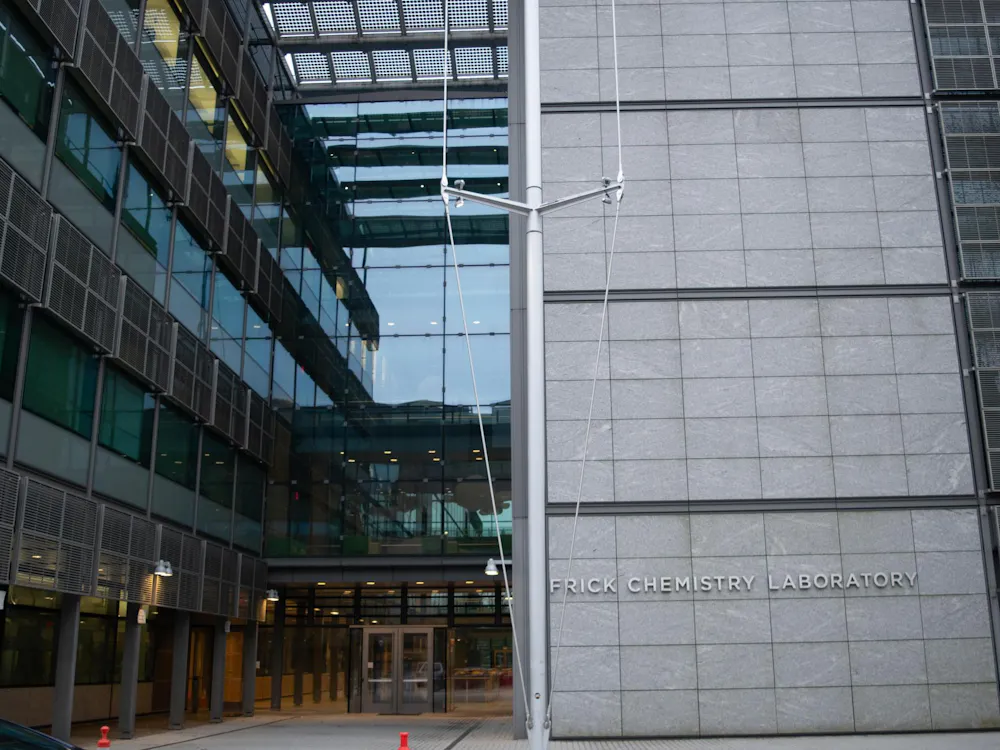
Two Princeton professors win 2027 American Chemical Society awards
Kimberly HutchinsonPrinceton chemistry professors David MacMillan and Paul Chirik were named 2027 American Chemical Society national award winners for their contributions to the field of chemistry.
Princeton chemistry professors David MacMillan and Paul Chirik were named 2027 American Chemical Society national award winners for their contributions to the field of chemistry.

Federal court blocks elimination of duration of status for international students
Luke GrippoA federal court has temporarily stopped the Department of Homeland Security from implementing its new final rule that would limit how long international students and exchange visitors can stay in the country. The next update on the case is set for Oct. 2.
A federal court has temporarily stopped the Department of Homeland Security (DHS) from implementing its new final rule that would limit how long international students and exchange visitors can stay in the country. The next update on the case is set for Oct. 2.

Forbes renovation scope still undecided as Hobson prepares to open
Gus Vogel and Daphne LewisAs Forbes students prepare to become the first cohort to live in Hobson College next year, specifics on Forbes' own renovation remains unsettled by the University nearly six months after the University announced it was accepting consultant bids for a campus-wide dorm renovation plan.
As Forbes students prepare to become the first cohort to live in Hobson College next year, specifics on Forbes' own renovation remains unsettled by the University nearly six months after the University announced it was accepting consultant bids for a campus-wide dorm renovation plan.