



While wireless networking is available at select locations on the University campus, some complain that the quality and reach of wireless service here does not match that of other universities, where networking is widely available.
OIT Wireless Networking Service currently allows students and faculty to connect to the Internet via a wireless interface in certain areas of campus, including the E-quad, Robertson Hall, Firestone Library and all of the Frist Campus Center.
Though there are no set plans for further expansion of the service, departments can choose to have wireless installed in or around their buildings, said David Morreale, the manager of OIT desktop computing support.
The installment fee for each department depends on the size and number of access points. Currently, the monthly fee per access point is $41, a price that has fallen over the past few years, Morreale said.
"There is an increasing number of departments that have asked my department to install wireless networks over the last six months or so," he said.
Other campuses
Some other universities have widely developed wireless networks. Columbia University has wireless access over a large part of the campus, covering much of the open spaces between buildings and classrooms, according to its website. The Massachusetts Institute of Technology also has wireless access in a majority of its buildings, according to its website.
Wireless access is not available in University student dormitories.
"At the highest levels, the Office of the Vice President of Information-Technology, they are talking about us integrating the installation of wireless systems . . . when we have the opportunity, such as when we build new buildings," Morreale said.

OIT allows students to register their own wireless access points, according to the OIT website. Students are expected to configure their WAPs in a way that will not interfere with OIT's own wireless and wired networks.
Student WAPs also cannot interfere with any other radio frequency services in the University, including cell phones or another WAP.
"OIT does not support students who use access points in the dormitory. They're on their own. If they want to do it, they can do it," Morreale said.
One student, who wishes to remain unidentified, expressed frustration with OIT's lack of support. He installed a network access translator, a type of WAP, in his dorm room, which operated for a month and a half before OIT requested that he shut it off, he said.
The student denied that there was any security breach with his NAT.
"Someone who could crack 128 bit encryption could potentially get in, but that's far outside the scope of anything a college student could obtain. It would have to be a professional hacker within the range of my wireless broadcast," he said.

His NAT provides wireless access to a restricted number of students, mostly those who live on his floor and the floors below and above him.
"The vulnerability of this kind of system is extremely low," he said.
The student also believed that OIT's wireless network is too limited.
"These wireless cards are included in the SCI computers, but are practically useless 99 percent of the time because I don't always do my work in Frist," he said.
OIT information security officer Anthony Scaturro was not available for comment.
Many of the eating clubs have wireless access, and all are given incentive to install wireless by the Princeton Prospect Foundation, a nonprofit organization that promotes educational endeavors in the clubs by providing project grants.
According to the foundation's website, the Campus, Cloister, Terrace and Tower Clubs have wireless access throughout their buildings. Charter and Colonial Clubs have connections in selected sections of their buildings, and Cap and Gown, Quadrangle and Ivy plan to provide wireless service soon, the PPF website said.
Read More
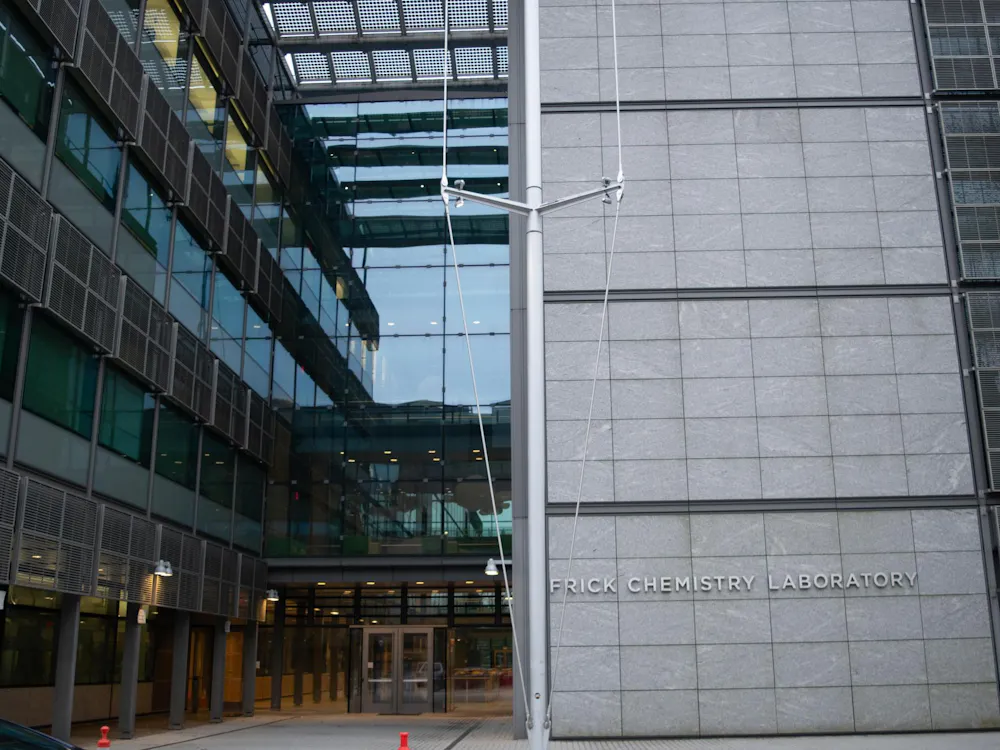
Two Princeton professors win 2027 American Chemical Society awards
Kimberly HutchinsonPrinceton chemistry professors David MacMillan and Paul Chirik were named 2027 American Chemical Society national award winners for their contributions to the field of chemistry.
Princeton chemistry professors David MacMillan and Paul Chirik were named 2027 American Chemical Society national award winners for their contributions to the field of chemistry.

Federal court blocks elimination of duration of status for international students
Luke GrippoA federal court has temporarily stopped the Department of Homeland Security from implementing its new final rule that would limit how long international students and exchange visitors can stay in the country. The next update on the case is set for Oct. 2.
A federal court has temporarily stopped the Department of Homeland Security (DHS) from implementing its new final rule that would limit how long international students and exchange visitors can stay in the country. The next update on the case is set for Oct. 2.

Forbes renovation scope still undecided as Hobson prepares to open
Gus Vogel and Daphne LewisAs Forbes students prepare to become the first cohort to live in Hobson College next year, specifics on Forbes' own renovation remains unsettled by the University nearly six months after the University announced it was accepting consultant bids for a campus-wide dorm renovation plan.
As Forbes students prepare to become the first cohort to live in Hobson College next year, specifics on Forbes' own renovation remains unsettled by the University nearly six months after the University announced it was accepting consultant bids for a campus-wide dorm renovation plan.