



Wendy Kopp '89, founder and president of Teach for America, said yesterday that a longterm organization building approach is essential to closing the achievement gap created by educational inequality.
Kopp said the solution to the problem requires building a strong culture of shared values, recruiting the right people to teach and holding them accountable for results, and setting clear goals, among other things.
"I honestly believe that [what's wrong is that] we haven't figured out that the same strategies that account for success in any sector —in business, in government agencies, in nonprofit organizations —would account for success in schools," Kopp said.
Though it would mean hard work, Kopp said, effective organizations are capable of putting children of all economic backgrounds on a level playing field.
"We've seen so many examples, whether at the classroom level or the school level, of the fact that when kids are given the opportunities they deserve, they absolutely can achieve at high levels," she said.
Kopp said she learned the importance of effective management through her work at Teach for America.
"Literally starting at the point where I realized that I, myself, was going to have to become a really good manager and organizational leader, that's the point at which Teach for America started literally thriving and stepped onto a different trajectory," she said.
In addition to the development of effective organizations, Kopp cited two other key components to a solution for the education gap.

"[W]e as a country would have to commit ourselves to the big goal of ensuring educational opportunity to all, which I don't think we've committed to yet," Kopp said.
She also pointed out the need to invest more resources in low-income schools, claiming "equal inputs won't get equal outputs."
Socioeconomic disparities such as lack of nutrition, poor access to good preschool programs and few quiet places to do homework are tremendous challenges for low-income children that contribute to the achievement gap, Kopp said.
"I also deeply believe that as long as today's socioeconomic disparities persist, it is within our reach to ensure that even despite those circumstances, we provide kids growing up in low income communities with the opportunity to obtain an excellent education," she said.
In addition to the policies she advocated, Kopp emphasized the role that Teach for America recruits play in transforming education.
"[T]he only real question is, 'Will the most talented and committed members of our generation commit ourselves to this effort?', and that's what also makes me excited to come back to campuses and talk to students because clearly it's the leaders who are on campuses today who will make or not make this movement work," Kopp said.

The lecture was sponsored by the Wilson School, in which Kopp majored while studying at the University.
Kopp shaped her ideas for Teach for America in her senior thesis. The program includes a national corps of college graduates who devote their skills to urban and rural public schools for two years. Since its inception in 1990, more than 9,000 men and women have joined the organization.
Kopp is also chair of the board of the New Teacher Project, a nonprofit consulting group derived from Teach for America that helps states and school districts recruit teachers.
In 1993, Kopp became the youngest recipient and first woman to be awarded the Woodrow Wilson Award, given every year to an alumnus or alumna who embodies Wilson's ideal of "Princeton in the nation's service."
Read More
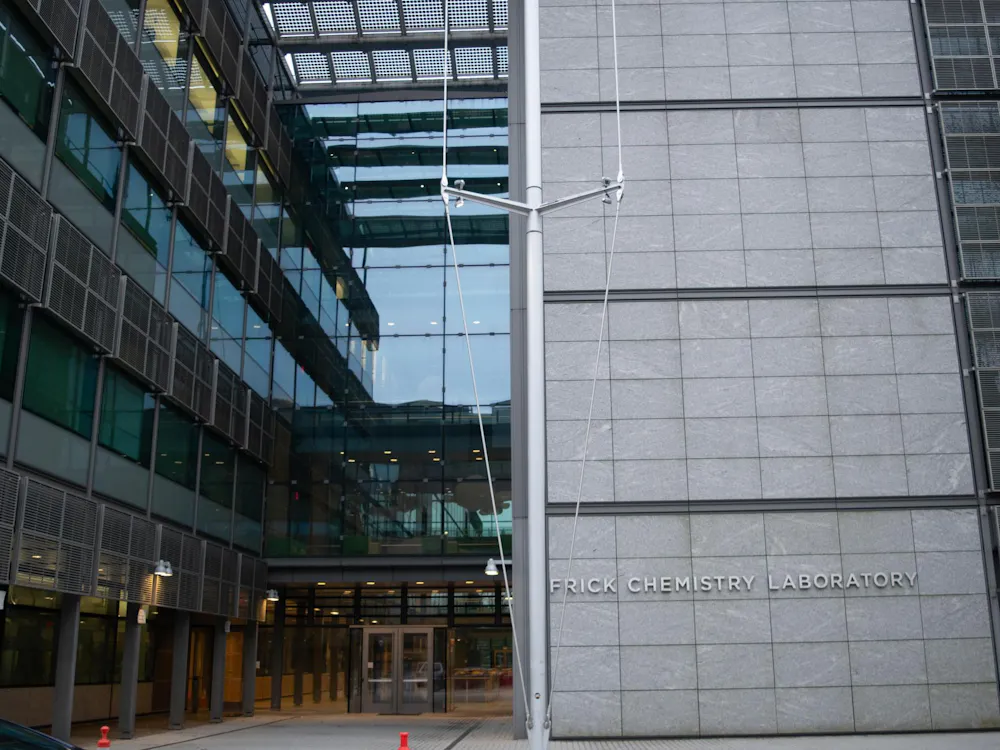
Two Princeton professors win 2027 American Chemical Society awards
Kimberly HutchinsonPrinceton chemistry professors David MacMillan and Paul Chirik were named 2027 American Chemical Society national award winners for their contributions to the field of chemistry.
Princeton chemistry professors David MacMillan and Paul Chirik were named 2027 American Chemical Society national award winners for their contributions to the field of chemistry.

Federal court blocks elimination of duration of status for international students
Luke GrippoA federal court has temporarily stopped the Department of Homeland Security from implementing its new final rule that would limit how long international students and exchange visitors can stay in the country. The next update on the case is set for Oct. 2.
A federal court has temporarily stopped the Department of Homeland Security (DHS) from implementing its new final rule that would limit how long international students and exchange visitors can stay in the country. The next update on the case is set for Oct. 2.

Forbes renovation scope still undecided as Hobson prepares to open
Gus Vogel and Daphne LewisAs Forbes students prepare to become the first cohort to live in Hobson College next year, specifics on Forbes' own renovation remains unsettled by the University nearly six months after the University announced it was accepting consultant bids for a campus-wide dorm renovation plan.
As Forbes students prepare to become the first cohort to live in Hobson College next year, specifics on Forbes' own renovation remains unsettled by the University nearly six months after the University announced it was accepting consultant bids for a campus-wide dorm renovation plan.