



For the first two weeks of the semester, David Gopstein '05 arrived to each of his classes more than 20 minutes late. Gopstein said "he just couldn't get out of bed." But Gopstein is no slacker — he was incapacitated.
With a torn right calf muscle and a two-week waiting period for renting golf cart from University Health Services, Gopstein had no choice but to hobble around on crutches and depend on Public Safety for rides.
"For those two weeks, it was a struggle just to get to class," Gopstein said of his wait for one of the eight Medical Transport Vehicles. "They don't have enough golf carts. It's a numbers problem that can be fixed easily, and it shouldn't prevent you from going to class," he said.
Gopstein said the University should purchase more golf carts to alleviate the problem because proctors have emergencies to attend to and a campus to patrol.
"Public Safety's job is not to be a shuttle service," he said.
Lauren Lyon '06, a coxswain on the crew team, echoed Gopstein's frustration. Lyon said it took 10 and a half weeks before she got a working golf cart after she tore a ligament in her ankle on Nov. 10.
After such a long waiting period, Lyon formed an attachment to the cart that helped her navigate campus, and came to call her trusty steed Barnaby.
"Public safety and I got in quite a few tiffs," Lyon said. "I didn't get any action taken on the golf cart until I talked to the head of Public Safety. I was waiting for 2 hours at a time for them to come [and take me to class]."

"I don't think the system is very efficient," she said.
Gopstein, on the men's varsity tennis team, said he had it easy.
Some students complain that non-athletes and out-of-season athletes often have to wait up to 11 weeks for a golf cart.
Director of administrative services in health services Elizabeth Langan denies that athletes get any preference over non-athletes in the waiting process.
"This is a myth. We do not segregate rental availability on the status of the student-athlete or non-athlete. Indeed many of our long term rentals are for students with special needs or recovering from catastrophic events. Students are assigned MTV's as they are approved for use," she said.
Langan said that often, "clusters" of athletes — "two football guys or girls on the crew team" — will request golf carts, but they do not get "first dibs."

Gopstein said his team picked up the $125 per week rental fee.
The rental fee, Langan said, goes toward golf cart maintenance.
"All costs related to the purchasing, administration, servicing, safety checks, replacement of tires, repairs and body replacement parts are [funded] through the rental income," Langan said.
Langan said the program is "self supporting" and must generate revenue to keep up the service for students.
Other students are satisfied with the way the MTV program is run. Amanda Kopf '04 broke her right tibia and fibula during the second of classes, and said she got a cart in no time.
Though she paid for the cart herself, Kopf said McCosh was accommodating and attentive.
"I will say that though the golf cart aspect of my injury was expensive, McCosh did their very best to make my life as easy and comfortable as possible," Kopf said. "And though their golf cart program could possibly use some work, the infirmary should be lauded for their behind the scenes work with gimps like me."
The MTV program began in 1999 when the University purchased four. By 2002, the fleet consisted of eight. Three more are on order, said Langan, who coordinates and who originally initiated the MTV program.
Langan said the biggest problem with the MTV program is vandalism and abuse of the golf carts.
"It is astonishing to me that people who see a vehicle identified with a handicapped sign would vandalize it," Langan said. "Would these same people decommission an electric wheelchair? Or cripple a seeing eye dog? As the director of this program, I cannot tell you how difficult it is for many students with serious temporary disabilities to be deprived of their ability to navigate this large campus."
She said that broken headlights, broken axels and carts that have been flipped over are not uncommon.
UHS statistics indicate that about 60 percent of rentals are to non-athletes.
In the past year, UHS has rented golf carts to 45 students.
Read More
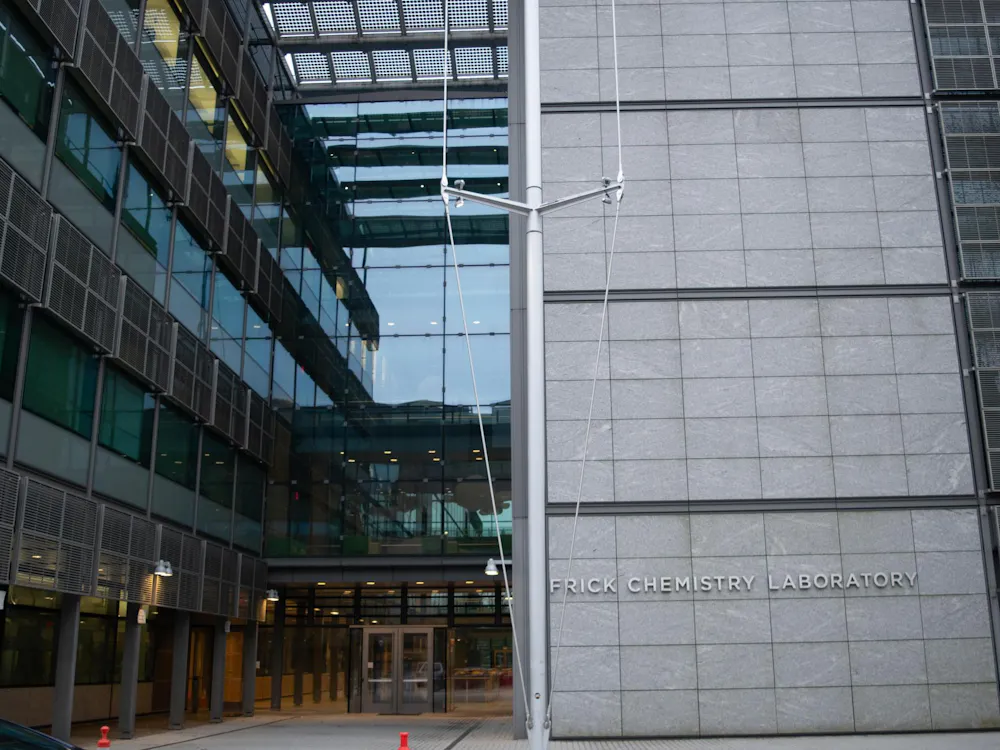
Two Princeton professors win 2027 American Chemical Society awards
Kimberly HutchinsonPrinceton chemistry professors David MacMillan and Paul Chirik were named 2027 American Chemical Society national award winners for their contributions to the field of chemistry.
Princeton chemistry professors David MacMillan and Paul Chirik were named 2027 American Chemical Society national award winners for their contributions to the field of chemistry.

Federal court blocks elimination of duration of status for international students
Luke GrippoA federal court has temporarily stopped the Department of Homeland Security from implementing its new final rule that would limit how long international students and exchange visitors can stay in the country. The next update on the case is set for Oct. 2.
A federal court has temporarily stopped the Department of Homeland Security (DHS) from implementing its new final rule that would limit how long international students and exchange visitors can stay in the country. The next update on the case is set for Oct. 2.

Forbes renovation scope still undecided as Hobson prepares to open
Gus Vogel and Daphne LewisAs Forbes students prepare to become the first cohort to live in Hobson College next year, specifics on Forbes' own renovation remains unsettled by the University nearly six months after the University announced it was accepting consultant bids for a campus-wide dorm renovation plan.
As Forbes students prepare to become the first cohort to live in Hobson College next year, specifics on Forbes' own renovation remains unsettled by the University nearly six months after the University announced it was accepting consultant bids for a campus-wide dorm renovation plan.