



Last amended in 2000, the University honor system constitution may face further revision if the proposed amendments of class senator Johnny Chavkin '05 are successful.
Chavkin said he is planning to collect signatures for a petition in support of his proposed changes to the Honor Committee.
The committee investigates alleged violations of the Honor Code, which covers in-class examinations. Of about 20 investigations each year, about six to nine lead to hearings and four to five lead to convictions, committee chair Catherine Farmer '03 said.
Chavkin's concerns about the honor code arise in three separate areas. First, Chavkin said he believes a student's intent should be considered in his or her punishment after the student is convicted, he said. Secondly, Chavkin said he supports the addition of two faculty members to the student-only honor committee. Finally, Chavkin said every session with a defendant should be tape recorded.
Chavkin said many students do not realize that intent plays no role in the Honor Committee process. Article IV of the Constitution of the Honor System states, "Documented evidence and plausibility of method, in the absence of demonstrated intent, may be enough to convict."
While Chavkin said he feels the Honor Committee should continue making its convictions without regard to intent, he would like intent to be a factor in the penalty process.
"In the penalty process, if they cannot show intent, the maximum penalty should be failing the test and probation," Chavkin said. "No student should have to leave this school because of an honest mistake."
Amy Saltzman '05, USG academics chair, said she disagrees with Chavkin because it would be virtually impossible to determine whether or not a student intended to cheat.

"Even if the student states that he did not intend to cheat, the Honor Committee should have the power to determine whether or not the student is guilty regardless of the student's claim," Saltzman said in an email.
Citing a need for oversight, Chavkin has also proposed the addition of two faculty members to the honor committee. Currently, 12 members sit on the committee and seven members hear any given case. A vote of six out of seven is required for a conviction.
Chavkin has recommended that two faculty members be added to the group of seven for a total of nine members hearing each case. A vote of eight out of nine would be required to convict. This would give faculty only veto power, Chavkin said.
"One complaint [against this idea] is that faculty would dominate the committee, and the other complaint is that faculty are overly harsh," Chavkin said. "Here, they can't convict on their own; they can only veto."
Farmer said the Honor Committee should remain student-run based on the original principles of the Honor Code.
"[In 1893] students approached the faculty with the Honor Code concept, whereby students would proctor themselves," Farmer said in an email. "Because students would be proctoring themselves in the examination room, it only made sense that the students themselves deal with the violators of this trust. I believe that this basic premise is as true in 2003 as it was in 1893."

The final change Chavkin said he would like to see is the tape recording of all interviews with defendants.
Farmer noted that the Honor Committee has decided to begin taping interviews with students accused of Honor Code violations. However, she does not support taping all interviews related to the investigation.
"So many of these interviews are simply to gather background information and taping them would create tension for the interviewee so that we would be less likely to gather the information we need," Farmer said.
According to Article VII of the constitution, Chavkin must gather 200 signatures from members of the student body in order to initiate a student referendum on the proposed changes. A three-fourths vote would be required to amend the constitution.
USG President Pettus Randall said the USG is not taking a position on the case.
Chavkin said he hopes that at least his recommendations cause students to think about and question the code and its implementation.
"We shouldn't blindly follow a code; we should evaluate it periodically," Chavkin said. "It's our duty as students."
Read More
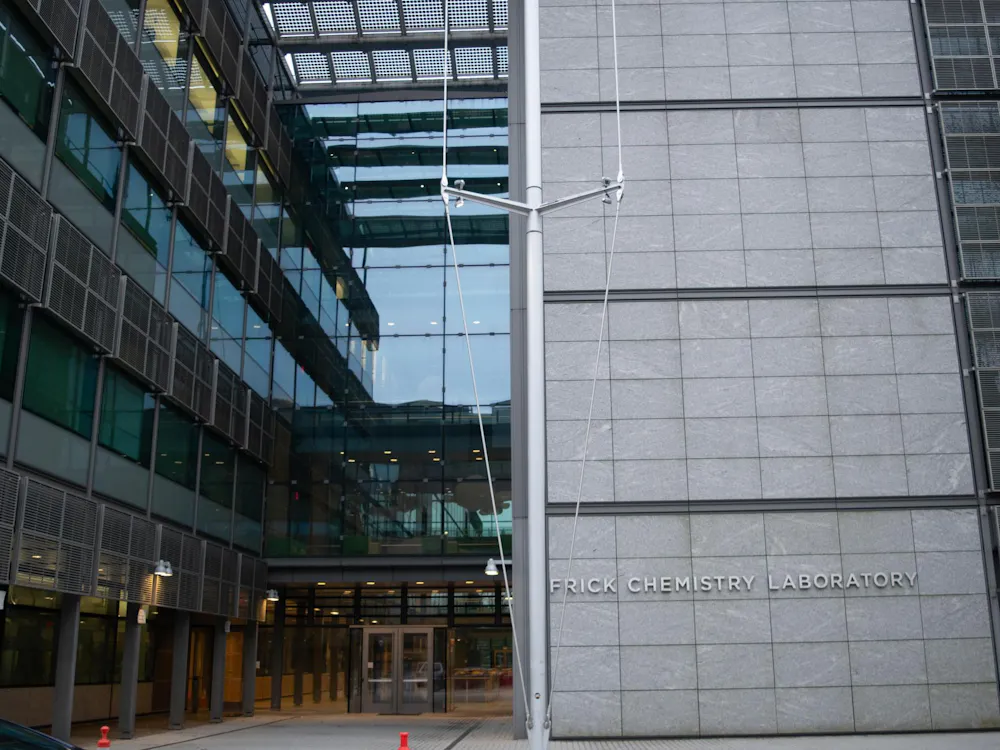
Two Princeton professors win 2027 American Chemical Society awards
Kimberly HutchinsonPrinceton chemistry professors David MacMillan and Paul Chirik were named 2027 American Chemical Society national award winners for their contributions to the field of chemistry.
Princeton chemistry professors David MacMillan and Paul Chirik were named 2027 American Chemical Society national award winners for their contributions to the field of chemistry.

Federal court blocks elimination of duration of status for international students
Luke GrippoA federal court has temporarily stopped the Department of Homeland Security from implementing its new final rule that would limit how long international students and exchange visitors can stay in the country. The next update on the case is set for Oct. 2.
A federal court has temporarily stopped the Department of Homeland Security (DHS) from implementing its new final rule that would limit how long international students and exchange visitors can stay in the country. The next update on the case is set for Oct. 2.

Forbes renovation scope still undecided as Hobson prepares to open
Gus Vogel and Daphne LewisAs Forbes students prepare to become the first cohort to live in Hobson College next year, specifics on Forbes' own renovation remains unsettled by the University nearly six months after the University announced it was accepting consultant bids for a campus-wide dorm renovation plan.
As Forbes students prepare to become the first cohort to live in Hobson College next year, specifics on Forbes' own renovation remains unsettled by the University nearly six months after the University announced it was accepting consultant bids for a campus-wide dorm renovation plan.