



Straying from University tradition and the actions of nearly every Ivy League school, Dean of Admission Fred Hargadon said yesterday that he would not release early decision statistics for the Class of 2007 until all regular admission decisions have been made because he thinks the process has become too much like a "sporting event."
This decision comes as both Yale and Stanford universities have announced intentions to switch to early action programs for next year. President Tilghman has strongly defended the University's early decision policy as fair.
"He is making a really important statement," said Lauren Robinson-Brown '85, University communications director.
She said that though it was up to Hargadon to set policy, the new admission dean will be free to reevaluate the situation after Hargadon retires in June. As of last night, she said she had not yet spoken to Hargadon about the decision.
"The fact that we've always made almost two-thirds of our offers of admission in regular decision (even when we had early action) is completely lost in treating admissions like a sporting event and in putting all the emphasis on the 'first-quarter score,' rather than how the game plays out and the sort of freshman classes we ultimately enroll," Hargadon wrote in an email.
He asserted that these "first-quarter scores" have caused parents, students and schools to focus too much on early applications.
Hargadon stressed that because early and regular rounds are two parts of the same process, the admission office will not release statistics until the entire process is complete.
Hargadon expects that the total number of applications received this year will "hit a record high," though he will not be certain for another week as the last of the applications are still arriving, he said.

The University admitted 45 percent of the Class of 2006 through its early decision program last year.
In this admission season, Harvard University has accepted 22 percent of a record 7,620 applications for a total of 1,150 students under their nonbinding early action program.
Traditionally, Harvard accepts 2,100 applicants — early and regular decision combined — 90 percent of whom enroll, said Marilyn McGrath Lewis, the university's director of admission.
Yale filled 43 percent of its class by accepting 557 students from a pool of 2,611. The number of students accepted increased less than 2 percent, despite a 25-percent jump in the number of applications, according to the Yale Daily News.
The University of Pennsylvania saw a 12-percent increase in the number of applications they received. Those admitted will constitute 47 percent of the entering class, down from 49 percent last year, according to Penn's admission office.
Read More
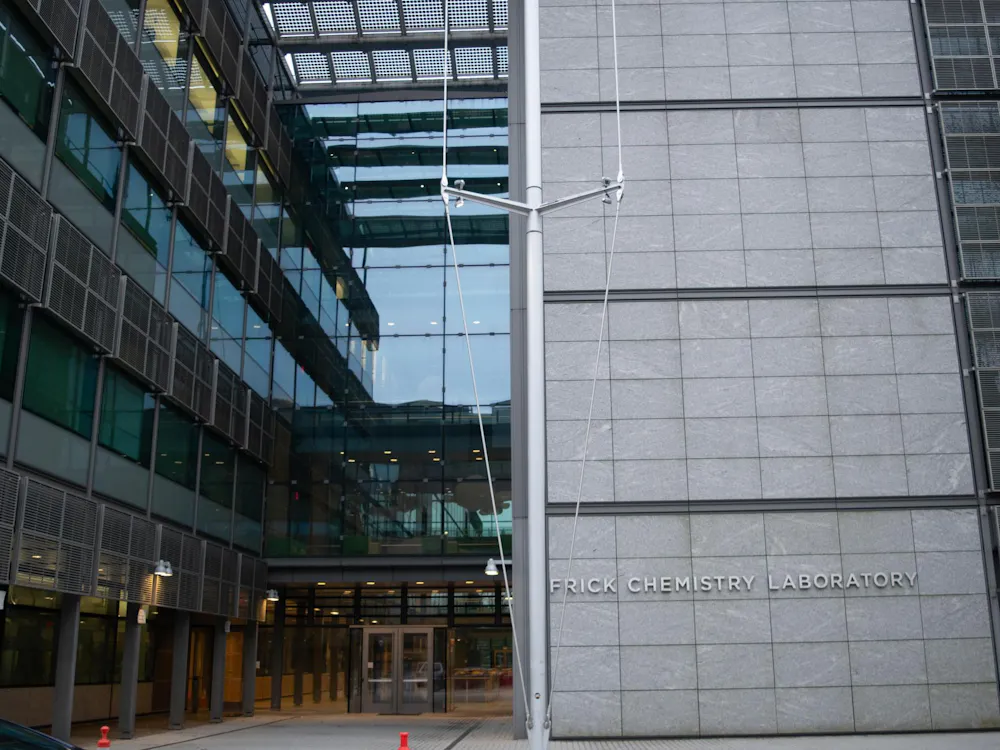
Two Princeton professors win 2027 American Chemical Society awards
Kimberly HutchinsonPrinceton chemistry professors David MacMillan and Paul Chirik were named 2027 American Chemical Society national award winners for their contributions to the field of chemistry.
Princeton chemistry professors David MacMillan and Paul Chirik were named 2027 American Chemical Society national award winners for their contributions to the field of chemistry.

Federal court blocks elimination of duration of status for international students
Luke GrippoA federal court has temporarily stopped the Department of Homeland Security from implementing its new final rule that would limit how long international students and exchange visitors can stay in the country. The next update on the case is set for Oct. 2.
A federal court has temporarily stopped the Department of Homeland Security (DHS) from implementing its new final rule that would limit how long international students and exchange visitors can stay in the country. The next update on the case is set for Oct. 2.

Forbes renovation scope still undecided as Hobson prepares to open
Gus Vogel and Daphne LewisAs Forbes students prepare to become the first cohort to live in Hobson College next year, specifics on Forbes' own renovation remains unsettled by the University nearly six months after the University announced it was accepting consultant bids for a campus-wide dorm renovation plan.
As Forbes students prepare to become the first cohort to live in Hobson College next year, specifics on Forbes' own renovation remains unsettled by the University nearly six months after the University announced it was accepting consultant bids for a campus-wide dorm renovation plan.