



The University's Priorities Committee held a public meeting last night to discuss budget proposals for the 2003-04 fiscal year. Questions from faculty and undergraduate and graduate students centered on the economy's effect on the endowment, University healthcare, graduate student quality of life and library expansion.
University treasurer Christopher McCrudden said though the University is "not immune from the general economic conditions," the Princeton University Investment Company has produced two years of positive growth in endowment while most endowments at universities across the country have fallen.
He said the committee's main concern was more with Annual Giving than with existing investments because the budget depends heavily on the yearly drive, which is affected more dramatically by downturns in the economy.
"We're cautiously hopeful, but that's a real vulnerability," McCrudden said.
Provost Amy Gutmann, who chairs the committee, emphasized that the University's commitment to financial aid will not be affected by the economic downturn, and if the need to cut back any facet of the University's budget came up, tentative plans for future renovations could be delayed as a first measure.
"Projects already started won't be pushed back," she said. "That would actually hurt us more."
This year McCosh Health Center, under new Chief Medical Officer Daniel Silverman, asked for a large budget increase to fund more staff for the counseling center, an eating disorder physician, an urgent care physician, a nurse and a continuing subsidy for student flu shots.
The items, all of which might not be met in this year's budget, were clearly prioritized in their presentation to the committee, Gutmann said.

The important thing about the volume of requests is that it "calls to everybody's attention what are the worthy things to do in the future even if we can't do them this year," she said.
Rising health insurance costs for dependents were one of several quality-of-life issues voiced by graduate students, who were heavily represented at the meeting. The erosion of fixed fellowships by inflation and a request for an increase to the two student housing staff members were also discussed.
In the second year of a three-year plan to increase library acquisitions, the committee faces rising book and journal costs that far outpace inflation.
Last night's meeting was open to the University community, but only 19 people were present.
Vice Provost for Administration Joann Mitchell moderated the meeting. She is one of 18 committee members, not all of whom were present last night.
The Priorities Committee is a subcommittee of the Council of the Princeton University Community and advises President Tilghman on each year's operating budget, which includes tuition and fees for all students.

She reviews and may amend the proposal before passing it on to the University Board of Trustees for official adoption.
The committee operates under an open mandate — a balanced budget is the only requirement from the trustees. The group meets approximately 20 to 25 times per year.
Preliminary recommendations of the committee will be aired in a meeting of the CPUC in December. Requests submitted by the various departments are available at the provost's website as soon as they are published. The operating budgeting will also be posted there after approval by the trustees.
Read More

Princeton University Orchestra and men’s ultimate frisbee team named in University’s latest hazing report
Andrew ArthurTwelve students in the Princeton University Orchestra and Men's Ultimate Frisbee team were found responsible for hazing violations in the University's latest Campus Hazing Transparency Report. Sanctions ranged from Dean's warnings to disciplinary probation.
Twelve students in the Princeton University Orchestra and Men's Ultimate Frisbee team were found responsible for hazing violations in the University's latest Campus Hazing Transparency Report. Sanctions ranged from Dean's warnings to disciplinary probation.

Murray-Dodge Café celebrates 50th Anniversary, drawing over 260 students
Hifza KaleemOn Wednesday, Murray Dodge Cafe celebrated its 50th anniversary, drawing more than 260 students to celebrate with free cookies and merchandise.
On Wednesday, Murray Dodge Cafe celebrated its 50th anniversary, drawing more than 260 students to celebrate with free cookies and merchandise.
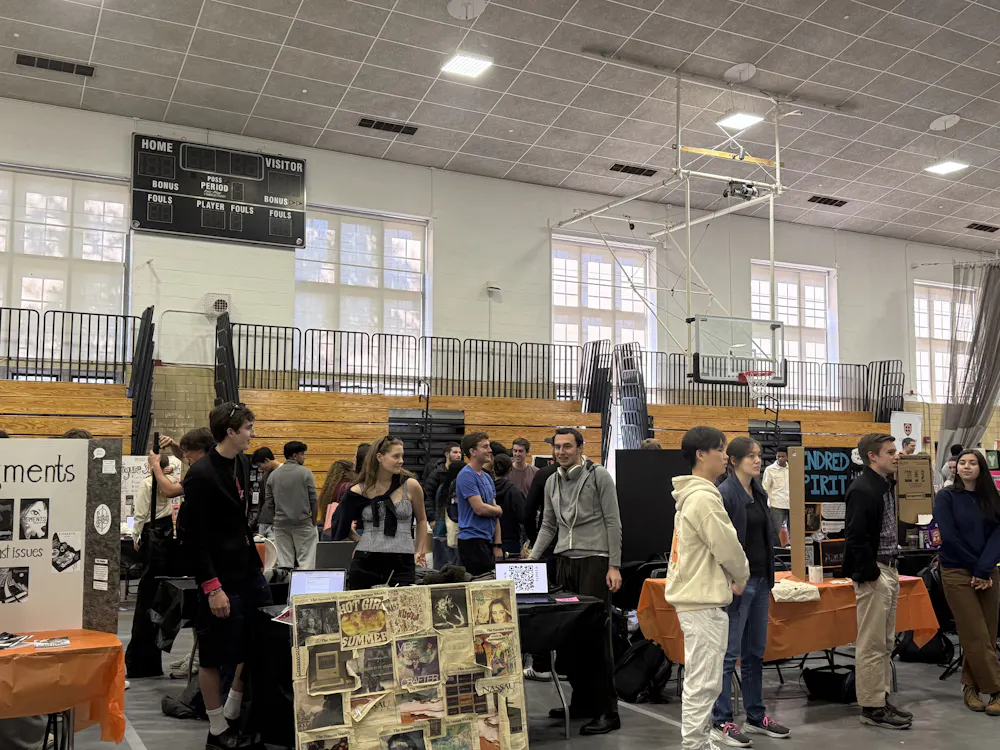
Students share mixed reactions as mandated officer and treasurer trainings return to in-person format
David EstradaThe University's student organization officers and treasurers returned to mandatory in-person training this fall after years of online sessions. Student reactions found parts of the training redundant or tedious, though most agreed the sessions were important.
The University's student organization officers and treasurers returned to mandatory in-person training this fall after years of online sessions. Student reactions found parts of the training redundant or tedious, though most agreed the sessions were important.