



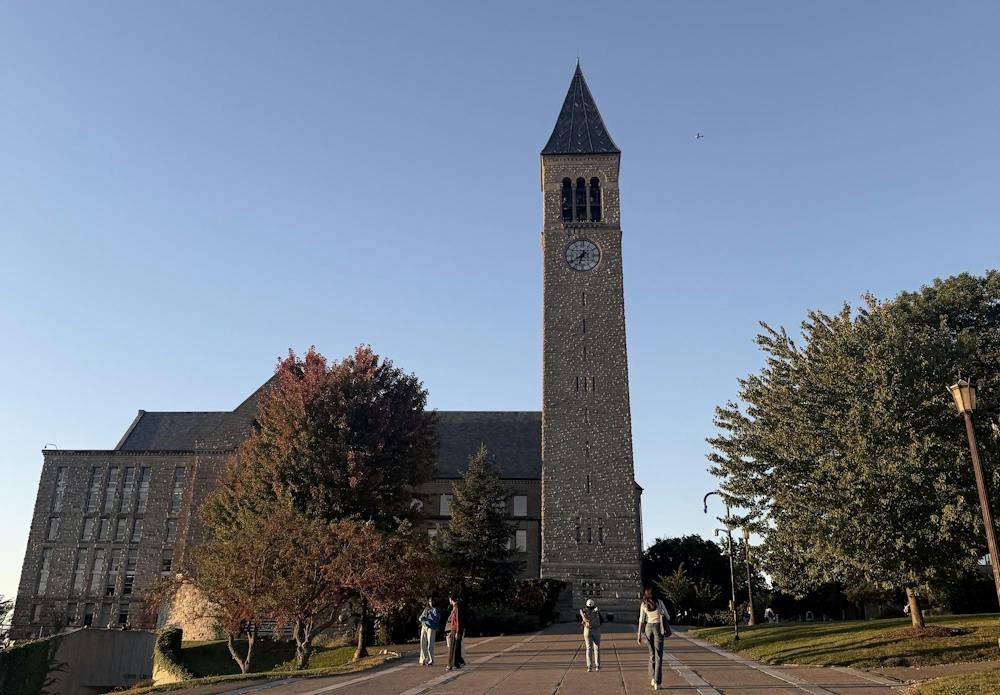
Jane Doe’s allegation of a gang rape at Cornell University is horrifying. According to her lawsuit, two men pressured her into using drugs while she was already intoxicated. They then sexually assaulted her and invited other men to rape her. Seven men are named as defendants.
In response, media attention — and the Cornell president — have rightfully focused on fraternities or drinking culture as factors contributing to sexual violence. While it’s important to examine the role of these social institutions in fostering sexual violence, we need to scrutinize the broader culture of misogyny and dehumanization on college campuses, looking beyond a specific setting or circumstance in which they occur.
At Princeton, where Greek life does not hold a commanding role, a 2022 campus survey found that one in five of our undergraduates were subjected to sexual misconduct. We face an uncomfortable truth: sexual misconduct at Princeton is pervasive and far too neglected, even if our social institutions might differ from Cornell’s.
The University publishes descriptions of a limited set of sexual assault cases here at Princeton, all of which are explicit and disturbing. Further, in 2015, as part of an effort to comply with Title IX requirements, Princeton began conducting surveys about sexual misconduct — a term that encompasses sexual assault, stalking, abusive intimate relationships, and sexual harassment.
Among undergraduates who experienced sexual misconduct, 35 percent of respondents in the 2022 survey said the misconduct occurred at social settings like parties, events, and public talks. Yet living environments like dorms were not far behind, reported by 29 percent of respondents, and 12 percent of respondents cited academic environments like classes. And the true numbers may be even higher: when asked why more didn’t respond to the survey, some students reported that they didn’t feel responses to the survey would change University policy.
Yet despite the fact that sexual misconduct permeates campus life, nearly half of the male respondents do not actively affirm that sexual violence is a problem. In the aforementioned survey, 14 percent of men answered “very true” or “true” to the statement “I don’t think sexual violence is a problem at Princeton,” while 30 percent were unsure. Notably, these are students who volunteered to fill out a survey about sexual misconduct: we do not know the actual percentage of students who recognize the problem of sexual violence on our campus.
By contrast, only 5 percent of women answered “very true” or “true” to the same statement, while 73 percent of women thought that the statement was untrue. 83 percent of genderqueer, gender non-conforming, nonbinary, or transgender students disagreed with the statement. Though there is still a substantial portion of non-male students who dismiss the scope of sexual violence, this is clearly a gendered issue: some men are either less aware, or simply indifferent.
That some men underestimate the significance and seriousness of sexual violence at Princeton may not be surprising. But perhaps there’s another assumption at work for the unassuming observer: that the social institutions particular to Princeton could curb the culture of violence that led to Jane Doe’s alleged rape.

Greek life dominates the social scene at many American universities. At Princeton, Greek life is an option, but it doesn’t control our campus culture. Instead, eating clubs define the structure of our social life. Like frats, eating clubs host parties, serve drinks, and function as an after-hours social space for many students. But unlike frats, which are single-gender residential environments owned and controlled by men, eating clubs are co-educational, and only house officers. It’s easy to see how people might associate a male-dominated space with sexual violence and a particular brand of masculinity.
Yet even if our institutions are different, people still commit sexual violence on our campus. According to the 2022 survey, 5 percent of female undergraduates were non-consensually penetrated in that year, and 5 percent were sexually assaulted while incapacitated.
These assaults may not make national news, but we don’t need headlines to tell us we should care about violence done to our peers. It’s important to scrutinize the role fraternities and similar institutions have in fostering an environment that permits or even encourages sexual violence. But we — Princeton students, administrators, and our extended community — need to stay vigilant. Our attention must not waver when the spotlight fades.
150th Editorial Board
Christopher Bao ’28, Chair
Raf Basas ’28

Juan Fajardo ’28
Lily Halbert-Alexander ’28
Siyeon Lee ’27
Maya Mukherjee ’27
The 150th Editorial Board is an institutional voice of The Daily Princetonian and consists of seven members. It convenes on a regular basis to discuss issues and current events of interest to the Princeton University community, as well as collectively write signed editorials addressing them, which reflect the consensus of a majority of the Board’s membership. To ensure independence, the Board works separately from the newsroom of the ‘Prince,’ and its members do not cover the topics of their editorials in that capacity for the paper.
Read More

Letter to the Editor: Broadline distributors are not responsible for declining nutrition
Benjamin Garcia de FigueiredoWhile food nutrition is indeed declining, broadline distributors are not the primary culprit — and we should make sure to be honest about that fact.
While food nutrition is indeed declining, broadline distributors are not the primary culprit — and we should make sure to be honest about that fact.

Princeton University, speak out against the South Brunswick data center
Elif CamThe New Jersey Department of Environmental Protection is currently considering whether to grant an air permit to the data center, which will be located on a site that was owned by Princeton University until 2024.
The New Jersey Department of Environmental Protection is currently considering whether to grant an air permit to the data center, which will be located on a site that was owned by Princeton University until 2024.

Start the conversation
Ian RosenzweigIt’s no secret that the United States is, functionally, a gerontocracy. By facilitating the occasional opportunity for national or international leaders to truly listen to young people’s concerns, Princeton will have made a more immediate impact in the service of humanity than most other campus initiatives can claim.
It’s no secret that the United States is, functionally, a gerontocracy. By facilitating the occasional opportunity for national or international leaders to truly listen to young people’s concerns, Princeton will have made a more immediate impact in the service of humanity than most other campus initiatives can claim.