



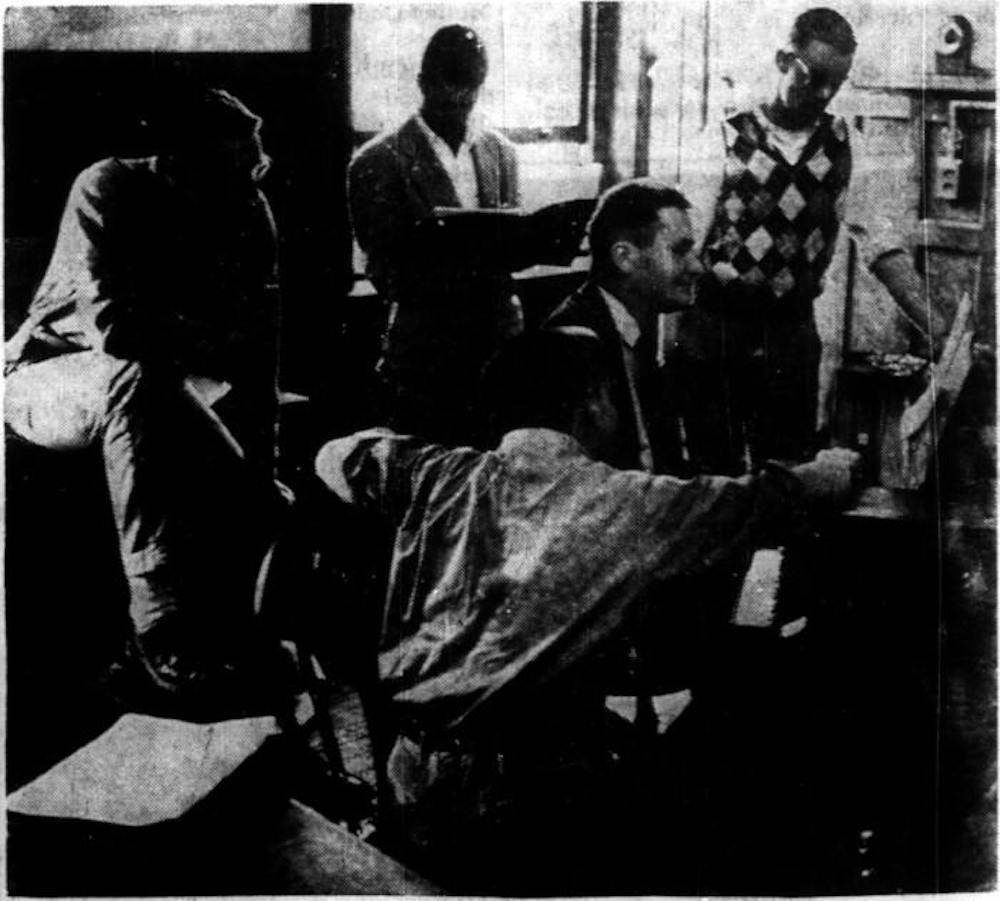
“Must a Princeton man always look like a Princeton man?” asked a Princeton student in a 1950 letter to The Daily Princetonian. He was referring to the school’s culture of clothing conformity. But what did it mean to dress like a Princeton man? Although the daily apparel of Princetonians has changed over time, throughout the university’s history, students have grappled with balancing self-expression and university regulations when shaping their sense of style.
Dress codes first emerged in the 1750s. In 1751 and 1752, Princeton’s trustees passed a dress code that mandated students wear a cap and gown for both class and recreational time. Inspired by the long tradition of cap-and-gown wearing that dated back to the Middle Ages at Oxford and its peer institutions abroad, Princeton followed suit. However, Princeton’s mandate only lasted a few years before it was ultimately dissolved by administration because these habits were considered “peculiar.”
In the late 19th century, Princeton’s student population was swiftly expanding. The growing prominence of Princeton led to a desire for a look that captured this, spurring debates about the merits of reinstituting cap-and-gown wearing amongst students. Although the rule was never reinstated, there was a prominent debate amongst students about whether caps and gowns should be enforced.
An 1878 Alumni Princetonian article highlights that the cap-and-gown dress codes that briefly existed in the 1750s were a key part of Princeton’s identity: “Instead of being an innovation at Princeton, [cap and gown wearing] is one of the earliest and most continuous customs.” And one particularly passionate student, who signed only his first initial “D.,” wrote an article for the November 1888 issue of the Nassau Literary Magazine explaining that at Oxford and Cambridge, academic dress was required to be worn the majority of the time. Despite Princeton’s brief 18th century foray into the required regalia, he complained that American universities lacked the precedent for the implementation of this kind of dress tradition. D. hoped that students would adopt the cap and gown to strengthen their scholarly identity, emphasizing that, “it is surprising, that in our colleges, where learning and scholarship is theoretically of prime importance, the cap, the emblem of the scholar, is so little used.”
Tatiana Nuñez-Bright, a lecturer for the Princeton Writing Program who teaches the first-year Writing Seminar course “Fashioning the Self,” said that “dress really telegraphs your relationship to the [college] institution” in an interview with the ‘Prince.’ The desire for cap-and-gown wearing represented a longing from some students for their dress to reflect and support the prestigious academic identity of the growing institution.
While some may have seen academic habits as a way of strengthening scholarly identity, other students pointed to potential negative consequences of a uniform dress code. In an 1896 student reflection on Princeton’s history published by the ‘Prince,’ Alfred L.P. Dennis ’1896 presented cap and gown wearing as restrictive to adolescent experimentation: “In academic habit and seemly garb [students] were to attend to college duties, and little excuse was there made for youthful spirits or boyish pranks.” For Dennis, a fixed dress code contradicted the freedom that defined the Princeton experience.
The debate surrounding cap and gown wearing faded at the turn of the 20th century, but the question of presenting a Princetonian visual identity through its dress remained. Princeton style became known for its emphasis on formalwear. According to the 1950 student complaint about clothing conformity, amongst students, there was generally an expectation to wear starched white Oxford shirts, ties, and grey flannel jackets for class and for leisure.
The more formal early 20th century style began to shift during the post-World War II period. Nuñez-Bright explained that Ivy League style at this time came to be defined by the intersection of established traditional formalwear alongside informal items. Casual wear such as khaki shorts and sack suit, which lacked the typical tight fit and structure of a typical suit, was brought in from those who came in on the GI Bill. She emphasized that “the thing to realize about mid-century Ivy style is that it was a movement toward comfort. It showed that you were a person that casually fit within the university, that you did not feel the need to signal your status.”

These new academic fashions were remarkably different from the earlier desire for more formal, traditional clothing as a marker of character. The GI Bill brought in men who otherwise would not have been able to pay for college, shifting the university away from an exclusively elite population. This was reflected in more casual student attire. The increasing trend of casual wear was further exacerbated by the younger, post-World War II generation. Students no longer wore coats and ties to classes and meals, a change that was not well-received by university administrators.
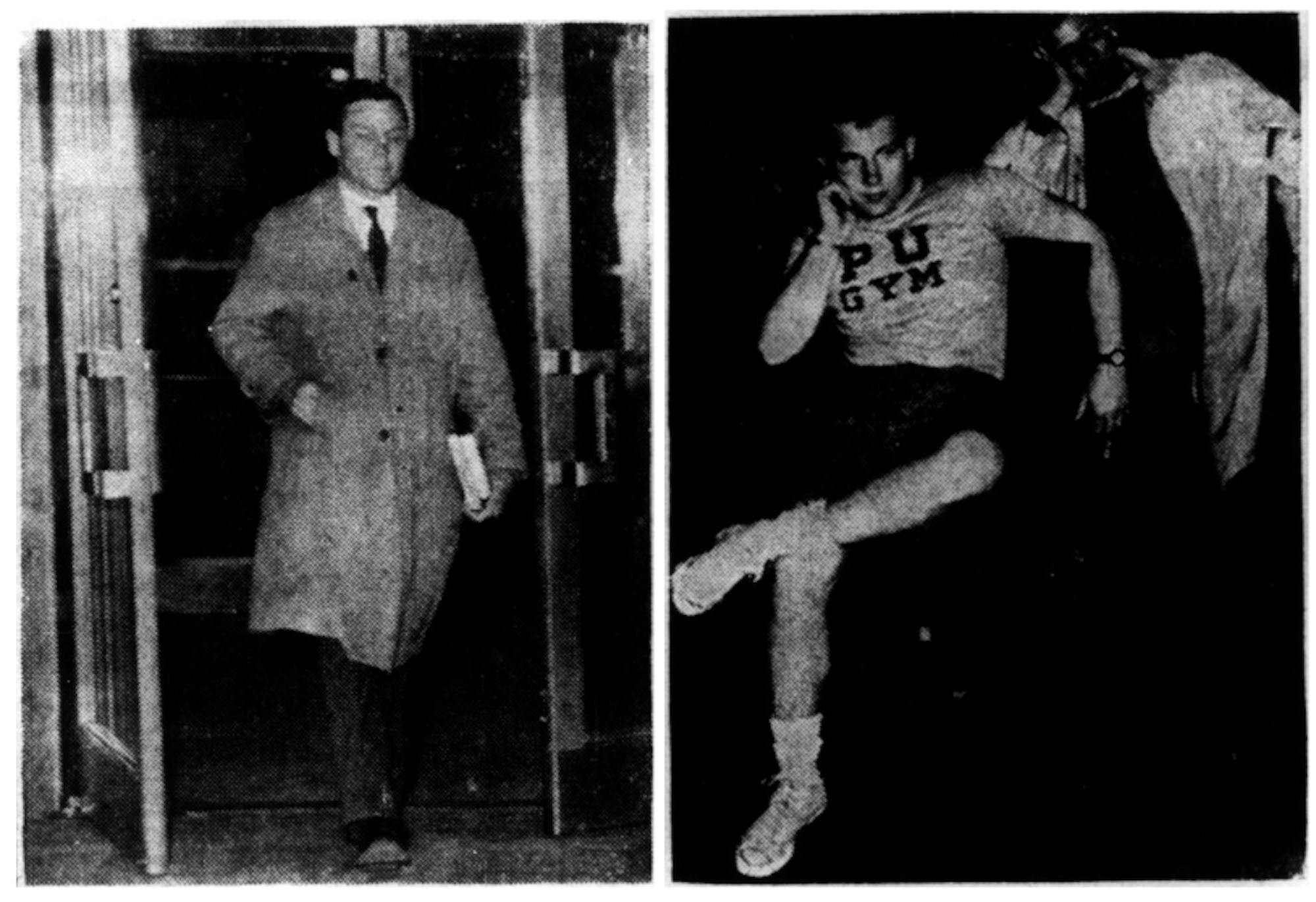
“Unfortunately, the way many students dress today gives the impression that they are sloppy,” Dean of Students Bill Lippincott lamented in a 1963 interview with the ‘Prince.’ Lippincott expressed a desire to implement a dress code to facilitate formal dress, to move towards a more dignified representation of the university. He stated that an official dress code would be “a much less desirable means of accomplishing the goal,” hoping that students would simply accept the idea of coats at meals and progressively wear coats and ties in classes. Lippincott blamed the casualness of current dress on the “change in dress habits of the younger generation.”
In the later half of the 20th century, as Princeton’s student body diversified, Nuñez-Bright explained that it became increasingly more difficult to implement a cohesive kind of dress due to not only the addition of women, but also the diversification of the socioeconomic makeup of Princeton’s student body.
Nowadays, there exists a wide range of diverse styles on campus. Nuñez-Bright explained that “It does seem like now Princeton style is generally more influenced by the outside world, especially the internet. Whereas I think before students tended to come to Princeton and buy clothing based on what styles they saw there.”
Today, the concept of ascribing attire to a “Princeton man” seems even more difficult to answer with the diverse student population, as well as influences that came with the advent of social media. Nevertheless, to many students throughout Princeton’s history, dress defined both their status at the university, as well as the image the university sought to project.

Rebecca Dean is a contributing Archivist for the ‘Prince.’
Please send any corrections to corrections[at]dailyprincetonian.com.
Read More

Student-led TigrBikes shares student interest form, first semester after e-bike ban
Nilufer BektasThe new student-led bike rental initiative is planning for a tentative Spring 2027 rollout.
The new student-led bike rental initiative is planning for a tentative Spring 2027 rollout.

A Four-Course Meal at the Princeton University Farmers’ Market
Joanna WangContributing writer for The Prospect Joanna Wang tries and reviews different food and drink items from the Princeton University Farmers’ Market.
Contributing writer for The Prospect Joanna Wang tries and reviews different food and drink items from the Princeton University Farmers’ Market.

No. 10 field hockey defeats No. 1 Northwestern in a rematch of last year’s championship game
Kaden Hammond and Emilia ReayPrinceton went undefeated over the weekend, beating Dartmouth and No. 1 Northwestern.
Princeton went undefeated over the weekend, beating Dartmouth and No. 1 Northwestern.