



Before the Princeton University Art Museum galleries open for viewing at 10 a.m., small parties trickle onto Princeton’s campus. They descend the wide terrazzo stairs and, before even entering the newly-constructed building, gaze reverently up from the museum’s entrance at artist Nick Cave’s grand mosaic, whose central figure leans down towards them. Light from the sun filters through an atrium high above visitors’ heads.
Once inside, the layout of the museum facilitates intimate interactions between museumgoers and encourages them to explore rooms they might have otherwise missed. On Oct. 31, 2025, the new art museum opened its doors to the general public with a 24-hour grand opening celebration. Since then, the museum has been visited by Princeton classes, families, and couples alike. Visitors have expressed that they often find greater meaning in the art when in the company of others — not despite their differing interpretations and interests, but because of them.
On March 21, an early Saturday in spring, a stressed group of parents supervised girls in princess dresses running wild in the Prints & Drawings hallway. Barbara DiLorenzo, an artist and instructor of the Arts Council of Princeton, was celebrating her daughter’s birthday with pizza on the outdoor patio and a scavenger hunt through the museum.
This scene may appear unbefitting for a university museum, which might be expected to receive mostly silent observers, but the art museum’s free entry appeals to visitors with children, some even younger than DiLorenzo’s.
Art historian Debora Silverman ’75 GS ’83 was also visiting with her three-month-old grandson and her family of artists. Having guided them through the museum, Silverman took a rest in the Hans & Donna Sternberg Viewing Room, engaging in conversation while gazing up at “Cosmos Beyond Atrocity,” a museum-commissioned piece on the ceiling by American artist Jane Irish.
“He’s probably a little young to appreciate it,” Stacy Eriksson said, cradling her newborn against her chest while reflecting on her child’s museum experience. Still, she said that she noticed him looking around at the fresh patterns and textures in the art and on the walls.
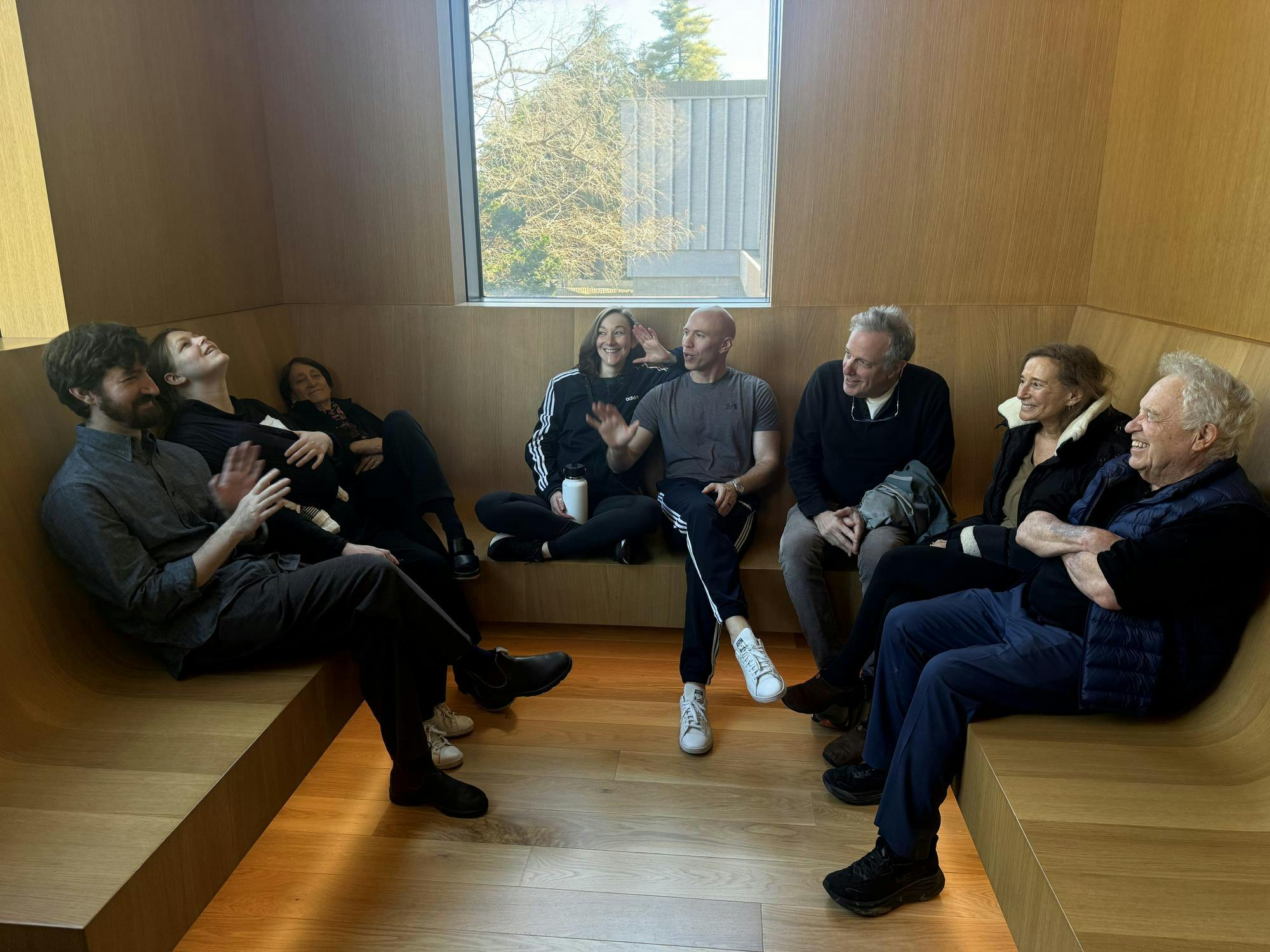
Debora Silverman ’75 GS ’83 (third from left), Stacy Eriksson (fourth from left) and their family at the Princeton University Art Museum, Saturday, March 21, 2026.
Lucas Escobar / The Daily Princetonian
Appreciating artwork clearly doesn’t have an age limit. Five-year-old Nora Dean, who asked her parents to take photos of certain pieces as they explored the collection, succinctly explained why she took interest in the intricately carved “Tall back chair” by Charles Rohlfs: “Because it looks pretty.”

Elizabeth Moore, visiting with her daughters eight-year-old Farrah and twelve-year-old Luciana, found that their individual art tastes sparked new topics of conversation. “It’s fun to look at art with other people, and especially different generations, because they pick up on things that I didn’t notice,” Moore said.
While the average adult museumgoer might have admired the bronze sculpture “Coming through the Rye” and moved on, Farrah’s shorter stature put her at eye-level with the horses’ hooves. She noticed that one of the leftmost animals appeared suspended in a midair gallop, also observing that it was connected to the horse beside it.
Farrah’s curious observations deepened her family’s understanding of the collection. “She brought a new perspective to how the paintings and statues are similar, but different,” Luciana said.
While children’s perspectives on art can spark fascinating conversations and learning experiences with their families, older groups also seek out the museum as a place to connect with each other. Student couples roam the galleries, like Blake Brown ’27 and his girlfriend, Aminata Latifah Mbaye. Brown said that he learned more about her from her interests in the collection, especially about the countries in which she lived as the daughter of diplomats.
“I’ve been able to grow with her more, understanding her through her appreciation of artifacts in the museum,” Brown said.
The couple recalled their experience of viewing the untitled 1961 piece by Jean Nakadulu Luvwezo ’63, which depicts a village scene using abstract brush strokes. “At first, I’m not gonna lie, I didn’t really see anything,” Brown said, until Mbaye began to notice the figures hidden in the painting.

“Oh my god, this is art,” Mbaye added, remembering her impression when viewing the painting for the first time.
Eliza Aamir ’29, who had come with her friend, Krishiv Bulsara, said that she was overwhelmed by the museum’s collection when it first opened and that she wanted to wait to step inside the gallery until she was with someone else. “It also just makes it more fun,” she added.
They said they appreciated viewing art originating from the South Asian countries their ancestors lived in. Aamir is Pakistani and Bulsara is Indian, so they traded folktales from their respective cultures with each other to contextualize the artifacts surrounding them.
Some visitors came in pairs, but others had more solitary experiences — even if they didn’t walk through the doors alone. Retired visitor David Mesinoff, sporting a striking orange coat and a white beard, found humor in the collection. Gazing intently at the interlocking pipes of Ai Weiwei’s “Porcelain Cube,” he reflected on the wall labels he had read, some of which feature commentary from the artists themselves.
“It’s funny. It’s humorous,” Mesinoff said. “The meaning of art is what it means to you as the person who’s looking at it; and what the intentions of the artists were … [they’re] irrelevant.”
Mesinoff was accompanied by his wife. When asked whether his museum experience was impacted by her presence, he responded candidly: “No, not really.”
Members of visiting affinity groups resonated deeply with art from regions and cultures beyond their own. On a guided tour, members of the South Jersey Chinese Women’s Group crowded around a Maya Uk’ib, known as the Princeton Vase, a chocolate-drinking cup and notable piece of pre-Colombian American artwork in the collection. After the tour, Dave Armstrong, the spouse of one of the members, said that he resonated most with this drinking cup, which was made in Guatemala.
While some visitors quietly soaked in pieces, others, like Dean’s parents, took photos of them to share. Some visitors also captured photos of friends and family to keep record.
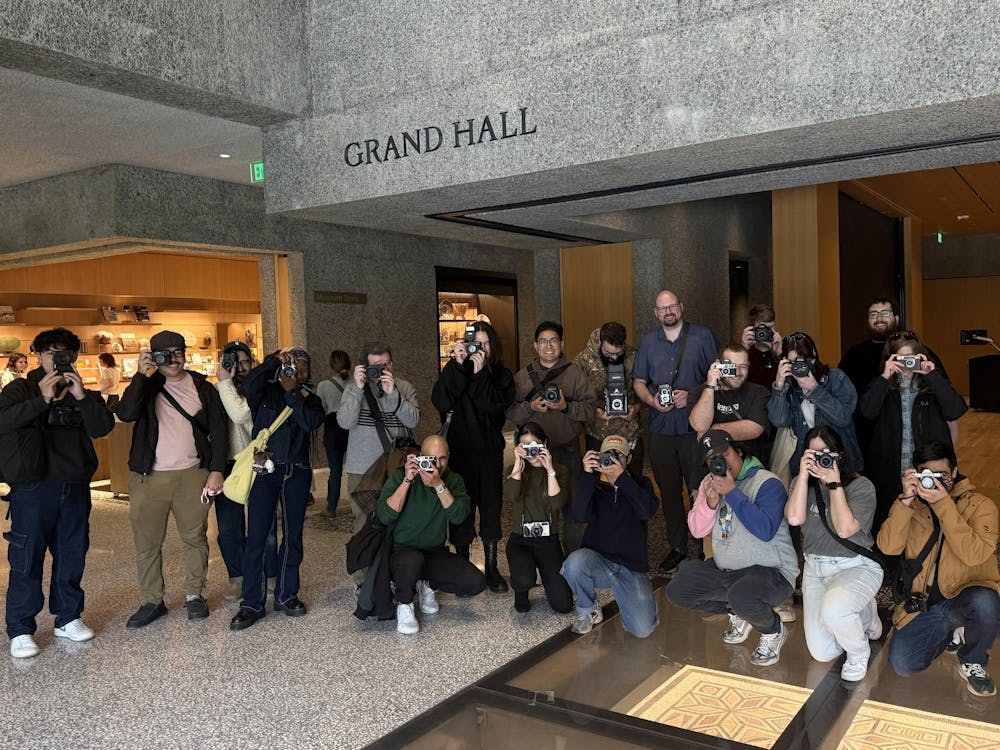
Bulsara recalled snapping photos, enjoying pieces of art, and more than a few people — including a member of photography meet-up group Beers And Cameras — took pictures of their friends and family members being interviewed.
About twenty members of Beers and Cameras toured the museum, equipped with digital, film, and even toy cameras.
“It’s a fun excuse to take pictures of each other,” one member, Alberto Serrano-Calva, said.
“The museum is the backdrop for the social stuff to happen,” Beers and Cameras co-host Jason Weinpel added.
The Princeton University Art Museum’s tagline might be “Find Yourself Here,” but when examining artworks from their cultures and beyond, visitors find more than just themselves — they also find each other.
Lucas Escobar is a Features contributor for the ‘Prince.’
Please send any corrections to corrections[at]dailyprincetonian.com.
Read More

Curious what the best burger on Nassau is? I went on a mission to find out
Eric MohoreaStaff writer for The Prospect Eric Mohorea visited three restaurants to decide what the best burger on Nassau Street is.

Princeton Council candidates meet in first contested general election in years
Oliver Wu and Mira BrockFor the first time in seven years, the Democratic candidates for Princeton Council will be challenged in the general election. The challenger is Antonio Merolli, a former orthopedic surgeon running as a Republican.
For the first time in seven years, the Democratic candidates for Princeton Council will be challenged in the general election. The challenger is Antonio Merolli, a former orthopedic surgeon running as a Republican.
Details on new ‘sexual climate’ subcommittee to be discussed, student survey to circulate amid Cornell case
Devon WilliamsThe new subcommittee will consist of undergraduate students, graduate students, faculty, and staff.
The new subcommittee will consist of undergraduate students, graduate students, faculty, and staff.