



From following each other on Instagram to finding someone’s email address on TigerNet to requesting connections on LinkedIn, the options for Princetonians to form online links with their peers are endless.
But, just over 20 years ago, before electronics infiltrated our mainstream, networking looked a little different.
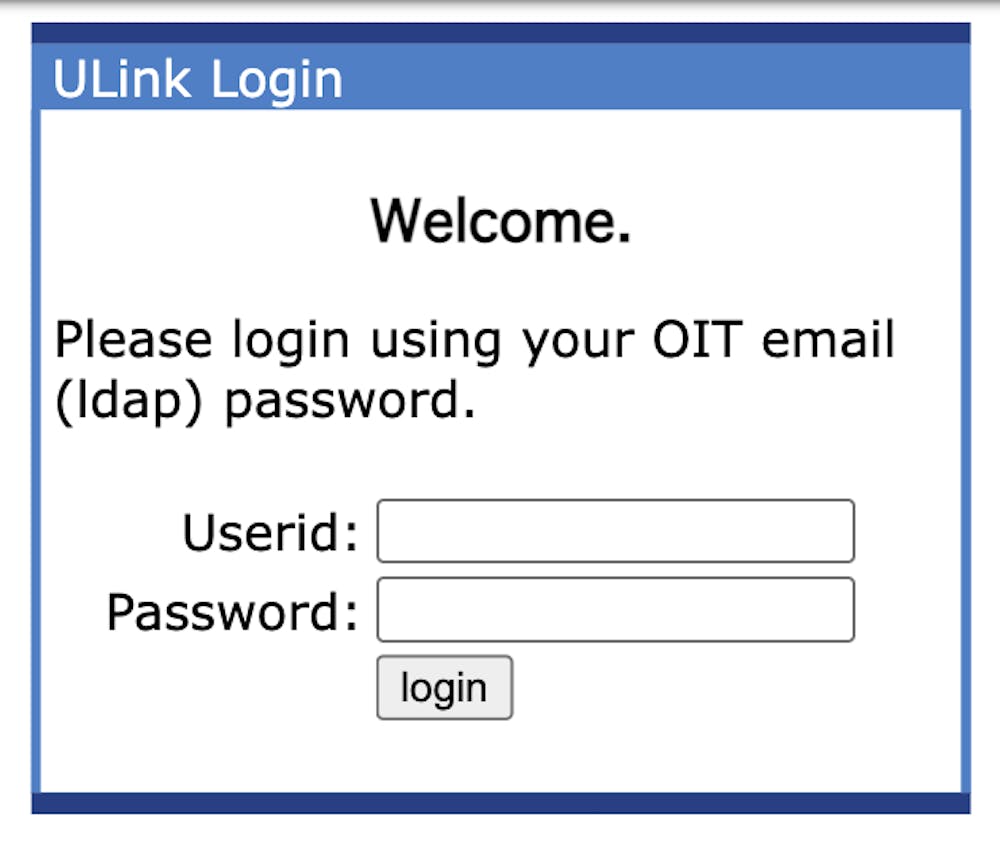
On April 28, 2004, The Daily Princetonian published a piece featuring Princeton’s first personalized social media platform: ULink. Originating from a COS 333 project developed by students Michael Li ’07, Ben DeLoache ’07, Cindy Lee ’04, and Reona Kumagai ’06, the platform was described as “a local and independently invented version of Friendster and/or theFacebook.” The website allowed students to register with their NetID, create a profile with personalized information like their residential college and eating club affiliation, and befriend fellow Princetonians.
ULink launched just months after Harvard student Mark Zuckerberg began working on thefacebook.com, but the creators of U-Link emphasized the originality of their project, although both platforms were similarly designed to connect students on campus.
“We thought of the idea independently of [thefacebook.com], and started working on the programming well before we knew it even existed,” Li told the ‘Prince’ in 2004 after ULink’s release. The students came up with the idea in February and began development in late March; Zuckerberg began work on his project in January.
In a recent interview with the ‘Prince,’ ULink co-founder DeLoache described the inspiration behind the group’s class project. The assignment instructed students to develop a program that utilized both an Internet-based level and a database level.
DeLoache and Li were influenced by a talk given by their computer science professor, Brian Kernighan (who still teaches at Princeton), on the increasing importance of digitalization for university students.
“Everyone was on really fast networks with personal laptops for the first time. We wanted to take the social environment we were living in and use it to create some sort of digital representation or artifact in a fun and interesting way,” DeLoache said.

DeLoache reflected that, despite what he lamented as the site’s “horrible bugs” and rudimentary functionality, the website was warmly welcomed by undergraduate students and garnered widespread usage in the first few weeks of its release.
“I went to bed the night we released it, and then I was shocked the next morning when there were hundreds of people on there — people I didn’t even know,” DeLoache recalled.
At its peak, according to DeLoache, ULink boasted 428 student users, around 10 percent of the university’s undergraduate population at the time.
Student users highlighted the Princeton-specific features of ULink and the popularity rating it gave to each user, calculated based on the number of friends they had, as their favorite parts of the platform.
Although the site’s usage died down by the end of the school year due to Facebook’s rising popularity, the project represented the beginning of digital social networking at Princeton. As the University continues to expand its digital infrastructure today, ULink is a creative reminder from the past of how burgeoning technology on campus may be used to foster personal connections in a digital age.
Canina Wang is a contributing Archivist for the ‘Prince.’

Please send any corrections to corrections[at]dailyprincetonian.com.
Read More

The 2026 Commencement Issue
Daily Princetonian StaffA digital version of our 2026 special Commencement issue.
A digital version of our 2026 special Commencement issue.

Princeton slashes reimbursement rates for external mental health clinicians
Elizabeth HuClinicians in the University’s mental and behavioral health Exclusive Provider Network (EPN) will see cuts to their rates for providing services to Princeton students, with a 48 percent decrease for psychiatric diagnostic evaluations.
Clinicians in the University’s mental and behavioral health Exclusive Provider Network (EPN) will see cuts to their rates for providing services to Princeton students, with a 48 percent decrease for psychiatric diagnostic evaluations.

Princeton custodial staff allege ‘toxic’ work environment, ‘dismissive’ leadership
Sena Chang and Benedict HooperAn investigation by The Daily Princetonian revealed that custodial staff are frustrated with a “toxic” work environment in Building Services, which they say stems largely from leadership.
An investigation by The Daily Princetonian revealed that custodial staff are frustrated with a “toxic” work environment in Building Services, which they say stems largely from leadership.