



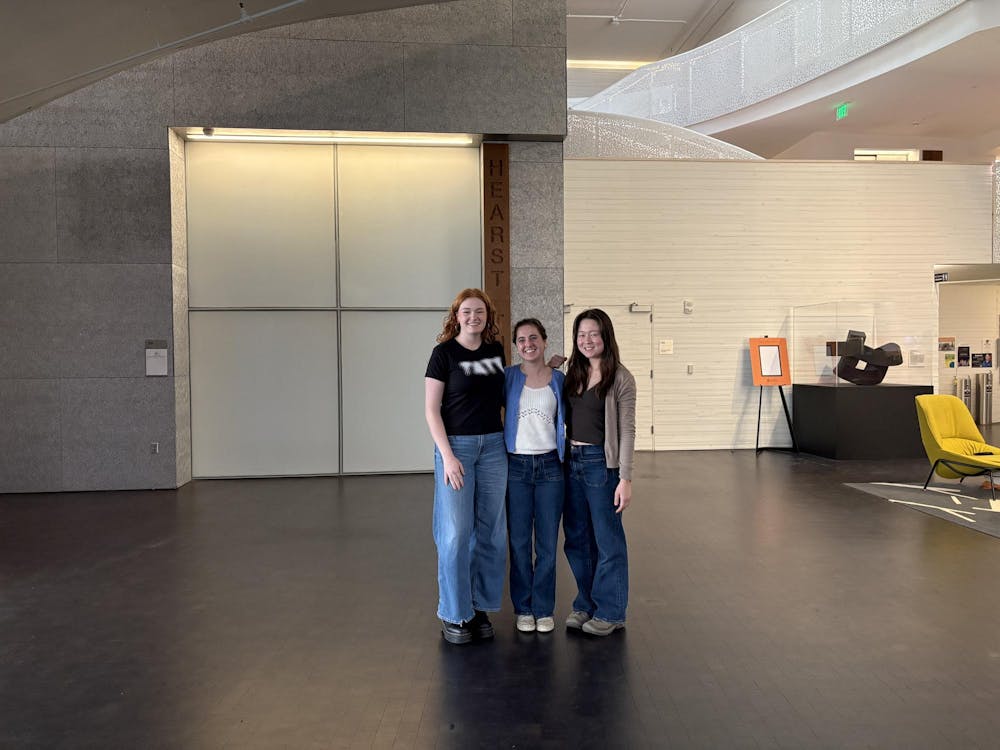
Founded in 2023, Princeton Pictures is the University’s premier filmmaking club, which produces three films written and directed by students, each semester. On a blustery Monday, The Daily Princetonian met the three writer-directors — Juna Brothers ’28, Jemima Smith ’28, and Hannah Bonbright ’28 — in the lobby of the Lewis Center for the Arts for a filmmakers’ roundtable. Serenaded by the Princeton University Orchestra’s nearby rehearsal, the writer-directors discussed the evolution of their films, from initial ideas to surprises during filming, in an hour and half long-interview. The following are the highlights of our conversation.
The transcription has been edited for clarity and brevity.
The Daily Princetonian: Without giving away the ending, could you guys share the essential theme or plotline of your film?
Juna Brothers ’28: “Scouting” is a family drama about how people fight over their children within a mixed-race, Korean American family.
Hannah Bonbright ’28: “Proximity” is a thriller about a girl who’s a stalker and discovers that she has her own secret admirer and accomplice.
Jemima Smith ’28: “Networking” is a strange existential interview that takes place after the death of the main character and explores different facets of social anxiety.
DP: Could you walk me through your writing process? Where do you come up with the idea? Where did you start?
JS: I like to sit on ideas for a very long time before I start writing them. One important part of this short film is practical special effects makeup, so I was working on special effects makeup designs that aligned with the vision of the film long before I ever started writing the film. An embarrassing amount of the plot of the movie came from the pun of networking, and also networking with mycelium networks. I’m also just really interested in near-death experiences and the scientific explanation of what happens in the brain as you die.
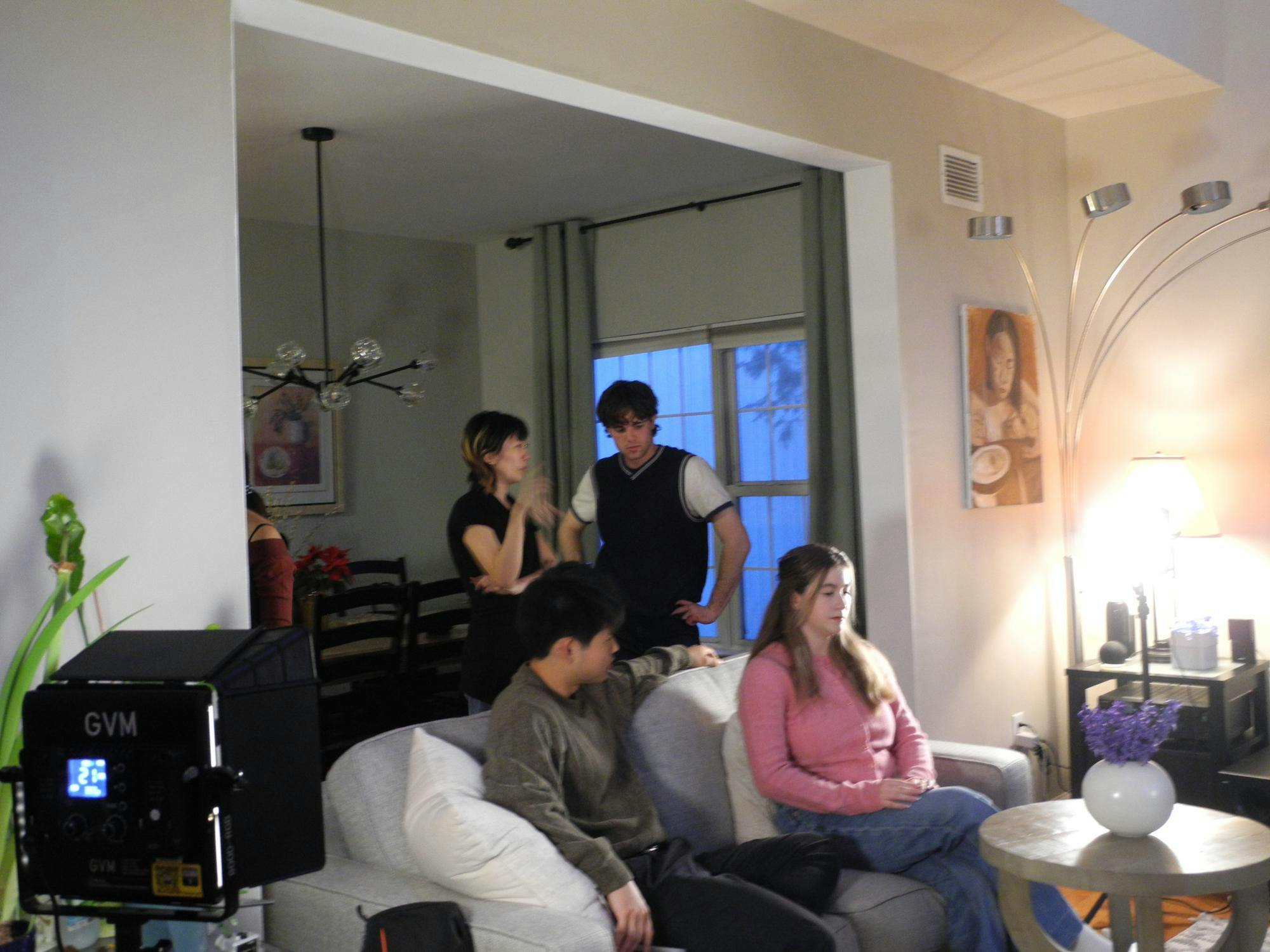
On the set of “Scouting.”
Courtesy of Daniel Park
JB: My idea began last spring. I was taking a playwriting class with [Visiting Lecturer in Theater] Sylvia Khoury, and I had never written a script before, so I was kind of daunted. I always felt that dialogue was really difficult to write, and my playwright teacher treated dialogue as this reaction. She was like, you have to set up the scene perfectly, and the characters have to have these specific relationships. Once you set it up right, the scenes just write themselves. She really helped me come up with the initial relationships between the characters. In this script, the core relationship was between this white woman and her Korean American sister-in-law, and they’re a cultural clash. The core inspiration was just a typical, little bit dysfunctional family dynamic, letting these different identities create the conflict and seeing how the story progresses.
It’s interesting to see how far it’s come from my initial idea. I adapted it somewhat over the summer and added more non-speaking moments, but it is definitely a dialogue-driven script.
DP: Is that the case for all of you? Has your piece really come far from what you started with?

HB: Mine has not. It’s interesting to hear you guys talk about starting over the summer, because I wrote the whole thing over winter break, like a week before the deadline. I really wrote this for Princeton Pictures, and I feel like mine is still very similar to the way that it was when I started.
DP: Just a week?
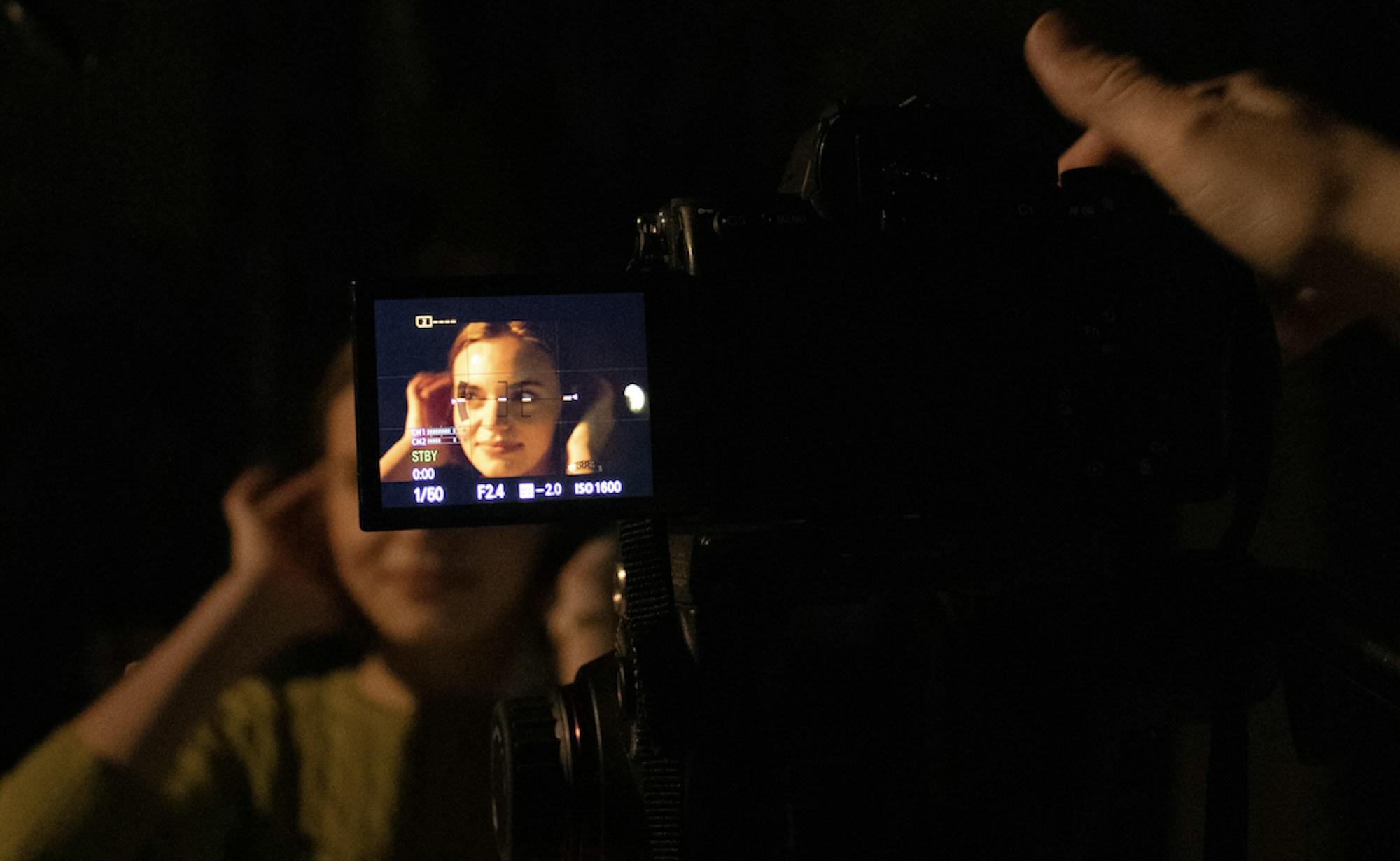
Actress Hallie Graham ’27 behind a camera on the set of “Proximity.”
Courtesy of Antonia Cañizares
HB: I mean, it was only 15 pages. I knew I wanted to write something for Princeton Pictures because I’ve gone to the last two premieres, all my friends have done movies here, and I thought they were so fantastic. I’d never really written a full play or screenplay, but I just thought I would give it a go. I had a lot of fun trying to write something my friends would enjoy filming and acting in. My initial idea was — I was just thinking about how all of us keep our doors taped, and also about that story that came out in the fall about the girl who faked her way into Yale. I think a lot of us assume that we’re unreachable, or that at least no one cares enough about us individually to try and break into our room, or steal our stuff, or anything like that. I thought that ignorance or apathy was really interesting.
DP: I know one of you wrote [in your script] that your story came from a dream — but I’m curious if there was anything else that influenced you during the writing or filmmaking process. Where did you draw inspiration?
HB: In the original script I wrote, “based on a dream,” because it was true; it was based on a dream that I had that I was impersonating someone here at Princeton. And I thought, wow, that would be a really great idea for a solid thriller.
I really like the movie “The Novice,” which is a thriller set at college about excellence and what happens when you have people in a really high-pressure environment. I was also inspired by a lot of great high-stakes dramas, like “The Social Network.”
JB: I wrote this as a play first, and I think I had the idea that film was essentially the same as putting a play on screen or recording people talking. But in my class last semester, it became clear that cinema emerged as something very different from the oral tradition and playwriting. Pure cinema has no dialogue, no words. It just gave me a lot more appreciation for wordless scenes.
There are movies that are similar, in some ways, to what I’m doing, like “Minari” or “Moonrise Kingdom” or, because of this cultural conversation between America and Korea, there’s this film called “Columbus” that I really enjoy.
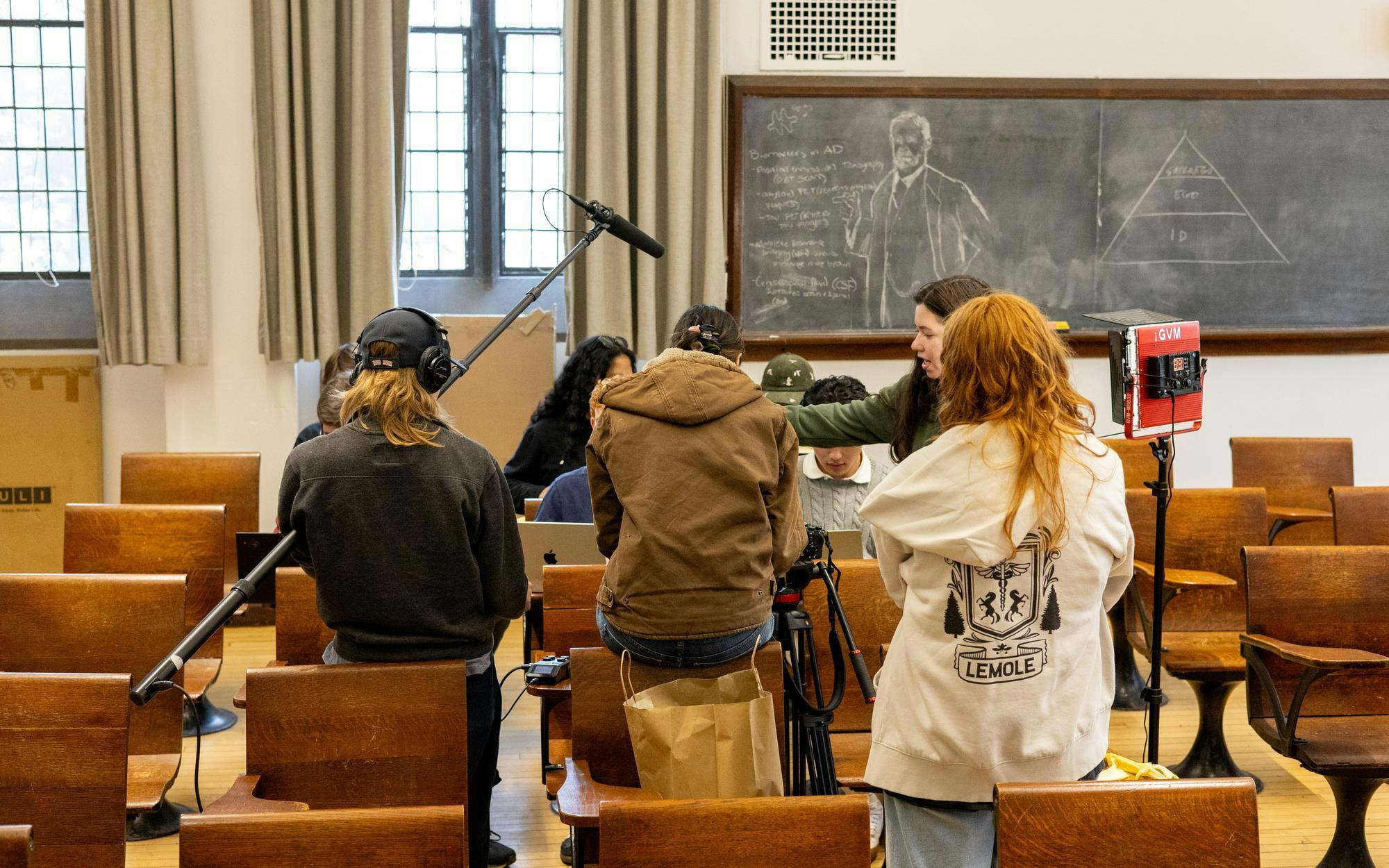
Students working on the set of “Networking.”
Courtesy of David Galarza
JS: I like to collect all my inspiration before I start writing, sift out what I like about certain things, and try to recreate that in my own work. So I’ve got — this is embarrassing to show you — I’ve got an Instagram page full of random reels where I was like, “this vibe, this I want.” Some of them are Hank Green talking about mushrooms, and some of them are clips of what childhood makes you feel like. There’s a scene at the end of this Mike Flanagan show called “Midnight Mass” that was very influential to me, where one of the main characters is dying. She’s narrating her experience as she dies, this idea of, “we are the cosmos dreaming of itself.” So just the fact that your consciousness is really part of something larger and more beautiful than you could imagine. “Bullet in the Brain” was really important, in terms of melding anatomy and experience. “Severance” was big because I’ve got some of that corporate horror in there.
I usually create a very specific feeling before I end up doing it; so much so, I have a playlist of music that inspires me.
DP: Were you all thinking about the music — and the visual effects — as you wrote, or did that come afterward?
JS: Visual effects were big for me, specifically because I knew that I would be doing the makeup for the shoot. I had a very specific idea of what I wanted it to look like as I was writing, but in terms of music, honestly, not specifically. That [playlist] was created to help me find the right vibe.
HB: I was coming to this from a theater actor perspective, so I was really focused on the lines. When I was doing the revisions, I was just reading it over and over, trying to make it sound natural, so, for me, it was less about visuals and more about how it sounded.
I wrote the script with only one needle drop, and now we’re thinking about maybe doing more. The song “Alabama” by Neil Young was what I was listening to when I was writing it. It’s one of my favorite songs. All my friends are gonna laugh because I will never stop talking about that song, but it was what I was picturing when I was thinking about the last scene, which is the only one where I’ll say I had a very specific visual image.
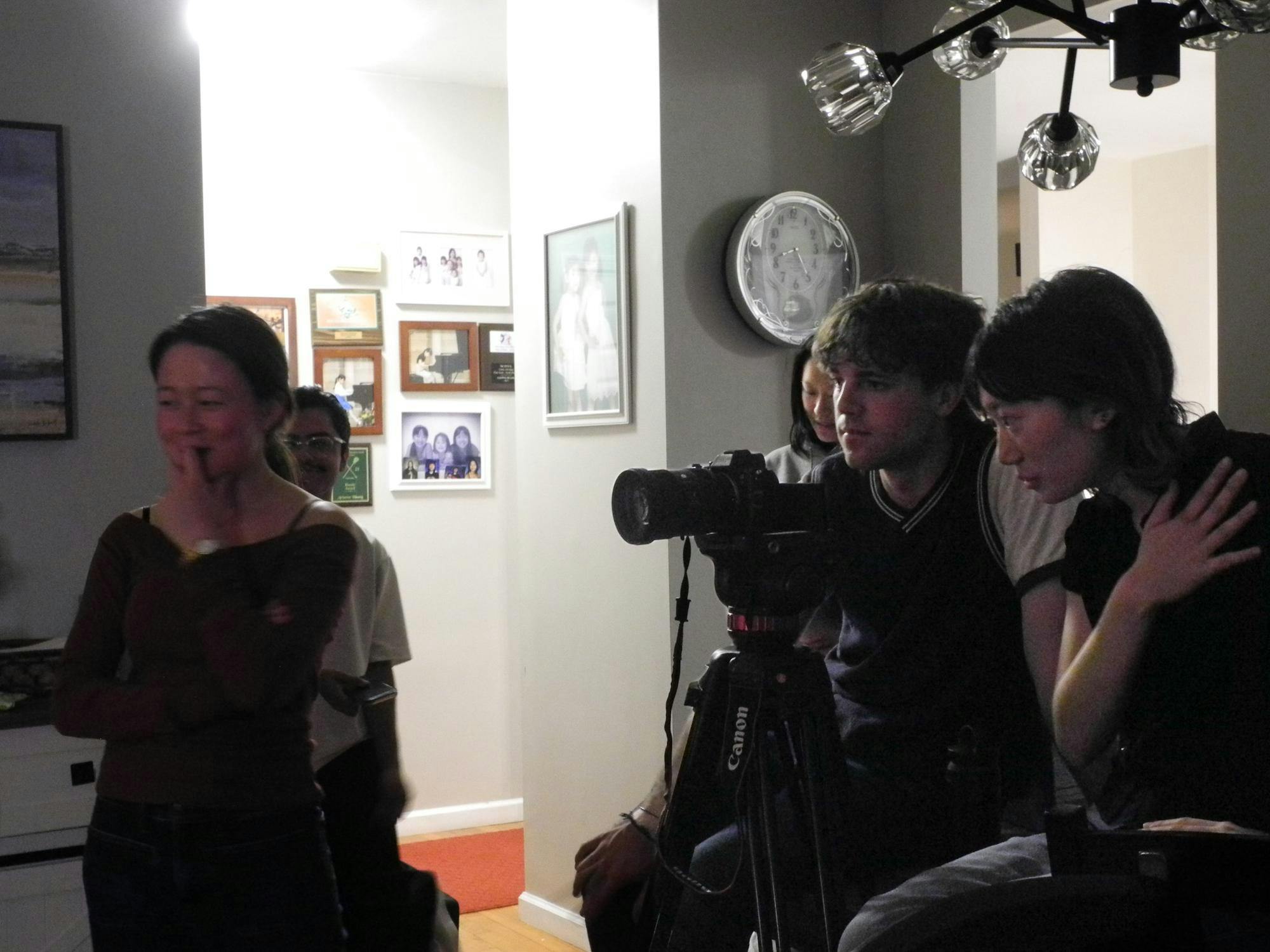
Behind-the-Scenes of “Scouting.”
Courtesy of Daniel Park
JB: The thing that I am most specific about is editing. There are times when I want the audio from one scene to overlap with the video from another, like a split edit. It really helps me think about how I want to plan things out. Sound effects are also important in these other scenes that I’ve written to go around the dialogue.
DP: How did you balance show and tell when you were writing the script, and/or how are you balancing it as you film?
HB: For me, originally, it was a lot of show and no tell because I was only writing for my own eyes. As we’re filming, I think it’s gotten more “tell” in a way that’s helpful to make things clearer for the audience. But, I mean — I don’t know if you guys feel this way — but I feel like for “Proximity” in particular, because it’s a thriller, it relies on mystery. I actually am pretty sure that you guys feel this way, because I think it’s true for a family drama, or for that corporate horror, that there has to be some kind of element of something you don’t know. And it also is a short film, you know, so there’s only so much information you can slam into under 15 minutes before the audience is falling asleep in their chair.
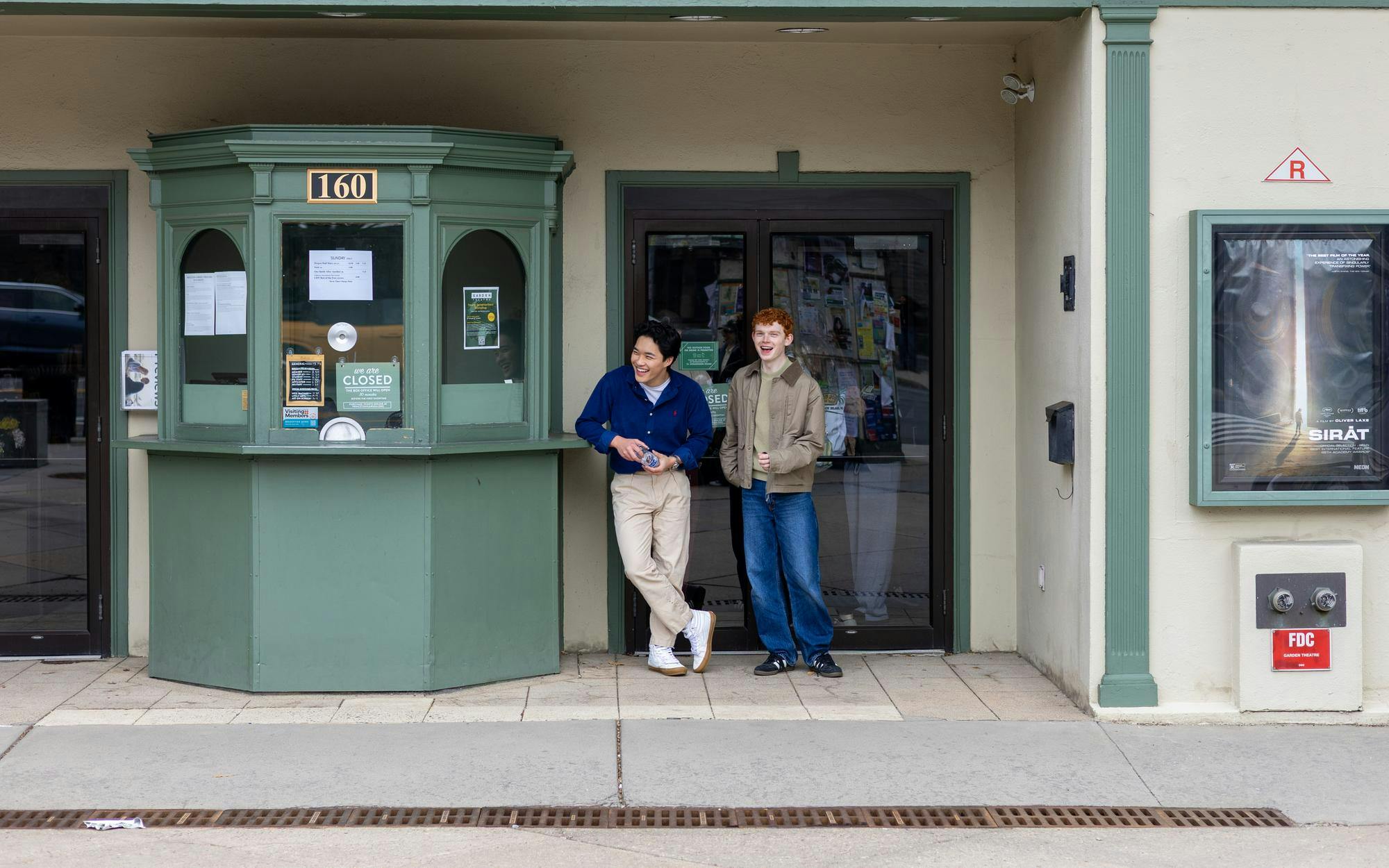
Students standing in front of the Princeton Garden Theatre on the set of “Networking.”
Courtesy of David Galarza
JS: I feel like my script started off kind of the opposite. It was very tell rather than show, because, you know, it’s kind of dense. And, in terms of motifs introduced and returned to, it’s a lot of “tell.” As a result of that, one thing that I’m trying to do is make sure my characters are very clear and well defined because I think that if it’s a script that’s just chock-full of tell, then people don’t have investment in it. That’s a difficult balance to strike, between interesting and why you should care.
JB: I feel pretty similarly. It started off as basically more wordy, and then I realized that there were opportunities to get across the information without having to speak it outright. People will come away from the film having an idea of what I want them to take away, and it’ll probably be a slightly different idea for each person, but I’m okay with that.
DP: I had a chance to read your scripts, and I think at least part of your films have an element of very complex or disturbing or just heavy subject matter, but at the same time, they’re kind of surreal or even funny. I’m wondering, how did you strike that balance?
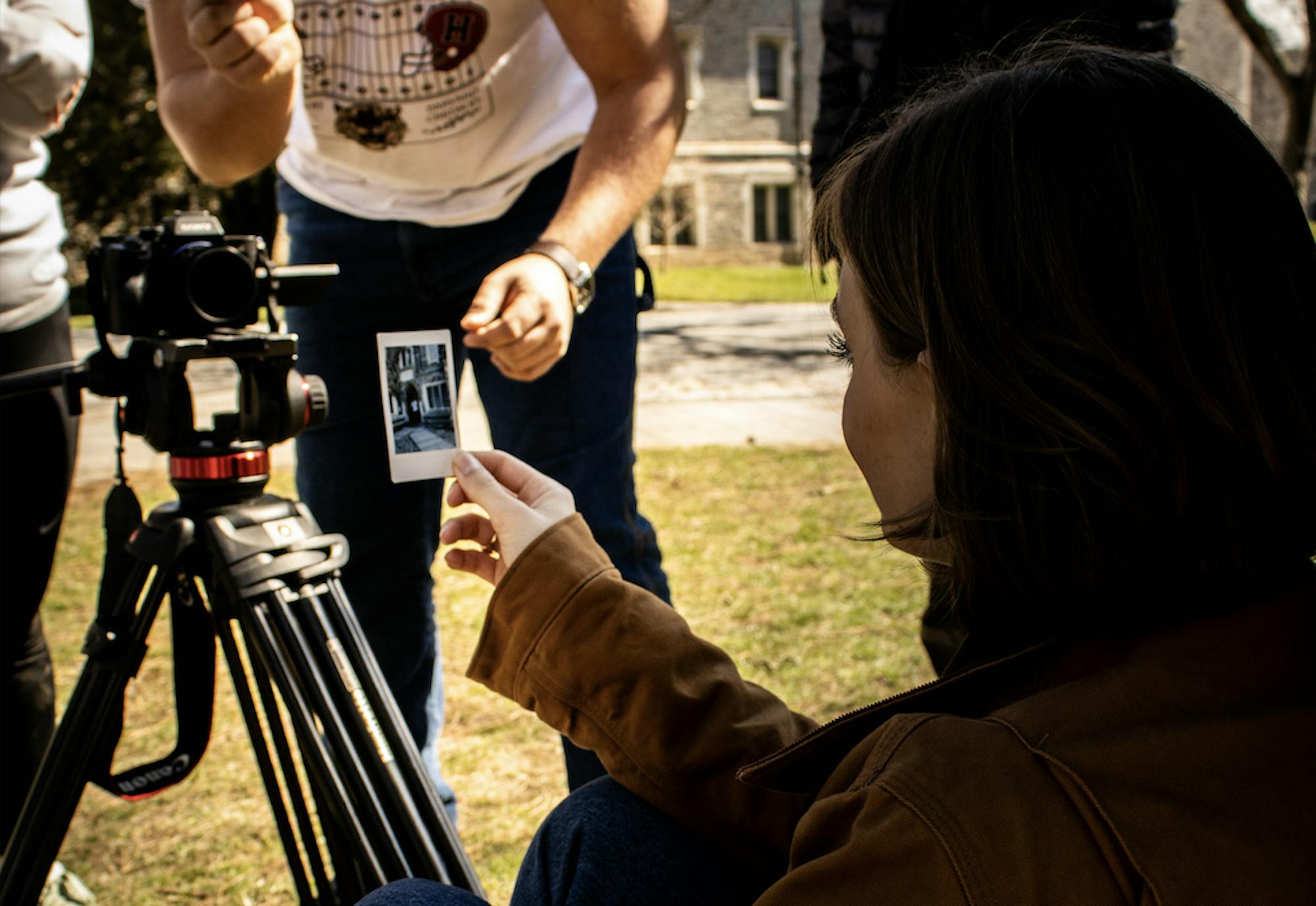
Actress Hallie Graham ’27 working on the set of “Proximity.”
Courtesy of Antonia Cañizares
HB: I mean, it’s just murder, you know [laughs]. I just feel like it’s impossible to write anything that’s not serious now, or, like, a totally light-hearted comedy which has no feet in reality, because if you even have a little toe in reality, I feel like it’s gonna drag the tone down a little bit, you know? Especially for a thriller where there is, you know, murder. It’s like, how do you have that without minimizing it? And then also let the characters still be funny and be happy? But I think it’s something that we’re all figuring out now, just going through our lives. How can people sit around and relax, or do anything, or hang out with their friends? Like, where is the levity of this frankly, kind of depressing world?
JS: I think one thing is, comedy only works if your characters are taking it deadly seriously. That’s very important: your characters have to really feel the stakes and be deep in it to create comedy.
I don't feel like my script is particularly funny, but it is a lot about nature, and in nature, the line between something that’s funny and something that’s horrifying is incredibly thin. There are so many different instances of illusion, of usurpation, of underhanded cheating, but also beauty and transcendent, supposedly moral things.
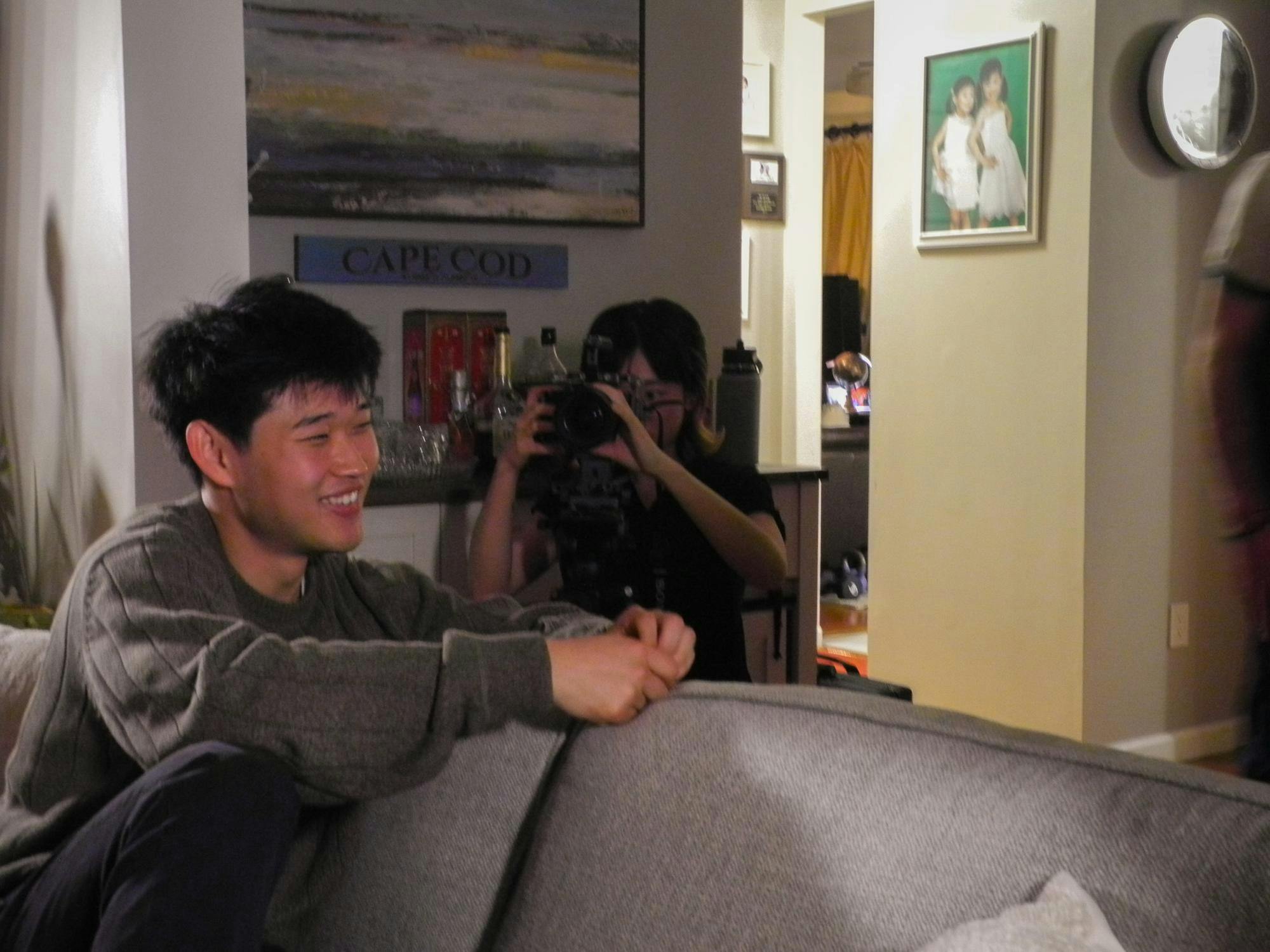
A photographer at work on the set of “Scouting.”
Courtesy of Daniel Park
JB: We’re the last to shoot, but we had our very first shoot yesterday. I was unsure how the cast and crew were gonna bond, but I will say the set is full of laughter. Everybody’s very jolly all the time, even if the things that we’re filming are pretty serious, so I think that a lot of the balance comes from behind the scenes, too.
DP: What were you guys looking for in casting and in your composer? What do those relationships look like?
JB: I think I was unique because a composer reached out to me first through a friend of a friend and asked if she could compose for my film. Composing is the aspect of the film that I am least knowledgeable about, so I’m really glad to have her.
I also think that we had a unique situation with casting because it’s a racially specific cast. The one character I had a person in mind for when I was writing ended up being the producer, Seryn Kim [’27], so she can’t act. We were kind of scrambling to find someone who would play this Korean mother. Eventually, we did. I’m sure she’ll be great. We are still trying to find a child actor. I’m hoping to use a family friend, but we’re asking everyone to reach out.
Casting and finding the crew was also special because other people could tell me about how they felt connected to the script, or their reactions to the script, and that was validating because I wrote it in part because I felt like there wasn’t representation for that kind of family dynamic or about Korean identity. There’s also a lot of Asian American representation behind the scenes, too.
HB: We have one weekend of filming left, so we’re almost done. Music is something that we’re going to figure out in post, but I’m really super excited to hear what he [composer Quinn Dorward ’27] puts together. We chatted a little bit at the very beginning about what kind of vibe we wanted. As we’re putting the film together, editing certain scenes, and seeing how everything fits and what we want tonally, we’re really gonna bring him in, and I’m super excited to hear what he does.
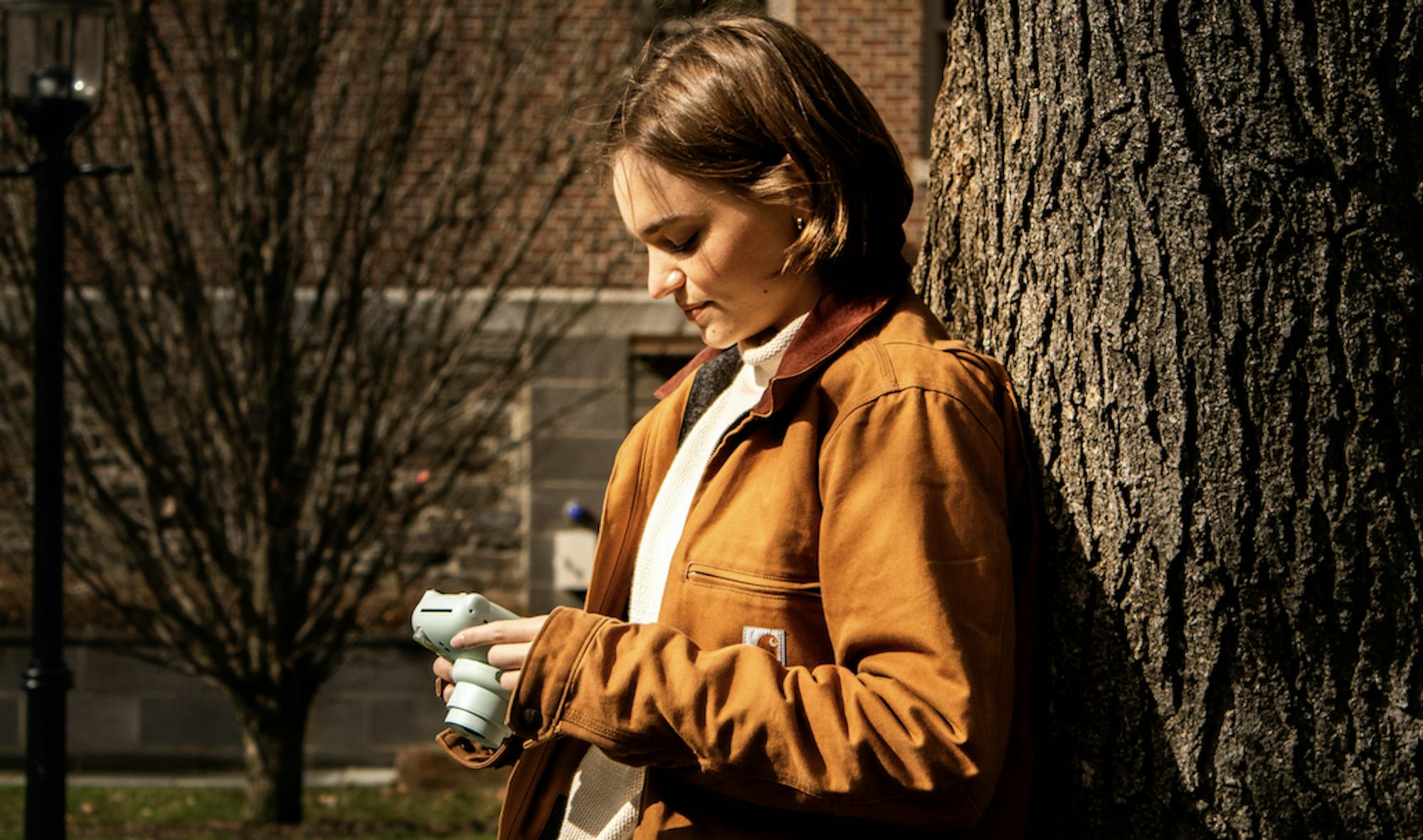
Actress Hallie Graham ’27 on the set of “Proximity.”
Courtesy of Antonia Cañizares
Casting for me was pretty easy because I wrote it for the two people that I wanted to star in it, and luckily, they both agreed, Connor [Roeser ’28] and Hallie [Graham ’27], my two very dear friends. I asked Connor what kind of role he wanted to play. He was in “Momo-Chan” last semester, and he was a man who wanted to be a dog. I think that he wanted something different. So I was like, “I’ll write you a really suave, cool guy.” And then I wrote him a loser. Now it’s a great running joke. I actually did write the character for him, and for Hallie, who’s our lead. Her voice was really strong in my head. She has a southern accent. She’s from a tiny little town in Tennessee, and, as I was doing rewrites, I started taking out her curse words because she doesn’t like cussing, and so I was just trying to, I don't know, make it more and more Hallie, and really honing in on them. I think that was the most special thing. The rest of the cast kind of just fell into place, and they all did a fantastic job. It was so magical to hear the script and their voices during our table reads.
JS: I actually came straight here from a meeting with my composer, [former podcast contributor] Isabelle Tseng [’27]. We’ve been speaking a lot about music as kind of a systematic mathematical structure, which I think is really interesting when paired with such a strange, abstract script. And I think the way that it will guide the viewer is going to be really useful. We’ve been talking about non-traditional sounds, and she, very kindly, has been talking me through some musical technical vocab because I agree that music is something I’m least experienced with.
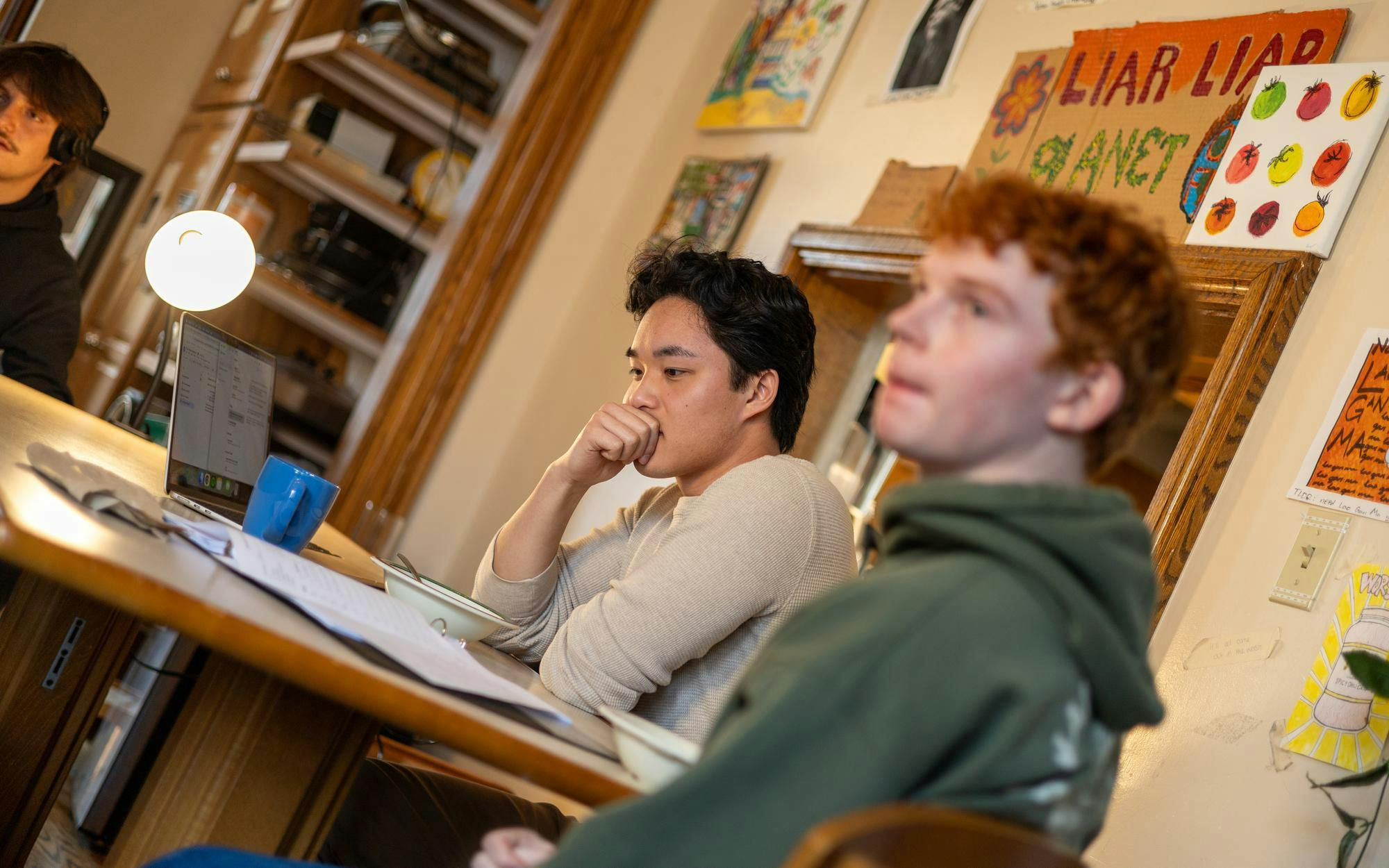
Actors on the set of “Networking.”
Courtesy of David Galarza
In terms of casting, I didn’t really write this with anyone in mind, and I’m so grateful that we ended up with the cast that we did. One of the things that was particularly difficult is that someone has to have this very distinct feeling of HR-trained, but also something really eldritch and terrifying about them. We found [Associate Podcast Editor] Julia [Sophie Hack ’29], who plays Liam, and she's just incredible. As for my two other mains, Caleb, the main character, is played by Spencer [Fitzgerald ’29]. He brought such a sensitivity to the role that I think was absolutely necessary. He’s a brilliant listener, which is really important in film and acting generally, the ability to listen to other people and be vulnerable enough to telegraph in your eyes what's coming from that.
Zach [Lee ’26] [former Reels contributor] plays Dylan, and he’s just a massive charisma, which is exactly what we needed. He’s warm and friendly enough that we understand why Caleb is interested in being his friend, but he also maintains authority in a way that makes you aware that he considers himself to have a higher social status than Caleb.
DP: How did you factor constraints into writing and producing the film? What's been the most challenging part of making your film?
HB: I mean, I wrote this for Princeton Pictures knowing we would be filming on a shoestring budget, if that — like a half of a shoestring maybe. Every time I was writing something, I was picturing a place here at Princeton. I didn’t have to change much from the original to make it doable.
And luckily, we have such an amazing producer and executive producer, Leela [Hensler ’28, staff News writer] and Xuan [Stabb ’27], for “Proximity,” who have handled everything logistical and budget related. I haven’t looked at a number since we started filming, which has been really nice.
JB: Last semester, I worked on “Proof of Love” for Princeton Pictures. It was a really fun shoot. But also, I was like, “Oh my gosh, audio is so hard,” because I was the sound tech. Knowing what I know now, I think there are things I would do differently, but I think I was trying to avoid shooting outside, especially because it was just so hard to control audio in public spaces or outside, like you were saying [to HB], hold for train, hold for everything.
JS: I had a similar thing to you with “Proof of Love” and sound. We had those street scenes that were such a nightmare to film with cars. So I was like, “We are not filming anywhere near cars.” I had initially written in the script to film outside Princeton Garden Theater and have a very pivotal scene take place with dialogue outside the Princeton Garden Theater. And then I was like, “No, the cars, the cars. We can’t do it.” So I rewrote around that. One of the things we did in terms of location was, the lovely people at [2 Dickinson St. co-op house] let us use their space for an afternoon. Shout out to them.
DP: Is there anything that's surprised you about the filmmaking process so far?
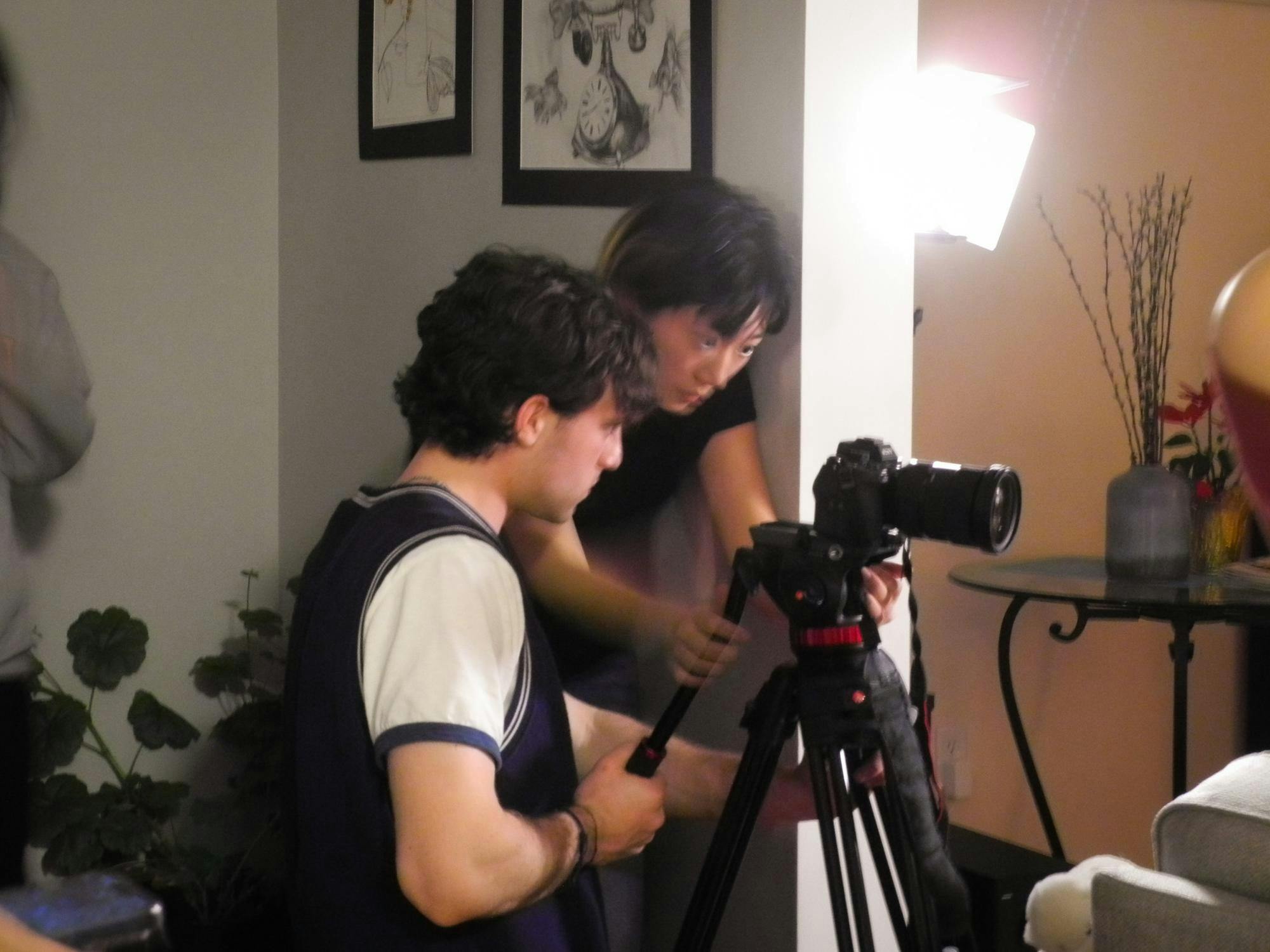
Camera work on the set of “Scouting.”
Courtesy of Daniel Park
JB: I think what surprised me was how excited everyone was to make the film. I was really seeing it as everybody doing a favor to me, to show up and do this work and make something, because it was ultimately my story that I wanted to have produced. I thought everyone would be kind of begrudging about the work they put in, but everybody was genuinely excited.
HB: What has surprised me? I don’t know, everything! It happened really quickly. I think that the number one thing that has surprised me is that we’re almost done. It’s such a brief period. I feel like I could work on this short film for the next six months and never feel like it’s finished.
JS: I feel the same way. I’m kind of pre-grieving it already. I’m like, “Oh, this is gonna be over so soon, and then it’s gonna be done.” But is it done? It’s strange. One of the things that surprised me was — I had similar feelings to you — it’s been so much fun.
DP: What is it like being the first wave of all-female writers/directors?
HB: I think it’s really exciting. It seemed like every semester there was a rom-com that a girl was doing, and that was like the “girl movie,” you know what I mean? The entire team was female, and it felt like doing a disservice to the person who had done this wonderful work. And so I think it was really exciting that I don’t have an all-female team, like it actually doesn’t have to be a “girl movie” just because it’s written by a woman. And nothing against rom-coms, but none of us are writing romances. We can actually write thrillers, dramas, and really funny corporate horror. We’re moving in a good direction, and I hope that it creates some momentum.
JS: I don’t know if you guys feel this too, but I feel like it’s kind of created a connection between the three of us, just in terms of, this is new, and it’s cool to be one amongst such a talented group of directors and writers.
HB: It’s really the network that I’ve been searching for — being in proximity to you guys is such a treat.
JS: That was good, bring it home. [Laughter] Have you been scouting for this kind of place this whole time?
HB: Yeah, that’s good!
JS: Making a movie is so fun. I feel like most people, even if they don’t consider themselves film people, will get something out of it. People should definitely get involved.
DP: That’s a wrap! Thanks, everyone.
“Networking,” “Scouting,” and “Proximity” will premiere in Princeton later this April.
Annika Plunkett is a staff writer for The Prospect, associate Newsletter editor, and a Spanish translator. She can be reached at ap3616[at]princeton.edu.
Please send any corrections to corrections[at]dailyprincetonian.com.