



Renzo Piano Building Workshop, a global architecture firm, has been chosen to design a new arts neighborhood on the corner of University Place and Alexander Street, the University announced last week.
Piano's firm, which was named after its founder, has designed multiple large-scale edifices such as the Centre George Pompidou in Paris, as well as smaller-scale projects that make him suited for the current job, University planners said.
Piano is "someone who is both intensely creative and who understands physical spaces for both performing and visual arts," President Tilghman said in an email. "He was by far and away our first choice for the project."
The firm had no comment on the project as of yesterday, claiming it is still too early to engage in conversation about the design.
While the details of the project are yet to be determined, the University plans to create various theater and dance performance spaces, as well as areas for visiting artists and satellite space for the art museum. Funds will largely come from the $101 million Peter Lewis '55 contributed earlier this year to expand the arts at Princeton.
Discussions are also underway for the realignment of the roads. University Place, which currently makes a right turn onto Alexander, is likely to be lengthened and extended further south, along the Dinky tracks. This will mean the demolition of various buildings currently being used as University offices, as well as the Wawa convenience store. It will, however, also result in the construction of a new commercial plaza further down the road.
The construction will unite Forbes College and graduate student housing with the main campus. It will also create a grander entrance into the University from that direction.
"The hope is at the end of the day that [it] will be a lively neighborhood for the performing arts and will be a more attractive entrance onto campus," University Vice President and Secretary Bob Durkee '69 said.

Discussions of the plan will begin between the University and the community as early as this fall.
"How long it will take to carry out the project will depend upon the plans, as well as the community," Durkee said.
The plans for the arts neighborhood design are part of a broader University effort to better unite campus communities. The first of the coming year's new developments is the ORFE building on Shapiro Walk, next to Mudd library. Also pending is the expansion of the down-campus science neighborhood to include additional buildings for chemistry and neuroscience.
University Executive Vice President Mark Burstein said improvements to the pedestrian routes and plans to decrease vehicular traffic are also in the works. "The goal is to make the objectives for campus planning identified last year more concrete," he said.

While the plans for the design are not finalized, there is already a buzz surrounding the project.
"An exciting thing about this area is the opportunity for it to serve the needs of both the University and the local community," Burstein said. "This is one of our major objectives and one of the reasons for choosing Renzo Piano Building Workshop. They have experience with areas like this."
Read More
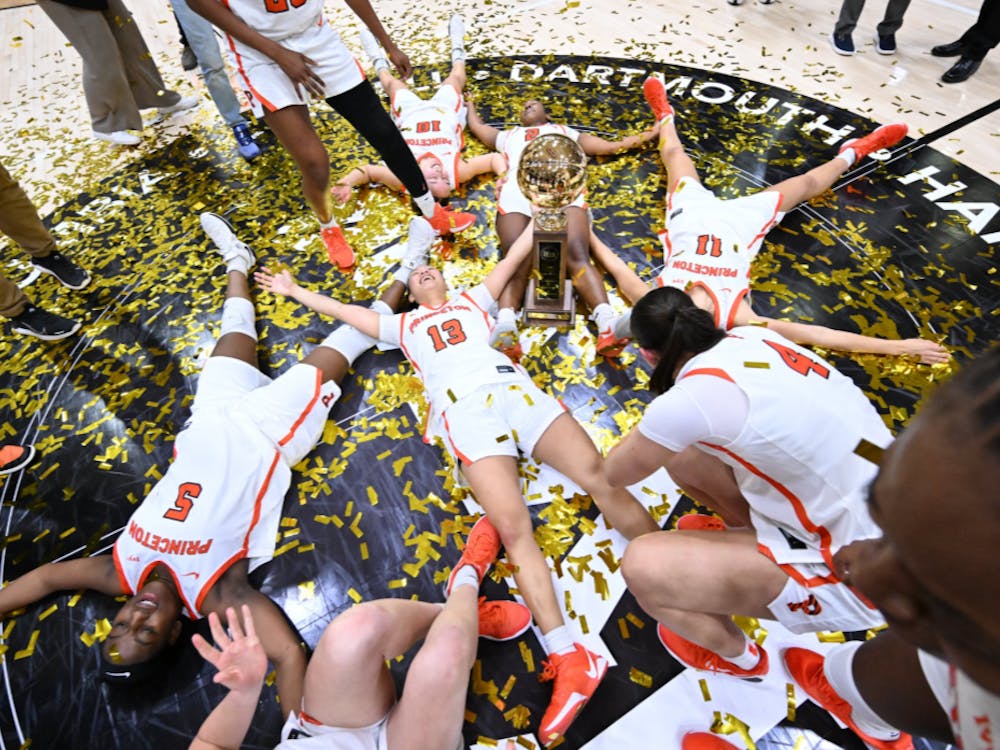
Back on top: Women’s basketball stifles Harvard in Ivy League Tournament Final
Lily PampolinaThe Tigers reclaimed the Ivy League Tournament title by defeating Harvard.
The Tigers reclaimed the Ivy League Tournament title by defeating Harvard.

Women’s basketball dominates Brown in Ivy League Tournament Semifinal
Lily Pampolina and Jordan HalagaoFollowing their victory against Brown, Princeton will play Harvard in the Ivy tournament final.
Following their victory against Brown, Princeton will play Harvard in the Ivy tournament final.

No. 18 women’s lacrosse secures first Ivy League win in 19–13 rout against Harvard
Alex Beverton-SmithSenior attacker Jami MacDonald’s eight points helped carry the Tigers to a comfortable victory over Harvard in Cambridge, Mass.
Senior attacker Jami MacDonald’s eight points helped carry the Tigers to a comfortable victory over Harvard away in Cambridge, Mass.