



In 1956, Robert Givey '58 sat in his dorm room dressed in coat and tie, waiting for eating club members to determine his social future. Over the course of several days, in a process known as Bicker, Givey and his roommates were graded on a scale of one to seven on their appearance and sociability.
During these "calling periods," club leaders would sweep through sophomore suites, interviewing potential members and assigning a grade to each. As Jerome Karabel writes in the bestselling book "The Chosen," a great applicant was given a one and a title like "ace," while a poor one was assigned a seven and the nickname of "lunchmeat," "banana," "wombat" or "turkey."
"Since the result of Bicker was sometimes to separate friends who had hoped to join a club together," Karabel writes, "one of its byproducts was to strain — and sometimes shatter — existing friendships."
While Givey said he received a bid to join Elm Club, a now defunct eating club, he watched peers receive unequal treatment. "The Bicker system in those days was pretty cruel," Givey said in an interview last week.
As current students enter Bicker week once again, they carry on a process that has, despite controversy, evolved over the 142-year history of eating clubs to become a uniquely Princeton tradition. But students today also question how Bicker will change with the inception of the four-year college system and Nassau Hall's plans to create alternative social venues on campus.
History of Bicker
The popularity of the eating clubs initially grew out of the necessity for better dining options in the second half of the 19th century.
"[T]he University ... was providing inadequate food service for the students," said William Selden '34, author of several books on University history, including "Club Life at Princeton: An Historical Account of the Upper-Class Eating Clubs at Princeton University." As a result, students began gathering to eat at various town boarding houses, calling their groups the Alligators, Knights of the Round Table and Nimrods, among other names.
By 1864, these informal group meetings had evolved into 12 of what the Nassau Herald called "eating clubs." In time, the clubs erected houses on Prospect Avenue, starting with Ivy Club in 1879, Selden said.

In his 1903 Trustees Papers, Moses Taylor Pyne, a member of the Class of 1877, argued that the clubs were having a positive and dignifying influence on students.
"There is a tendency towards refinement of manners," he wrote. "Gambling and the use of spirits or wine or malt liquors in the club houses are positively prohibited."
Controversy, though, began to surround the clubs as they grew in popularity.
In 1907, President Woodrow Wilson, a member of the Class of 1879, proposed a residential college system modeled on Oxford's as an alternative to the Street. The clubs, Wilson said, were "distinctly and very seriously hostile to the spirit of study, incompatible with the principles of a true republic of letters and of learning."
But the clubs continued to grow, and as membership ballooned, a new system evolved as the process by which clubs competed for elite members and underclassmen vied for membership. By 1913, the term "bicker" was used to refer to the annual process during the spring semester which granted sophomores membership in eating clubs.
"College students have always eaten with gusto, but only Princetonians turned eating into a contact sport," James Axtell writes in his forthcoming book from Princeton University Press, "The Making of Princeton University." "Their competitive juices were stimulated — to a degree unusual in the history of American higher education — not by what they ate, but by where and with whom."

Bicker in its earlier years was a much longer and more formal process than it is today.
Historically, Bicker began with "calling period," a series of interviews conducted in prospective members' own rooms. Sophomores dressed in coats and ties were evaluated on social attributes, including their conversational skills and attire.
The "calling period" was followed by lengthy sessions in the clubs where representatives cut down rosters.
Controversy
Even in these early years, Bicker was met with opposition from Princetonians who viewed the process as elitist and undemocratic. Before World War I, dozens of sophomores protested Bicker, refusing to take part in the process and calling upon the administration to better the University's dining and social facilities.
In the late 1940s, concern over Bicker's potential to isolate rejected sophomore candidates led to the initiation of a 100 percent admittance system, so that every sophomore who bickered was guaranteed a spot at one of the clubs.
This new approach to Bicker was hailed as more egalitarian, but did not escape controversy. Selden said the early Bicker process took into account prospective members' religious affiliation, economic status and socio-demographics, resulting in segregated membership groups.
"In the early years there was ... segregation in the clubs," Selden said, adding, however, that with time, "that pretty much passed out of existence."
The so-called 1958 "Dirty Bicker" was an especially controversial Bicker year. Despite the 100 percent admittance system, 23 students were refused eating club membership. Since 15 of them were Jewish, this provoked allegations of anti-Semitism.
"Identification of a candidate as a Jew, or from an old Baltimore family, as a Chinese or a Negro or as a member of any special group by accident of birth receives consideration by bicker-men," David Lewit '47 wrote in a 1949 article entitled "The Motivations of Bicker Men."
Givey, who was a senior in 1958, called the discrepancies in admittance that year "Princeton's darkest hour."
"I sensed [the alleged discrimination] at the time, and I was quite disturbed by it," Givey said. "I was even more [disturbed] later on when I really knew what was going on. It kind of galled me that it was practiced."
Changes to the system
Attitudes towards Bicker and the eating clubs changed in the 1960s as a reflection of significant shifts in campus political and social thought. The eating clubs, often thought of as attracting elitist membership, began to fall out of favor with students.
"We were also in the midst of a time — in the late '60s and early '70s — that was anti-establishment, and what could be more establishment than an eating club at Princeton?" Alison Amonette '73 said in The Daily Princetonian.
By the late 1960s only about 50 percent of undergraduates were counted as eating club members, in contrast to earlier rates of 90 percent. With some clubs forced to shut their doors as a result of this newfound unpopularity, several instituted a non-selective sign-in system as an alternative to Bicker.
The admission of women to the University introduced another potentially contentious issue to the Bicker system. While women were offered membership early on at Stevenson Hall and Campus Club, many women chose not to bicker and various clubs barred women from admission.
After being denied membership to Ivy, Tiger Inn and Cottage Club, Sally Frank '80 filed a gender discrimination complaint with the New Jersey Division on Civil Rights in 1979.
"I thought that it was really harmful to [Princeton] to have all-male eating clubs ... because the clubs radiated sexism on the campus," Frank said Friday in an interview with the 'Prince.'
Cottage began admitting women after settling with Frank in 1986. Ivy integrated after the New Jersey Supreme Court ruled in Frank's favor several years later. Tiger Inn continued to bar the admission of women until 1991, when its appeals to the United States Supreme Court were denied.
But despite these changes, Frank maintains that Bicker is, on the whole, a harmful Princeton tradition.
"I think it's generally negative," she said. "It is one thing to have an application process for a thing where skill is involved, but social acceptability should not be measured in that sort of way. If you are going to have eating clubs, it should be non-selective."
Its controversial past notwithstanding, many have praised Bicker as a positive and quintessentially Princeton experience.
"People slam Bicker for the inequities and the unfairness, but in a lot of ways it is like the real world," says Emily Goodfellow '76 in the book, "The Making of Princeton University."
Goodfellow, a former member of Cap and Gown Club, said that decisions in the real world are often based on unfair criteria, such as race and gender.
"The University spends a lot of time telling you how special and wonderful you are," she said. "Bicker brings you back down and shows you that things aren't always fair."
The future of Bicker
Though Bicker clubs have maintained their popularity over the last few years, many wonder whether the inception of the four-year college system and transformation of Campus Club into a new social venue will change life on the Street.
Last year, Cap and Gown attracted 180 applicants, the highest number of contenders any club has seen in five years. The other clubs have also seen sustained or increased bicker numbers.
But the debut of the four-year residential college system in 2007 could distort the Bicker equilibrium.
"The [future of the] whole process is a big unknown right now," said Jamal Motlagh '06, president of the Interclub Council and outgoing president of Quadrangle Club.
By 2012, the University plans to add 500 students to its undergraduate population. To support the influx of new students, the University will open three four-year colleges and aims to broaden dining and social options on campus.
President Tilghman expects the college system to complement, not replace, Street life. For example, each college will have spaces available for student programming, such as dark rooms and dance and art studios.
"I am quite sure that students will still see the Street as an attractive social option — we are just providing a greater menu of choices," Tilghman said in an email.
The transformation of Campus into an open venue for undergraduate and graduate students may also detract from eating club membership.
"We are talking about ways to maintain the club atmosphere within and create an environment that will be inclusive so that any student that chooses to will feel comfortable and at home there," Vice President for Campus Life Janet Dickerson said of plans to transform the Campus building.
She stressed that plans for the club are still in preliminary stages. This week, a group of students and faculty will tour the club and brainstorm ideas for its future.
Tower Club president Scott Grzenczyk '06 doubts the new college system or the revamping of Campus will detract from eating club participation.
Noting events such as theme parties, movie nights, study breaks and formal dances, Grzenczyk said "there are a lot of great things about the clubs, and those characteristics will continue to exist after Whitman [College] opens. I'd choose to join a club again, even with four-year colleges, for those reasons."
Club financial aid
Expansion of financial aid to cover eating club membership could be particularly important in maintaining broad student participation on the Street.
"The eating club system should be open to anyone who wants to join it," recently elected USG president Alex Lenahan '07 said. "There does need to be some form of financial aid that would allow people [to join] who now are discouraged from joining the system because of extra cost."
Former USG president Leslie-Bernard Joseph '06 said the administration has promised to increase aid to students in the future, but the timeframe and amount are uncertain.
The University "will never cover the full cost of club membership, since some of the cost is social fees or dues that go to alcohol or anything else that the school might not condone," Joseph said in an email.
"Students shouldn't have to take out additional loans to take part in what's supposed to be a tradition. It's like having to take a loan out to walk in the P-Rade," Joseph said.
Motlagh, the ICC president, said that inadequate financial aid following the debut of the four-year college system could lead to a more divided student body. Students who can't afford the clubs will be forced to remain in the college system, while wealthier students will have the option of bickering — a throwback to the segregated past.
Even after some 150 years, Bicker still has new hurdles to overcome.
Related
— Read this week's full series, "The Club Experience" — Read selections of 'Prince' coverage of Bicker from the 1950s through todayRead More

Play the Tuesday Crossword, ‘Spring has sprung’
Penelope Cohen(Photo: “Easter eggs” by Pixabay / CC0 1.0 Universal) Come celebrate the sun with this debut puzzle by Contributing Constructor Penelope Cohen!
(Photo: “Easter eggs” by Pixabay / CC0 1.0 Universal) Come celebrate the sun with this debut puzzle by Contributing Constructor Penelope Cohen!
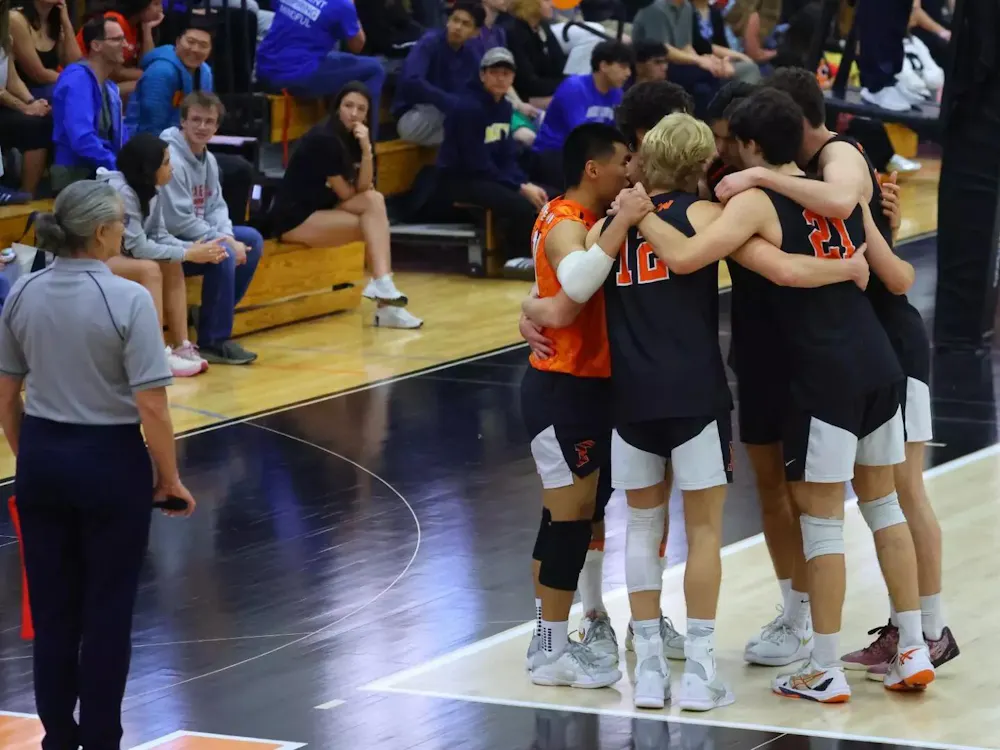
Men’s volleyball falls in back-to-back matches against Sacred Heart on senior weekend
Andrew KangThe Princeton Tigers were unable to rebound at Dillon in a two-game split.
The Princeton Tigers were unable to rebound at Dillon in a two-game split.

Fewer new classes, less global travel in Fall 2026 course offerings
Christine CaiFall 2026 courses were released on March 26. The ‘Prince’ broke it down.
Fall 2026 courses were released on March 26. The ‘Prince’ broke it down.